
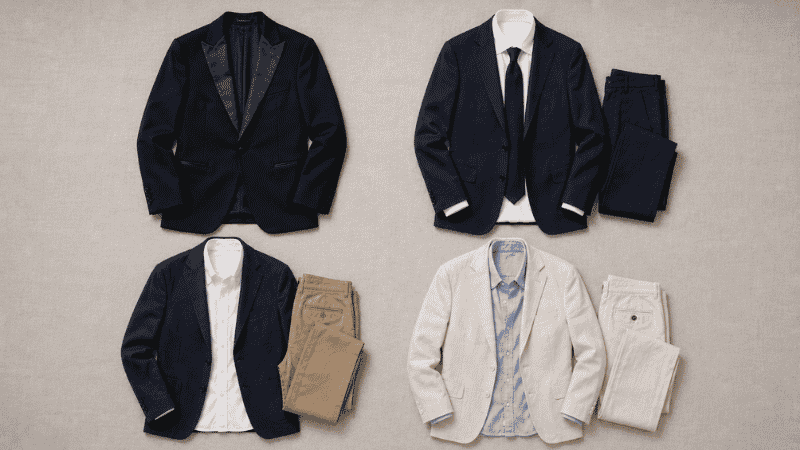
The invitation arrives. There’s a dress code printed on it. And suddenly you’re Googling “what does cocktail attire mean for men” at 11pm wondering if your navy suit is too casual or not casual enough.
This is one of the most reliably stressful outfit decisions men face—not because the rules are genuinely complicated, but because the terminology is vague and the stakes feel real. Showing up underdressed to a wedding is one of those social situations that’s hard to recover from. You can’t exactly go home and change.
The problem with most wedding dress code guides is that they explain what each term means in theory without telling you what to actually wear. “Cocktail attire is semi-formal and elevated” doesn’t help you stand in front of your closet the morning of the wedding.
This guide does the opposite. For every dress code you’ll realistically encounter as a male wedding guest—from black tie to beach casual—there’s a specific, actionable outfit recommendation. Not a range of vague options. An actual answer.
Key Takeaways
- There are five dress codes you’ll encounter at most weddings as a male guest: Black Tie, Cocktail/Semi-Formal, Smart Casual, Casual, and Beach/Destination
- When in doubt, dress one level above what you think is required—it’s far easier to remove a tie or jacket than to wish you’d worn one
- A well-fitting navy or charcoal suit handles Black Tie Optional, Cocktail, and Semi-Formal with minor adjustments
- Shoes matter more at weddings than in most other contexts—clean, polished leather shoes elevate any suit combination significantly
- Never wear white, ivory, or cream as a male guest—it reads as a direct conflict with the couple’s color choices
How to Read a Wedding Dress Code (Before You Do Anything Else)
The first thing to do when you receive an invitation is identify the dress code. If it’s printed clearly—”Black Tie,” “Cocktail Attire,” “Casual”—skip straight to the relevant section below.
If the dress code is ambiguous or missing, use these three signals to calibrate:
The venue. A ballroom at a five-star hotel implies formal. A vineyard or garden implies smart casual. A beach location implies casual to beach formal. A restaurant private dining room implies cocktail or semi-formal.
The time of day. Evening weddings (after 6pm) always skew more formal than daytime ones. A 2pm garden ceremony is likely smart casual or casual. An 8pm hotel ballroom reception is likely cocktail or black tie.
What you know about the couple. If they’re formal people, the wedding reflects that. If they’re relaxed and casual, even a “semi-formal” label might mean they’d be happy with a blazer and no tie.
When genuinely uncertain, go one level above what you think is required. The person who shows up slightly overdressed reads as respectful. The person who shows up clearly underdressed reads as careless.
What to Wear to a Wedding: By Dress Code
Black Tie
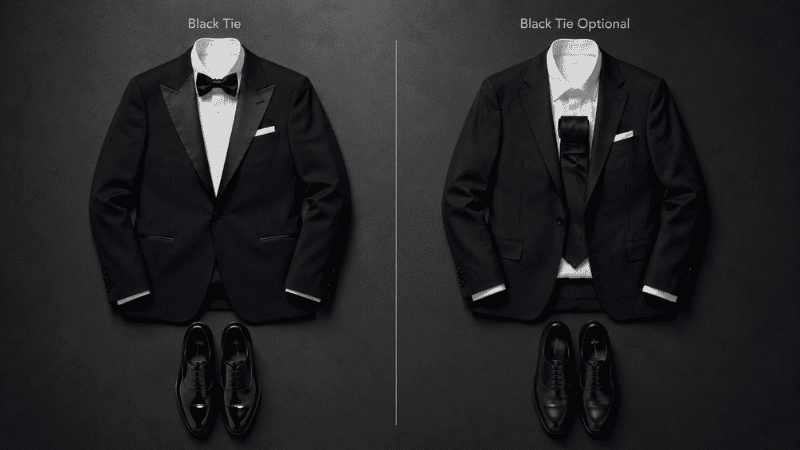
What it means: The most formal standard. Tuxedo expected. This is not the place for a business suit.
What to wear:
- Tuxedo (black or midnight navy) with satin lapels
- White dress shirt with a pleated or bib front
- Black bow tie (pre-tied is fine)
- Black patent leather Oxford shoes or black cap-toe Oxfords
- Black or midnight navy cummerbund or waistcoat
The honest note: If you don’t own a tuxedo and this is a one-off occasion, renting is entirely acceptable. Generation Tux, The Black Tux, and local formal wear retailers all offer quality rental options. Specify that you want a slim or modern fit—rental tuxedos often default to boxy cuts that date the look immediately.
What to avoid: A dark business suit. At a genuine black tie event, it reads as underdressed regardless of how well it fits or how expensive it is.
Black Tie Optional
What it means: The couple wants a formal atmosphere but aren’t requiring a tuxedo. This is your permission to wear an excellent suit instead.
What to wear:
- Dark suit (charcoal, midnight navy, or deep navy) — well-fitted
- White or light blue dress shirt
- Silk or woven tie in a muted color or subtle pattern
- Black or dark brown Oxford shoes (cap-toe or plain)
- Pocket square (optional but elevates the look)
The honest note: Black Tie Optional is where a tuxedo also remains appropriate—if you own one, wear it. If not, treat this as a high-stakes business formal occasion and dress accordingly. The key word is dark: charcoal or navy, not medium grey or khaki.
Cocktail Attire
What it means: Elevated and celebratory—more dressed up than a work meeting, less formal than black tie. This is the most common wedding dress code you’ll encounter and the one that causes the most confusion.
What to wear:
- Navy, charcoal, or dark grey suit
- White, light blue, or subtle patterned dress shirt
- Tie optional but recommended (a silk tie or knit tie both work)
- Brown or black leather loafers, Oxfords, or derby shoes
- Pocket square adds personality without effort
The honest note: Cocktail attire is where you have the most flexibility as a male guest. A well-fitted navy suit is the safest choice and works universally. If you want to show personality, this is where a bolder tie, a pocket square in a complementary color, or even a patterned shirt (kept subtle) is appropriate. The suit itself should stay in classic territory.
Semi-Formal
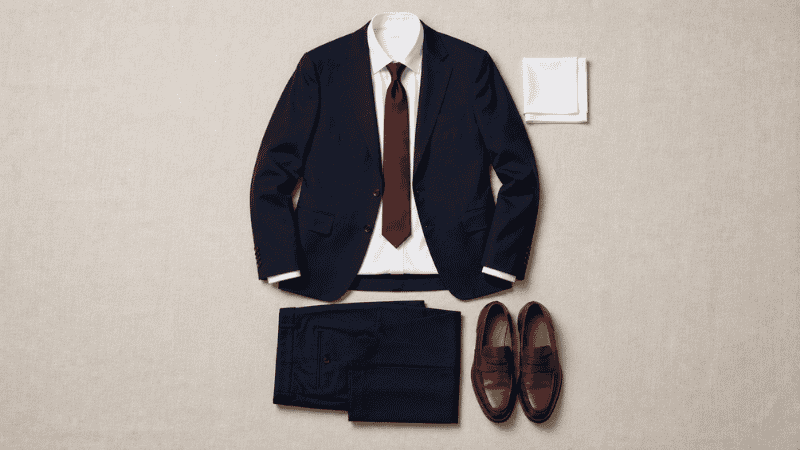
What it means: Semi-formal sits between business casual and cocktail attire. Think of it as “the nicest restaurant in your city”—polished and intentional, but not black tie.
What to wear:
- A suit or a blazer with dress trousers
- Dress shirt (tie optional at semi-formal)
- If going suit-only: navy or medium grey with a white or light shirt
- If going blazer + trousers: navy unstructured blazer + grey or navy dress trousers + white dress shirt
- Leather loafers or Oxford shoes in brown or black
The honest note: Semi-formal is where men most commonly underdress. “No tie required” gets interpreted as “casual shirt and no jacket,” which is too casual. Even without a tie, the jacket stays on through the ceremony and most of the reception. Remove it later in the evening if the vibe loosens up.
Smart Casual / Dressy Casual
What it means: The couple wants guests to look good but doesn’t want anyone feeling overdressed or uncomfortable. This is common for outdoor daytime weddings, backyard receptions, and casual venue events.
What to wear:
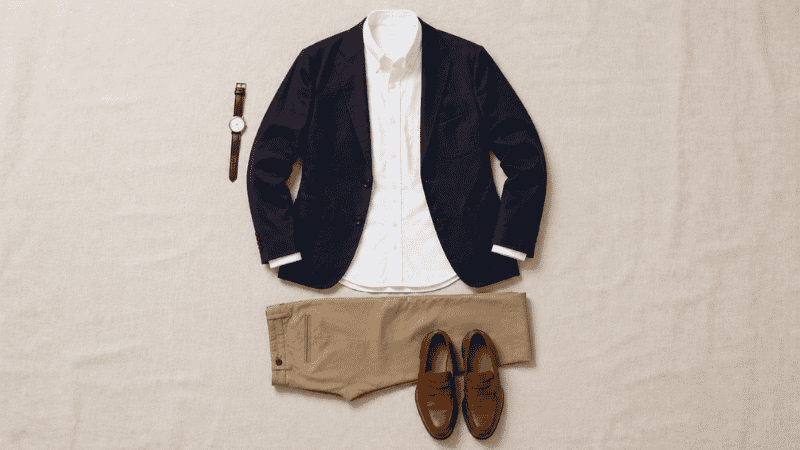
- Navy unstructured blazer + chinos (khaki or navy) + Oxford shirt or polo
- Or: well-fitted dress trousers + OCBD shirt + no jacket
- Leather loafers or clean leather sneakers (context-dependent)
- Tie: almost certainly not needed
The honest note: Smart casual is where the widest range of interpretations exists. A blazer and chinos is the reliable middle ground—smart enough to look intentional, relaxed enough to not feel overdressed. If the invitation says “smart casual” and the venue is outdoors in summer, linen pieces are appropriate and practical.
Beach / Destination Wedding
What it means: The couple wants guests comfortable in an outdoor, often warm-weather environment while still looking the occasion.
What to wear:
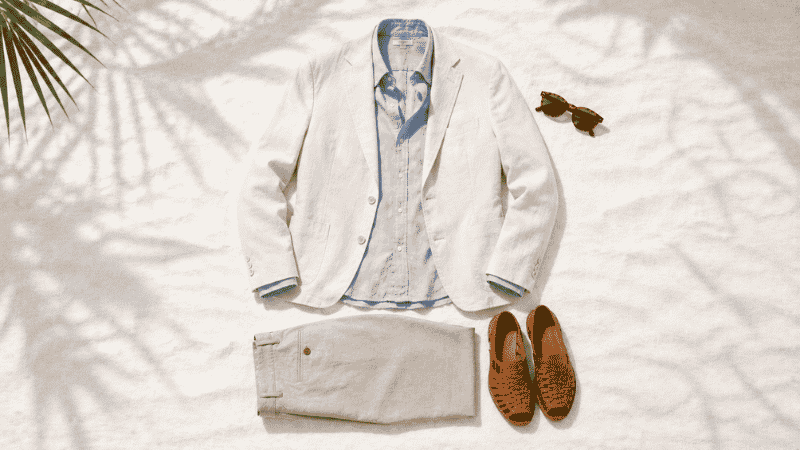
- Linen suit or linen-blend separates in ivory, light blue, tan, or soft grey
- Or: linen shirt (tucked) + tailored chino shorts or lightweight chino trousers
- Loafers (suede or canvas), clean boat shoes, or leather sandals
- No tie required; open collar is appropriate and expected
- No heavy dress shoes—they sink in sand and look out of place
The honest note: This is the one context where lighter colors (ivory, cream, tan, light blue) are not only appropriate but preferred. The exception remains true white—avoid it even at beach weddings to respect the couple’s color. A well-fitted linen suit in ivory or light tan reads as intentional and seasonally correct.
The “10 Minutes Before You Leave” Checklist
You’ve chosen the outfit. Here’s what to check before you walk out:
Fit: Do the jacket shoulders sit at the edge of your shoulder bone? Is the shirt tucked cleanly? Do the trouser hems touch the top of your shoe without significant stacking?
Shoes: Are they clean and polished? Scuffed shoes undermine any suit combination immediately.
Shirt: Ironed or at least steamed? A wrinkled dress shirt under a blazer reads as rushed.
Pocket square: If you’re wearing one, it should be visible but not theatrical. A simple white square with a flat fold handles every situation.
Tie: Knot sitting at the collar button? Length reaching the belt buckle?
If any of these are off and you have ten minutes, fix the shoes first—they’re what people notice at a glance. Everything else is secondary.
What Men Should Never Wear to a Wedding
A few things that remain true across all dress codes:
White, ivory, or cream clothing. This applies to men as well as women—these tones are reserved for the couple. A cream linen suit at a beach wedding reads as a direct conflict. Choose light blue, tan, or soft grey instead.
Jeans of any kind. Even dark, clean, well-fitting jeans are below the minimum for any wedding dress code. The exception is an explicitly casual outdoor event where the couple has indicated jeans are welcome—which they’ll usually state directly.
Athletic shoes. Even “fashion” sneakers or designer trainers read as casual in a wedding context unless the event is explicitly styled around streetwear aesthetics. When in doubt, leather.
Shorts. Only appropriate at explicitly beach casual events where the invitation indicates beach attire. Not for indoor receptions regardless of season or heat.
Anything that needs ironing that hasn’t been ironed. Wrinkled formal wear looks worse than a clean casual outfit. If you’re wearing dress shirts and suits, press them.
What If the Dress Code Isn’t on the Invitation?
This happens more often than it should, and it’s genuinely frustrating. Your options:
Ask the couple or a member of the wedding party. This is always appropriate and welcomed. Send a brief message: “We’re so excited for the wedding—just wanted to check on the dress code so we come dressed right.” Nobody minds this question.
Look at the venue. Google the wedding venue and look at photos of events held there. A ballroom will give you a different read than a backyard.
Default to smart casual if no other signal exists. A navy blazer, dress shirt, chinos, and leather shoes is appropriate everywhere from casual outdoor weddings to semi-formal indoor receptions. It’s the safest default.
FAQ
What do men wear to a semi-formal wedding? A well-fitted suit in navy or charcoal is the most reliable choice for a semi-formal wedding. A dress shirt is required; a tie is optional but recommended. Leather loafers or Oxford shoes in brown or black complete the look. If you opt for a blazer and dress trousers instead of a full suit, keep the trousers formal—no chinos.
Can men wear a navy suit to a black tie wedding? A navy suit is not appropriate for a strict black tie wedding—a tuxedo is expected. For Black Tie Optional, a very dark navy suit (nearly midnight) with a white dress shirt and silk tie is acceptable. When in doubt, rent a tuxedo rather than risk being underdressed at a formal event.
What do men wear to a beach wedding? Lightweight linen or linen-blend trousers with a linen shirt (tucked, open collar) is the ideal beach wedding outfit for men. A linen suit in ivory or light tan is also appropriate for more formal beach events. Avoid heavy dress shoes—loafers, boat shoes, or leather sandals work better on sand and in heat.
Is a blazer enough for a wedding, or do I need a full suit? A blazer without matching trousers works for smart casual and some semi-formal weddings. For cocktail attire and above, a full suit is expected. The distinction: matched suit = more formal, blazer + dress trousers = slightly more relaxed but still polished.
What should men wear to a casual wedding? A blazer with chinos and a dress shirt or neat polo is the right level for most casual weddings. Clean leather loafers or neat leather sneakers are appropriate footwear. Jeans are generally too casual unless the invitation explicitly states otherwise. When in doubt, the blazer-and-chinos combination is universally appropriate.
References
- The Knot, “Menswear Experts Break Down Every Wedding Dress Code for Guys” — expert input from Jason Jackson (Generation Tux) and Michelle Durpetti (Michelle Durpetti Events) on wedding attire expectations in 2025
- Wedgewood Weddings, “Dress Code 101: What to Wear as a Wedding Guest” — comprehensive wedding dress code breakdown by formality level
- InStyle, “Going to a Semi-Formal Wedding? Here’s 7 Stylist-Recommended Outfits” — stylist guidance on semi-formal interpretation
Explore More on Modvello
- How to Dress Better: The Practical Men’s Style Guide (Wardrobe Basics)
- Business Casual Dress Code for Men: What It Actually Means (Wardrobe Basics)
- Capsule Wardrobe for Men: 10 Basics That Cover Every Situation (Wardrobe Basics)
- The Best Chinos for Men: Honest Picks at Every Budget (Best Picks)
- What to Wear in Summer: The Men’s Guide to Looking Good When It’s Hot (Style by Occasion)
Last updated: June 2026 | Written by Daniel Ross