
Khaki Is Not a Uniform—It’s a Tactical Advantage
Most guys treat khaki like a default setting—the boring, safe choice for “business casual” or a relative’s backyard BBQ. That’s a missed opportunity. Historically, khaki khaki khaki wasn’t designed for cubicles; it was forged for the rugged utility of the British military in the mid-19th century. It was meant to be durable, adaptable, and camouflage.
Today, that same DNA makes it one of the most powerful neutral tools in a man’s wardrobe, provided you understand that khaki is a spectrum, not a single shade. If you’ve ever felt like you looked “washed out” or like a retail employee in a pair of tan pants, the issue isn’t the color—it’s your execution. Mastering what color is khaki means moving beyond the basic “tan” mindset and into the realm of intentional styling.
[Internal Link: The Essential Guide to Men’s Color Theory → /mens-wardrobe-color-guide]
1. Navigating the Spectrum: It’s All About the Undertone
To the untrained eye, “khaki” is just light brown. To an expert, it’s a game of undertones. Getting this wrong is how you end up looking like you’re wearing a uniform rather than an outfit.
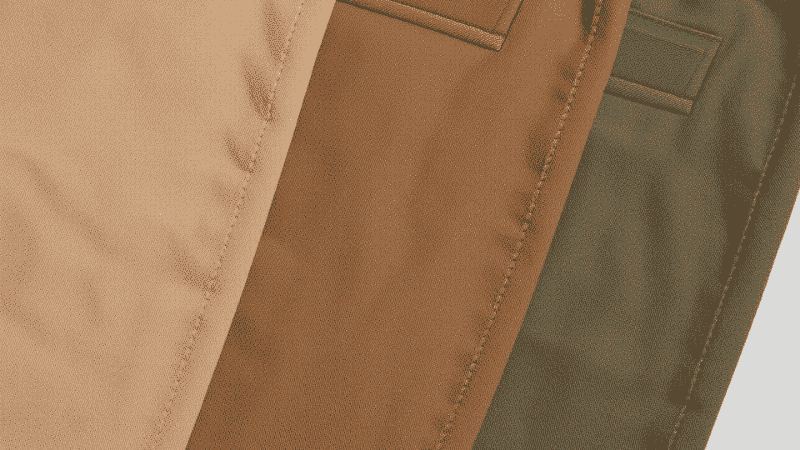
- Stone & Sand: These are high-summer shades. They lean toward off-white and cool grey. Because they lack warmth, they look incredibly sharp against a tan or a darker complexion.
- True British Khaki: This is the heavyweight champion. It’s a saturated, warm tan with a slight golden hue. This is the color that looks “expensive” when paired with high-quality leather.
- The “Olive” Pivot: Many modern “khakis” lean into a dusty green. This is the bridge to workwear. If you’re wearing boots and heavy flannel, this is your target.
Styling Intuition: Proportions matter here. Because khaki is a lighter value than navy or black, it draws the eye. If you wear light khaki on your lower half, it will visually “weight” your bottom half. Balancing this with a darker or textured layer on top is the key to a proportional silhouette.
2. Real-Life Nuance: From The Boardroom to The Bar
The “Creative Professional” (High-Low Layering)
You need to look like you’re in charge, but you don’t want to be the guy in the stiff suit.
- The Move: Pair a rich, British Khaki chino with a charcoal merino wool sweater over a white Oxford.
- The Logic: Most guys default to navy, but charcoal grey provides a sophisticated, low-contrast alternative that feels modern. Adding a leather belt that matches your boots—think a rugged dark brown—grounds the lightness of the pants.
The “Refined Weekend” (Textural Depth)
You’re out for a Sunday lunch or a city walk. You want to look effortless.
- The Move: Light sand-colored trousers in a heavier cotton twill, paired with a navy chore coat and a simple white tee.
- The Logic: Khaki thrives on texture. A flat, thin khaki fabric looks cheap. A heavy, “crunchy” twill or a broken-in cotton adds a layer of ruggedness that keeps the outfit from looking like a school uniform.
3. The Fit Truth: Kill the “Dad Pant” Silhouette
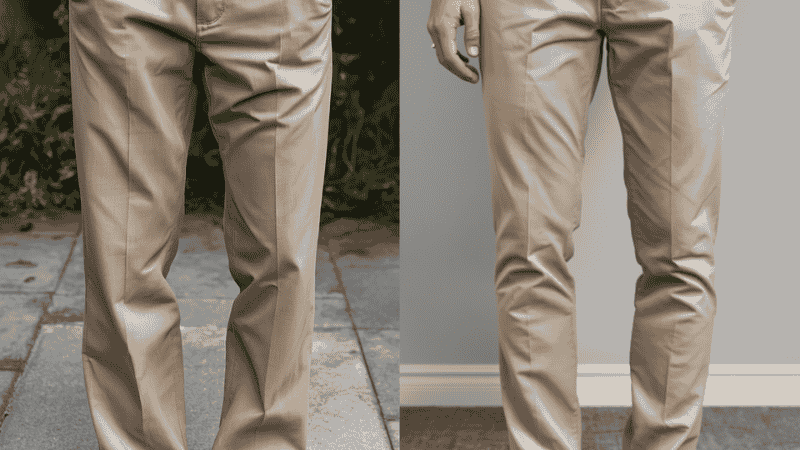
The reason most men feel insecure in khakis is the “billow” factor. Light colors catch shadows in every fold; if your pants are too big, you’ll look like you’re swimming in fabric.
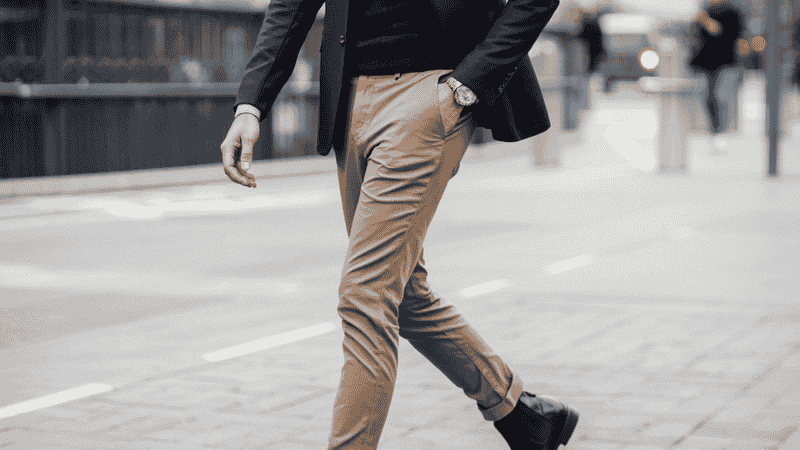
- The Taper is Non-Negotiable: You want a “clean” leg. The fabric should follow the shape of your calf without clinging to it. A 7-inch to 8-inch leg opening is the sweet spot for most men.
- The Rise & The Seat: Stop wearing low-rise chinos. They shorten your legs and create a “muffin top” effect. A mid-to-high rise lengthens your frame and keeps your shirt tucked in where it belongs.
- The Break: Aim for a “shivering” break—where the hem just kisses the top of your shoe. This creates a vertical line that adds height and communicates that you actually visited a tailor.
4. Conversion Layer: The 2026 Khaki Shortlist
Key Pieces for This Look
To execute the “Modern Khaki” aesthetic, you need more than just the pants. You need the supporting cast:
- The Navy Chore Coat: The perfect casual alternative to a blazer.
- Dark Brown Suede Boots: Texture that complements the matte finish of cotton twill.
- The Heavyweight White Tee: Provides the structure needed to match the weight of chinos.
Best Options for Different Budgets
| Category | Recommended Item | Why It Fits You |
| Best Overall | The Heritage Twill Chino | 9oz weight provides structure. Perfect for the guy who wants one pair to do it all—office to weekend. |
| Best for Body Type | The Athletic Taper Khaki | Extra room in the seat/thigh for gym-goers, but tapers at the ankle so you don’t look “baggy.” |
| Best Budget Option | The Washed Slim Chino | A “peached” finish makes cheap cotton feel premium. Great for building a high-rotation wardrobe. |
5. What Most Men Get Wrong About Style (The Differentiation)
Most style blogs tell you that “khaki goes with everything.” They are lying. If you wear a neon-bright polo with khakis, you look like a caddy. If you wear a black dress shirt with khakis, you look like you’re working a security detail at a mall.
The Real Secret: Khaki is an earthy, organic color. It belongs with other organic colors: Navy (sea), Olive (forest), Burgundy (wine), and Brown (earth). When you stay within this natural palette, your style looks intuitive rather than forced.
6. The Fatal Errors
- The “Ghost” Effect: Don’t match your skin tone. If you’re fair-skinned, avoid light sand. Go for a darker, muddy khaki to provide contrast.
- The Shoe Conflict: Black shoes and khaki are a stylistic divorce. They don’t speak the same language. Stick to “Earth Tones”—chocolate suede, tan leather, or a stark white minimalist sneaker.
- Over-accessorizing: Khaki is a “background” color. Let it be the foundation. Don’t ruin a clean pair of chinos with a loud, printed belt or neon socks.
7. FAQ: Everything Else You Need to Know
Is khaki a color or a type of pant? Both. Technically, khaki is the color (dusty brown), while “khakis” has become a colloquial term for cotton twill chinos. You can have khaki-colored jeans or navy-colored khakis (though we call those chinos).
Can I wear a tie with khakis? Yes, but keep it casual. A silk power tie looks ridiculous with cotton khakis. Opt for a knit tie or a wool-blend to match the informal nature of the fabric.
Does khaki work in winter? Absolutely, but swap the fabric. Look for “Brushed” cotton, cavalry twill, or corduroy in a khaki shade. It adds the visual weight needed to compete with heavy overcoats.
What shirt color goes best with khaki? Navy blue is the undisputed king. However, forest green, white, and light blue chambray are close runners-up. Avoid bright yellows or oranges, which compete too much with the brown undertones.
How often should I wash my khakis? Less than you think. To keep the khaki khaki khaki pigment from fading, wash them every 3–5 wears in cold water and always air dry. Heat ruins the fit and the color.