
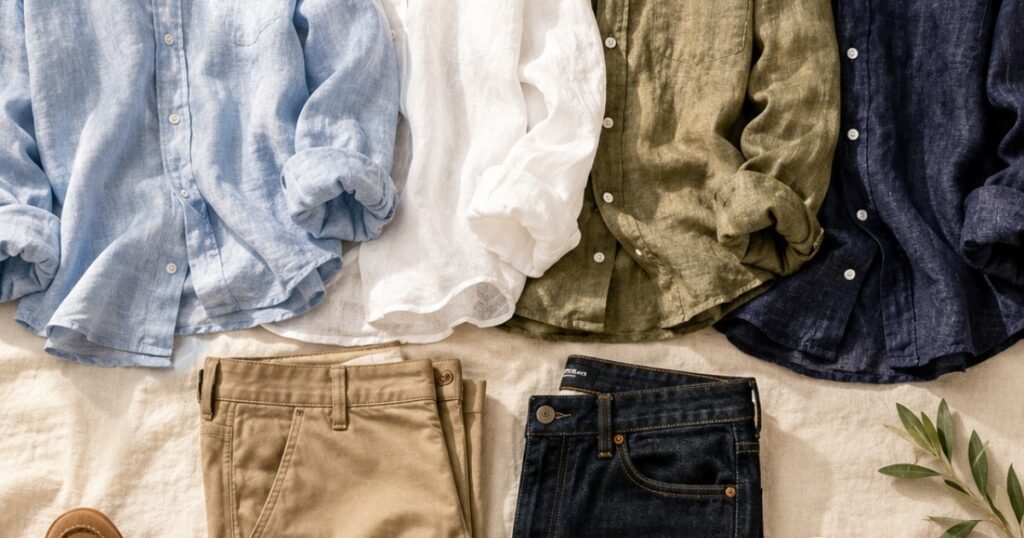
The first time I bought a linen shirt, I did everything wrong.
bought it a size too large because it felt more comfortable in the store. I wore it with a white undershirt that was visible through the fabric by 10am. And I spent the first hour of wearing it pulling at the front because the hem was already wrinkling in a way that looked less “relaxed Italian summer” and more “slept in car.”
Linen shirts have a reputation for being effortlessly stylish — and they can be. But there’s a gap between how they look on a mannequin and how they look on most men the first time they wear one. That gap isn’t about the shirt. It’s about the things nobody tells you: the fit, the undershirt, the hem length, the right fabric blend, and how to handle the wrinkles without fighting a losing battle.
This guide covers all of it.Whether you’re buying your first linen shirt or trying to wear one better, these are the simple rules that make the biggest difference.
In a hurry? Here’s the short version:
- Buy light blue if it’s your first linen shirt.
- Choose a linen blend for the office and 100% linen for weekends or vacations.
- Pair it with chinos, dark jeans, or linen trousers for the easiest outfits.
- Wear a skin-tone V-neck undershirt under light-colored linen.
- Don’t chase perfectly wrinkle-free linen—looking naturally relaxed is the goal.
Why Every Man Needs a Linen Shirt This Summer
Why Linen Beats Cotton in Hot Weather
Cotton is fine. Linen is better for summer, and the reason is physics.
Linen is made from flax fibers, which are hollow — they allow air to circulate through the fabric rather than trapping it against your skin. The result: linen breathes significantly better than cotton, wicks moisture faster, and dries more quickly when it does get damp. In practical terms, a linen shirt at 90°F is genuinely more comfortable than a cotton shirt at the same temperature.
The tradeoff — and the reason some men avoid linen — is that it wrinkles more easily than cotton. But wrinkles in linen aren’t a flaw. They’re a characteristic. The distinction between looking sloppy and looking intentionally relaxed comes down to fit and styling, not the absence of wrinkles.
Who Should Wear Linen (And Who Shouldn’t)
Anyone can wear a linen shirt. The caveat: linen rewards men who’ve figured out their fit. Because the fabric is lightweight and drapes loosely, poor fit reads more obviously than it does in heavier materials. An oversized cotton shirt looks casual. An oversized linen shirt looks like you borrowed someone else’s clothes.
If you’ve never found a shirt that fits well through the shoulders and chest, sort that out before investing in linen. The shirt itself isn’t the hard part — the fit is.
The Biggest Mistakes First-Time Buyers Make
Buying too large. The most common mistake by far. More room doesn’t mean more comfort in linen — it means more fabric, more drape, more wrinkle, more shapelessness.
Buying pure white as the first shirt. White linen is beautiful. It’s also the most unforgiving: it shows sweat, it goes transparent in sunlight, and the wrong undershirt ruins it immediately. Start with light blue or beige.
Ignoring the hem length. The hem determines whether you can tuck or untuck and whether the shirt reads as intentional or accidental. More on this below.
Wearing the wrong undershirt. Or the wrong color. This single decision makes or breaks a linen shirt, especially in lighter colors.
Quick Outfit Cheat Sheet
| Occasion | Shirt | Pants | Shoes |
|---|---|---|---|
| Beach / Vacation | White or beige linen shirt | Linen shorts | Canvas sneakers or sandals |
| Weekend Casual | Light blue linen shirt | Dark slim jeans | White leather sneakers |
| Smart Casual | Navy linen shirt | Khaki chinos | Tan leather loafers |
| Summer Date | Olive linen shirt | Cream or stone trousers | Minimal leather sneakers or suede loafers |
| Smart Casual Office | Light blue linen shirt | Navy or charcoal chinos | Brown leather loafers |
| Casual Dinner | White or ecru linen shirt | Linen trousers | Suede loafers or clean sneakers |
The Golden Rules: How to Choose the Perfect Linen Shirt
100% Linen vs. Linen Blends — Which Should You Buy?
Both are good. They’re good for different things.
100% linen: Maximum breathability, the most authentic linen texture, develops beautiful character with wear. Also wrinkles the most aggressively — within an hour of putting it on, it will show creases at the elbows and across the chest. For casual and vacation contexts, this is fine. For office or smart casual situations where you need to look reasonably crisp through a full workday, pure linen can be frustrating.
Linen blends (typically 55% linen / 45% cotton, or linen/cotton/elastane): Still breathable, still has the linen texture, but significantly more wrinkle-resistant. A linen-cotton blend shirt worn to the office will look reasonable at 5pm; a 100% linen shirt in the same situation will have accumulated visible creases by noon.
The practical recommendation: Start with a linen blend if you plan to wear it in professional or smart casual contexts. Buy 100% linen for vacation, beach, and casual summer situations where the natural wrinkling is a feature rather than a problem.
Choosing the Right Fit
This is the single most important decision. More important than the brand, the color, or whether it’s 100% linen or a blend.
Shoulders: The shoulder seam should sit exactly at the edge of your shoulder bone. If it hangs over, the shirt is too large. Nothing else about the fit matters if the shoulders are wrong — and unlike the torso, shoulders can’t be easily altered.
Chest: Should skim without pulling. You should be able to pinch about an inch of fabric on either side of the chest. Less than that: too tight. More than two inches: too loose.
Sleeves: Should reach your wrist bone when your arms are relaxed at your sides. Long sleeves that extend past the wrist look borrowed. Short sleeves that end at mid-bicep should feel deliberate, not accidental.
Length (for untucked wearing): The hem should fall to approximately the middle of your fly — roughly 2-4 inches below your waistband. Any longer and it starts to read as a dress shirt worn outside; any shorter and it looks like the shirt shrank.
By body type:
- Lean build: Slim fit or regular fit both work. Slim fit follows the body cleanly.
- Athletic build: Look for athletic fit or “relaxed chest” options — standard slim cuts will strain across the shoulders and chest. Brands like Buck Mason and Faherty cut specifically for this proportion.
- Larger build: Regular or relaxed fit, but not oversized. The goal is fabric that doesn’t cling while still having defined shoulder seams and a hem that doesn’t billow.
The Best Colors for Maximum Versatility
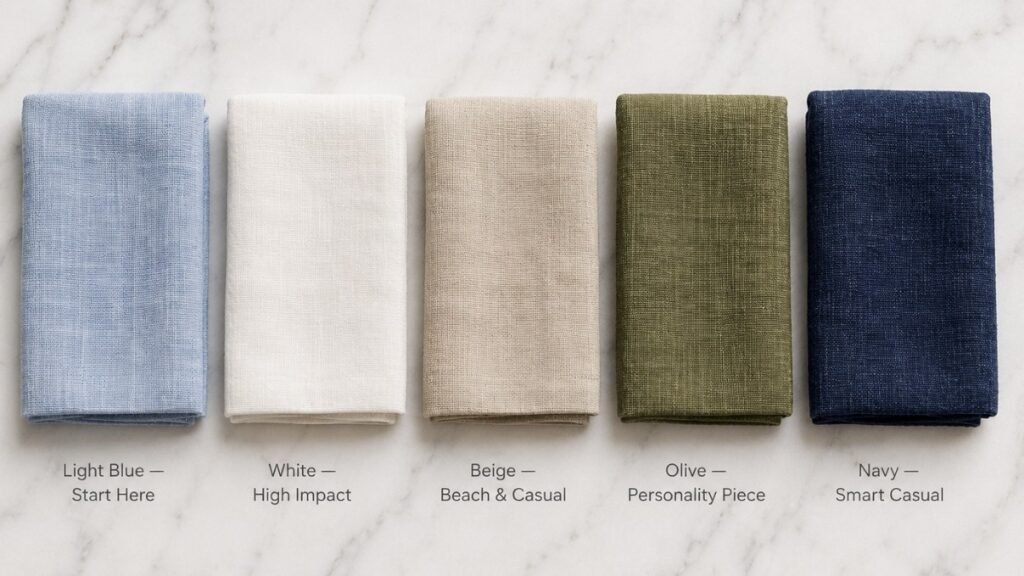
The five colors worth owning, in the order I’d buy them:
Light blue: The most versatile linen color. Works with every neutral trouser (khaki, navy, grey, dark jeans) and reads as intentional without being bold. This is the first linen shirt most men should own.
White / Ecru: Classic and clean. More demanding than light blue — shows sweat, requires the right undershirt — but the payoff is a shirt that reads as sharp across the most contexts. Ecru (off-white) is slightly more forgiving than pure white.
Beige / Sand: Warm and casual. Perfect for beach and vacation contexts. Pairs beautifully with linen shorts and chinos in similar earth tones.
Olive / Sage: The personality option. Works with khaki, cream, and navy trousers. A solid olive linen shirt is the piece that turns a basic summer wardrobe into something that looks considered.
Navy: Slightly more formal than the others. Works as a smart casual piece and pairs with almost every trouser color.
Start with light blue. Add white or beige second. Everything else is building from there.
How Much Should You Spend?
Budget ($30–60): Amazon Essentials, H&M, Uniqlo. Functional, decent quality for occasional wear. Uniqlo specifically punches well above its price point — their premium linen shirts at $40-50 are genuinely good.
Mid-range ($80–150): Everlane, J.Crew, Banana Republic. Better fabric quality, more attention to construction details, better durability through repeated washing.
Premium ($150+): Faherty, Buck Mason, Portuguese brands like Proper Cloth. Full linen or premium blends, better finishing, shirts that develop character with wear rather than just aging.
The honest recommendation: Start at mid-range if you’re new to linen. Uniqlo if budget is the primary constraint. Don’t spend premium until you know which fits and colors work for your wardrobe.
Modvello Style Formula: 6 Easy Ways to Wear a Men’s Linen Shirt
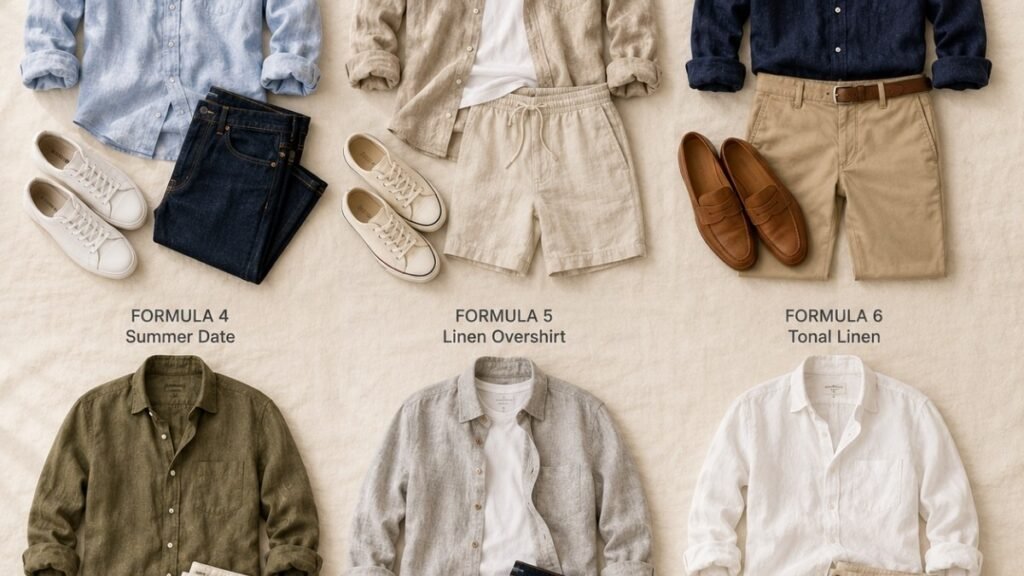
Formula 1: Weekend Casual
White or light blue linen shirt (untucked) + dark slim jeans + white leather sneakers
The baseline casual combination. Untucked with clean white sneakers, this reads as deliberately relaxed — the linen shirt doing the work that a tee does in winter, but with more visual interest. Roll the sleeves to the forearm.
The detail that makes it work: The sleeves. A linen shirt with sleeves down reads more formal than with them rolled. For casual situations, always roll.
Formula 2: Beach and Vacation
Beige or white linen shirt (worn open, over a tee) + linen shorts + canvas sneakers or leather sandals
Wear the linen shirt completely open over a plain white or grey tee for beach and vacation contexts. This is the “overshirt” configuration — the linen shirt functions as a lightweight layer rather than a standalone top. It handles sun protection and wind without adding any weight.
The outfit that travels: This combination packs flat, dries quickly, and works from beach to a waterfront restaurant without changing.
Formula 3: Smart Casual Office
Navy or light blue linen shirt (tucked) + khaki chinos + brown leather loafers
For office environments with relaxed dress codes, a tucked linen shirt over chinos reads as business casual in most modern workplaces. The linen texture signals seasonal awareness; the tucked hem and leather shoes signal professional context.
Internal link note: For chino recommendations that work with this combination, see The Best Chinos for Men.
The critical detail: Tuck it properly — shirt stays or a good tuck keeps the hem from coming out during the day, which is the difference between “business casual” and “gave up at lunch.”
Formula 4: Summer Date Night
Olive or navy linen shirt + cream or stone chinos/trousers + suede loafers or minimal leather sneakers
For an evening out, the linen shirt moves from casual to smart casual by pairing with non-denim trousers and leather footwear. Olive against cream creates a warm, earthy palette that reads as considered without trying too hard. Navy with stone does the same in a cooler direction.
Tuck or untuck: Tuck for restaurants; untuck for drinks or casual dinners. The hem length should allow either without looking deliberate.
Formula 5: Linen Overshirt
Linen overshirt (worn open) + white tee + dark chinos or jeans + chelsea boots or sneakers
A linen overshirt — a heavier, more structured linen shirt designed to be worn as a light jacket — is the spring-to-summer transition piece. Worn open over a plain tee, it functions as outerwear without any warmth, which makes it perfect for evenings when a tee alone feels too casual but a jacket feels too warm.
linen overshirt men is a specific search term worth noting — the overshirt configuration is distinctly different from a regular linen shirt and worth having in the wardrobe alongside one.
Formula 6: The Tonal Linen Look
White or ecru linen shirt + linen shorts or trousers in matching or complementary tone
Wearing linen top and bottom in the same fabric family creates a relaxed, cohesive look that reads as seasonally intentional. The key is shade variation — a white linen shirt over ecru linen trousers works. White shirt over white trousers reads as uniform.
The shoe rule for linen shirts:
| Shirt Color | Shoe Direction |
|---|---|
| Light colors (white, light blue, beige) | White leather sneakers or tan suede loafers |
| Earth tones (olive, sage, sand) | Tan suede or brown leather — anything warm |
| Dark (navy, slate) | Brown leather loafers or clean dark sneakers |
Tuck or Untuck? The Ultimate Hemline Rule for Men
This is the question that gets more men in trouble than any other with linen shirts.
The 3-Inch Rule
Hold the shirt hem against your hip. If the hem falls more than 3 inches below your waistband, the shirt was designed to be tucked — the hem is too long to untuck cleanly. If it falls within 1-3 inches below the waistband, untucked works.
Most casual linen shirts are designed with a curved or straight short hem specifically for untucked wear. Most dress-cut linen shirts have a longer straight hem designed for tucking. The length tells you the intention.
When to Tuck
- Office and business casual environments
- Dinner at a restaurant that’s a step above casual
- Smart casual events where a blazer or sport coat is involved
- Any situation where you want the shirt to read as more formal
When to Leave It Untucked
- Weekend and casual social situations
- Beach and vacation contexts
- Casual dinners and drinks
- Any time you’re wearing sneakers as the primary shoe
Half Tuck?
The front tuck (tucking just the front of the shirt in loosely) is a styling move that works in specific situations — mainly for men who want a slightly more intentional untucked look without full tuck formality. For most men in most situations, it’s unnecessary. If you’re uncertain: fully tuck for formal, fully untuck for casual, and skip the half tuck until you’re confident with the other two.
What to Wear Under a Linen Shirt
This section alone is worth the read. The undershirt is where most linen shirt outfits fail.
Should You Wear an Undershirt?
In lighter linen shirts (white, light blue, beige), yes — especially in summer heat where sweat is a factor. The undershirt absorbs moisture and prevents the sweat from showing through the linen, which is particularly important because lighter linen can become transparent when damp.
In darker linen shirts (navy, olive, slate), an undershirt is optional. The darker color hides moisture better.
Best Undershirt Colors
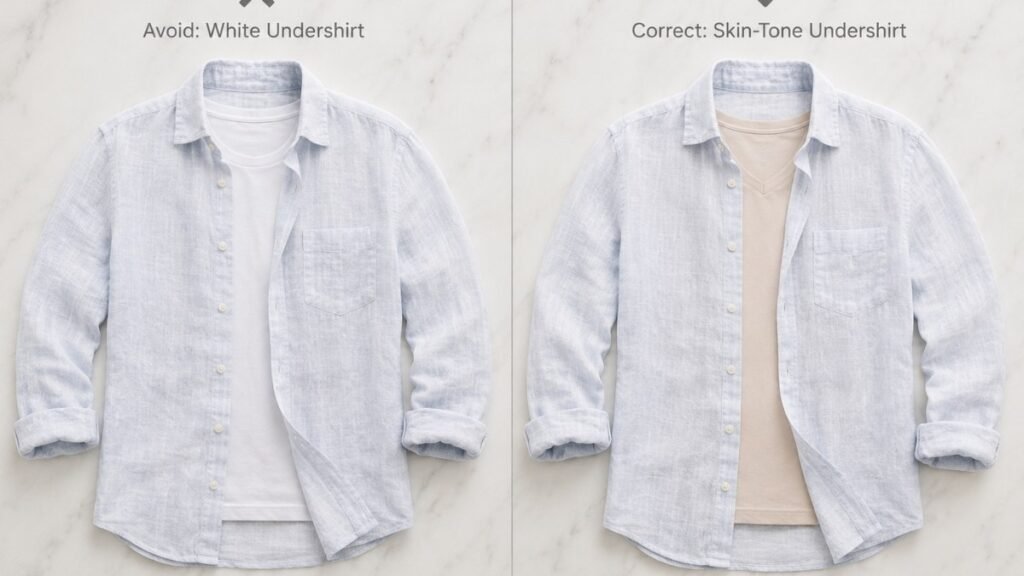
White undershirt: The instinct for most men — and almost always the wrong choice under linen. White undershirts are visible through light-colored linen, especially when the shirt is damp. They create a visible layered look at the collar and chest that reads as careless.
Grey undershirt: Better than white but still visible through very light fabrics.
Skin-tone / nude undershirt: The correct answer for light-colored linen. A shirt in your approximate skin tone disappears under the linen — no visible layering, no collar show-through, no transparency issues. This is the specific recommendation that most style guides miss.
V-neck cut: Choose a deep V-neck undershirt regardless of color — it stays below the collar and button line and remains invisible even with the top two buttons undone.
Avoiding Visible Undershirts
Three specific situations to address:
Transparency: Linen in direct sunlight can show more than you expect. A skin-tone undershirt eliminates this. Test your shirt in natural light before leaving the house.
Nipple visibility: A mid-weight undershirt handles this. Linen with no undershirt in direct sunlight can be surprisingly revealing.
Sweat patches: The undershirt absorbs this before it reaches the linen. With a proper undershirt, sweat patches on linen are eliminated almost entirely.
The Lazy Man’s Guide to Linen Care: Washing and De-Wrinkling
How to Wash Linen Correctly
Cold or lukewarm water only. Hot water degrades linen fibers and causes significant shrinkage. Gentle cycle. Mild detergent.
The most important step: remove from the washing machine immediately and either hang dry or lay flat. Leaving linen sitting in the drum while wet sets the wrinkles into the fabric in a way that’s genuinely difficult to remove later.
Will Linen Shrink?
Yes, if you wash it in hot water or tumble dry on high heat. Cold wash and hang dry prevents virtually all shrinkage. Most quality linen shirts are pre-washed by the manufacturer — they’ve already accounted for the initial shrinkage — but subsequent hot washes will continue to shrink the fabric.
How to Remove Wrinkles Without an Iron
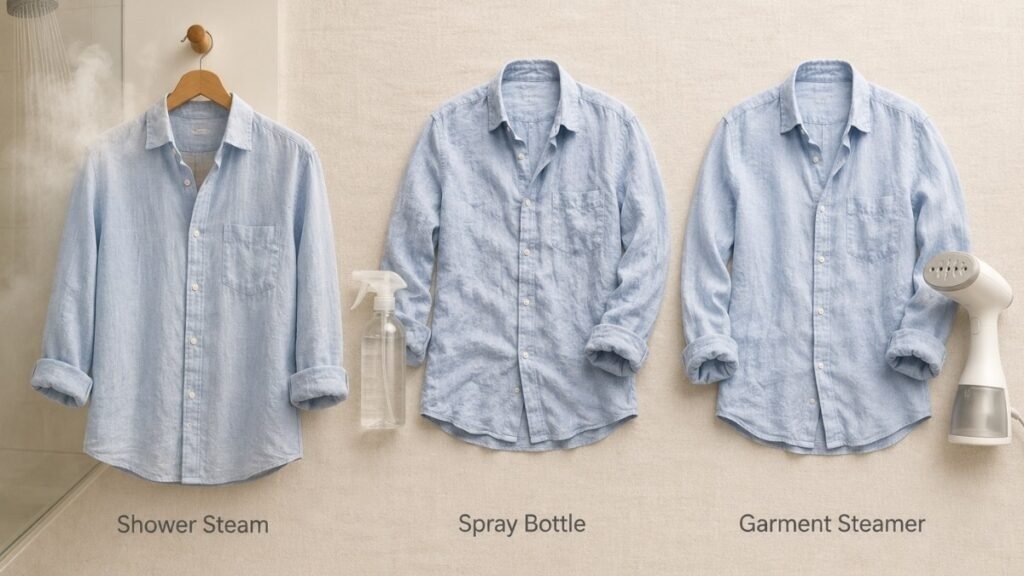
Shower steam: Hang the shirt in the bathroom while showering. The steam relaxes the fibers and removes most wrinkles within 10-15 minutes without any effort.
Spray bottle: Mist the shirt lightly with water, then smooth with your hands and hang. Works for minor wrinkles in under 5 minutes.
Garment steamer: The most effective tool for linen. A handheld steamer ($25-40) removes wrinkles in about 3 minutes without the risk of damaging the fabric that comes with direct iron contact.
Damp towel trick: Lay the shirt flat, place a damp towel on top, and press gently. Works in a pinch without any equipment.
Embracing Natural Wrinkles
Here’s the thing about linen wrinkles that nobody quite says directly: you’re not supposed to eliminate them entirely. A perfectly pressed linen shirt looks stiff and wrong — it fights against the nature of the fabric.
The goal is wrinkles that look like the result of a comfortable day, not wrinkles that look like the result of sleeping in the shirt. The difference is usually the shoulders and collar: if those areas are reasonably smooth, the wrinkles elsewhere read as texture rather than neglect.
Hang the shirt immediately after washing. Steam or spray it if the wrinkles are severe. Otherwise, put it on and let it settle naturally for 10 minutes before leaving the house. The warmth of your body relaxes the fabric, and most wrinkles even out on their own.
Common Linen Shirt Mistakes to Avoid
Buying oversized. Already covered above, but worth repeating: oversized linen looks sloppy in a way that oversized cotton often doesn’t. The fabric drape amplifies poor fit.
Buying pure white as your first shirt. Start with light blue or beige. White is high-maintenance and unforgiving. Earn it after you’ve gotten comfortable with the fabric.
Wearing a white undershirt under light linen. Skin-tone or nude V-neck only.
Pairing linen with dress trousers. Linen shirts sit in the casual-to-smart casual range. Pairing a linen shirt with formal dress trousers creates a mismatch of formality that reads as unconsidered. Chinos, linen trousers, and dark jeans are the right partners.
Ignoring shoe choice. The same shoe rule that applies to every outfit applies here. White sneakers for casual; leather loafers for smart casual; suede for warmth and texture.
Over-ironing linen. A hot iron on linen can damage the fibers, leave shiny marks, and create creases that are harder to remove than the original wrinkles. Steam or spray instead.
Wearing it with the collar buttoned up with no tie. The top button of a linen shirt should almost always be left open. A buttoned collar with no tie on a linen shirt reads as uncomfortable rather than formal.
FAQ
Can you wear an undershirt under a linen shirt? Yes, and for lighter colors you should. Choose a skin-tone or nude V-neck undershirt — white undershirts are visible through light linen, especially when damp. A skin-tone undershirt disappears under the fabric and handles sweat without showing through.
Is 100% linen better than a linen blend? Depends on the context. 100% linen is more breathable and develops better character with wear, but wrinkles more aggressively. Linen blends (linen-cotton or linen-cotton-elastane) are significantly more wrinkle-resistant and better for office and smart casual contexts. For casual and vacation wear, 100% linen is excellent. For professional contexts, a blend is more practical.
Do linen shirts shrink after washing? Yes, if you use hot water or tumble dry on high heat. Cold wash and hang dry prevents virtually all shrinkage. Most quality linen shirts are pre-washed to account for initial shrinkage, but hot washing will continue to shrink the fabric over time.
How do you remove wrinkles from a linen shirt without an iron? Three methods: hang in a steamy bathroom for 10-15 minutes; mist with a spray bottle and smooth with your hands; or use a handheld garment steamer for 3 minutes. All three work better than a conventional iron on linen, which can damage the fibers and create shiny marks.
Are linen shirts good for business casual? Yes, in most modern office environments. A linen-blend shirt in navy or light blue, tucked over chinos with leather loafers, reads as business casual appropriately. Pure 100% linen may wrinkle too aggressively for all-day office wear — a blend is the better choice for professional contexts.
What pants go best with a linen shirt? Khaki chinos, navy chinos, linen trousers in complementary earth tones, and dark slim jeans all work well. Avoid formal dress trousers — the formality mismatch is too significant. For casual situations, shorts in linen or cotton work equally well.
Should linen shirts be tucked in? Depends on the hem length and the context. If the hem falls more than 3 inches below the waistband, tuck it — it’s designed to be worn tucked. For casual situations with a proper short hem: untuck. For office and formal situations: tuck. The hem length of the specific shirt is the best guide.
Are linen shirts supposed to wrinkle? Yes. Wrinkling is a characteristic of linen, not a defect. The goal isn’t zero wrinkles — it’s wrinkles that look like a comfortable day rather than a neglected shirt. Smooth shoulders and collar, natural wrinkles elsewhere, is the standard. Steam or spray if the wrinkles are severe; otherwise, let the shirt settle naturally on your body.
The Bottom Line
A linen shirt isn’t a complicated purchase. It’s one of the most practical summer pieces a man can own — genuinely more comfortable in heat than cotton, versatile across casual to smart casual situations, and durable enough to last years with basic care.
The variables that determine whether it works are simple: the right fit through the shoulders and chest, the right hem length for how you plan to wear it, and a skin-tone undershirt for lighter colors. Get those three things right and the shirt does the rest.
Start with one shirt in light blue or beige. Wear it a few times in different contexts to understand how it behaves. Then add a second in white or olive. A great linen shirt isn’t about following trends—it’s about building a summer wardrobe that’s easy to wear, easy to match, and ready for almost any occasion.
🧥 Modvello Style Notes: The Thinking Behind This Guide
Looking well-dressed isn’t about owning dozens of shirts or chasing every seasonal trend.
More often, it comes from understanding how a few well-chosen basics work together—and knowing when to keep things simple.
A linen shirt is a perfect example. The right fit, the right color, and the right styling matter far more than buying the most expensive brand.
This guide is built around three core principles:
👕 Fit Comes Before Fashion
A well-fitting shirt will always look better than an expensive shirt that doesn’t fit your body.
🎨 Versatility Beats Quantity
Choose pieces that work with multiple pants and shoes instead of buying more clothes you’ll rarely wear.
☀️ Dress for the Occasion
The best outfit isn’t the trendiest one—it’s the one that feels appropriate, comfortable, and effortless for where you’re going.
Good style isn’t about trying harder.
It’s about making better decisions before you get dressed.
Continue Building Your Summer Wardrobe
If this guide helped you choose the right linen shirt, these articles will help you build the rest of your warm-weather wardrobe:
- What to Wear in Summer: The Men’s Guide to Looking Good When It’s Hot (Style by Occasion)
- The Best Chinos for Men: Honest Picks at Every Budget (Best Picks)
- The Best Casual Shoes for Men: Sneakers, Loafers, and Boots (Best Picks)
- How to Wear Chinos: Men’s Outfit Ideas From Office to Weekend (Outfit Ideas)
- Men’s Dress Code Guide: From Casual to Black Tie, Explained Simply (Style by Occasion)
Why We Created This Guide
Every guide on Modvello is designed to make men’s style simpler—not more complicated. We focus on timeless essentials, practical outfit advice, and buying recommendations that help you get more wear out of every piece in your wardrobe.
Last updated: July 2026 | Written by Daniel Ross