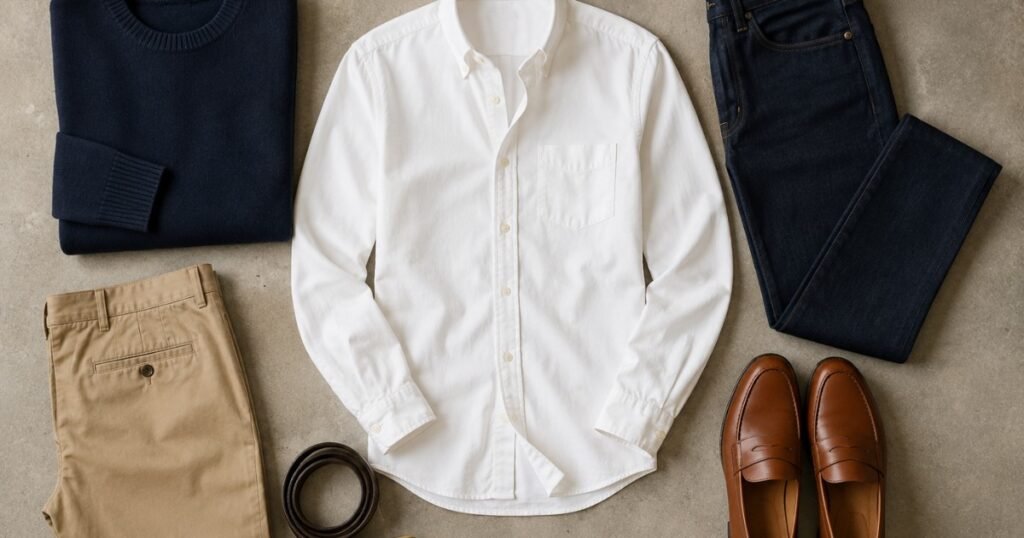
There isn’t one men’s clothing brand that’s best at everything. The better question is which brand makes the piece you’re shopping for better than everyone else. That’s the idea behind this guide. Instead of chasing logos or reputation, we’ll compare brands by quality, fit, durability, and overall value.
If you’ve ever stood in a fitting room wondering why a shirt from one brand fits perfectly while the same size from another brand looks like a tent, you already know the real question isn’t “what’s the best brand.” It’s “which brand should I trust for this specific thing I need to buy.”
That’s the approach here. Instead of ranking brands like trophies, we’re sorting them by job. One brand might be the smartest choice for a plain T-shirt. A completely different one might be the better call for a jacket that needs to survive five winters. This guide is built around fabric quality, construction, fit consistency, and price-to-quality ratio — not marketing copy or logo prestige.
If you’re just getting started, our capsule wardrobe for men guide is a good companion piece for thinking through the pieces themselves before you decide where to buy them.
| Brand | Best For | Typical Price Level | Signature Item | Fit Profile | Best Alternative |
|---|---|---|---|---|---|
| Uniqlo | Affordable basics | $ | Crew neck T-shirt | Regular, consistent | Everlane |
| Everlane | Elevated basics | −$ | Organic cotton tee | Slim-to-regular | Uniqlo |
| Buck Mason | Heavier everyday basics | $$ | Heavyweight tee | American regular | Taylor Stitch |
| Taylor Stitch | Durable casualwear | $$ | Chore coat | Slightly relaxed | 3sixteen |
| J.Crew | Business casual | $$ | Oxford shirt | Regular to slim | Bonobos |
| Ministry of Supply | Performance office wear | $$ | Wrinkle-resistant trouser | Tailored | Todd Snyder |
| Asket | Minimal, European fit | $$ | Merino sweater | Slim, cropped | Arket |
| Carhartt WIP | Workwear durability | $$ | Chore jacket | Boxy, roomy | Flint and Tinder |
| Brunello Cucinelli | Craftsmanship luxury | $$$$ | Cashmere knit | Tailored, refined | Loro Piana |
What You’ll Learn
- How to judge clothing brands beyond marketing.
- Which brands offer the best value at different budgets.
- The best brands for basics, workwear, business casual, and premium clothing.
- How to choose the right brand for your body type.
- Common buying mistakes that lead to expensive regrets.
The Anatomy of a Great Wardrobe: How We Evaluate the Best Men’s Brands
Before recommending any brand, it helps to know what we’re actually judging. Price tells you almost nothing on its own. A $40 T-shirt can outlast a $90 one, and a $300 jacket can be a genuinely smart purchase if it holds up for a decade. The real evaluation happens at the level of fabric, construction, fit, and long-term value.
Fabric Quality: What Are You Actually Paying For?
Fiber composition, fabric weight, and weave or knit quality all matter more than the label alone suggests. “100% cotton” sounds reassuring, but it says nothing about weight, density, or how the fabric was spun. A lightweight, loosely woven cotton tee can pill and go sheer within a few washes, while a heavier, tightly knit cotton from a different brand holds its shape for years.
Three practical labels are worth keeping in mind as you shop:
- Fabric Integrity — how well the material resists stretching, thinning, or pilling.
- Construction Quality — how the garment is actually put together.
- Care Difficulty — how much effort it takes to keep the item looking good.
Construction and Durability: Will It Still Look Good After Repeated Wear?
Stitching density, seam finishing, collar recovery, and hardware quality are the details that separate a garment that ages well from one that falls apart. A shirt collar that springs back into shape after washing is doing something a cheaper collar simply can’t. Reinforced stress points — underarms, pocket corners, belt loops — are small details that quietly determine whether a piece survives normal wear.
This is where marketing language and reality tend to diverge. A brand can describe a fabric as “premium” without it holding up to a single season of regular use. What matters is how the garment performs, not how it’s described.
Fit: Does the Brand Make Clothes That Work With Your Body?
A size medium at one brand can fit like a small somewhere else. Brands build around different body archetypes, and that shows up in shoulder width, torso length, and how much room is built into the chest and waist.
Broadly, you’ll run into a few recurring fit families:
- Boxy American fit — roomy through the body, common in classic American basics.
- Modern relaxed fit — room without excess bulk, popular in newer domestic labels.
- Tailored fit — closer to the body through the chest and waist.
- European-inspired silhouettes — typically slimmer and shorter in the torso and sleeve.
Knowing which family a brand belongs to saves you from ordering your usual size and being surprised.
Value: Is the Higher Price Actually Buying Better Clothing?
Cost per wear is a more honest measurement than sticker price. A $120 pair of chinos worn twice a week for three years costs far less per wear than a $40 pair replaced every six months. Repairability and replaceability matter too — a garment that can be re-hemmed, re-soled, or patched holds value longer than one designed to be discarded.
The distinction to keep in the back of your mind is quality value versus logo value. One buys you a better garment. The other buys you a name on a tag.
The “Wash Test” Buyers Should Think About Before Spending $200
Before committing to an expensive piece, it’s worth asking a few blunt questions.
Before You Buy: 7 Questions to Ask About Any Brand
- Will it shrink after the first wash?
- Does it actually require dry cleaning, or is that just a cautious label?
- Will the collar hold its shape or start to curl?
- Is the fabric prone to pilling?
- Can it be machine washed without falling apart?
- Does the brand publish honest care instructions, or vague ones?
- Do recent buyer reviews mention any of the above?
Answering these honestly before checkout prevents a lot of buyer’s remorse.
The Best Men’s Clothing Brands for Everyday Basics
Basics are where most wardrobes either succeed or quietly fail. They’re worn constantly, washed often, and judged harshly for any early wear.
Best for Affordable Wardrobe Building
Uniqlo and Everlane are the two names that come up most often for building a wardrobe without overspending.
Uniqlo’s strength is consistency at a low price point — its crew necks, Oxford shirts, and lightweight layering pieces are reliable enough to buy in multiples without worrying about wide quality swings between batches.
- Best for: T-shirts, layering basics, casual trousers
- Fit verdict: True to size, regular cut
- Fabric integrity: Solid for the price, though lighter weights can thin over time
- Main caveat: The most affordable lines aren’t built for heavy daily rotation
Everlane leans slightly more elevated, with an emphasis on transparent pricing and simple, minimal design.
- Best for: Organic cotton tees, basic knitwear
- Fit verdict: Slim to regular, runs closer to the body
- Fabric integrity: Generally strong, especially in heavier tee weights
- Main caveat: Sizing has shifted across collections, so checking current measurements matters
Best for Premium Everyday Basics Without Luxury Pricing
Buck Mason, Taylor Stitch, and 3sixteen occupy a middle tier — noticeably better materials and construction than mainstream basics, without moving into luxury pricing.
Buck Mason’s heavyweight tees and jackets use denser cotton than most basics brands, which shows up in how the garment drapes and how long it resists pilling.
Taylor Stitch built its reputation on durable, slightly workwear-inflected pieces — heavier denim, sturdier outerwear, and construction meant to be repaired rather than replaced.
3sixteen focuses heavily on denim and heavyweight knitwear, appealing to buyers who care about fabric weight and long-term wear patterns.
For all three, the trade-off is price: expect to pay noticeably more than mainstream basics, in exchange for materials that hold up to years, not months, of regular wear.
Best for Modern, Clean-Cut Basics
For men who want minimal branding and a cleaner, more polished everyday look, European-inspired options like Asket and Arket are worth a look. Silhouettes tend to run slimmer through the body and shorter in the sleeve and torso, which suits a leaner build better than a broader one. The trade-off is that sizing often requires more careful comparison against your existing measurements before ordering.
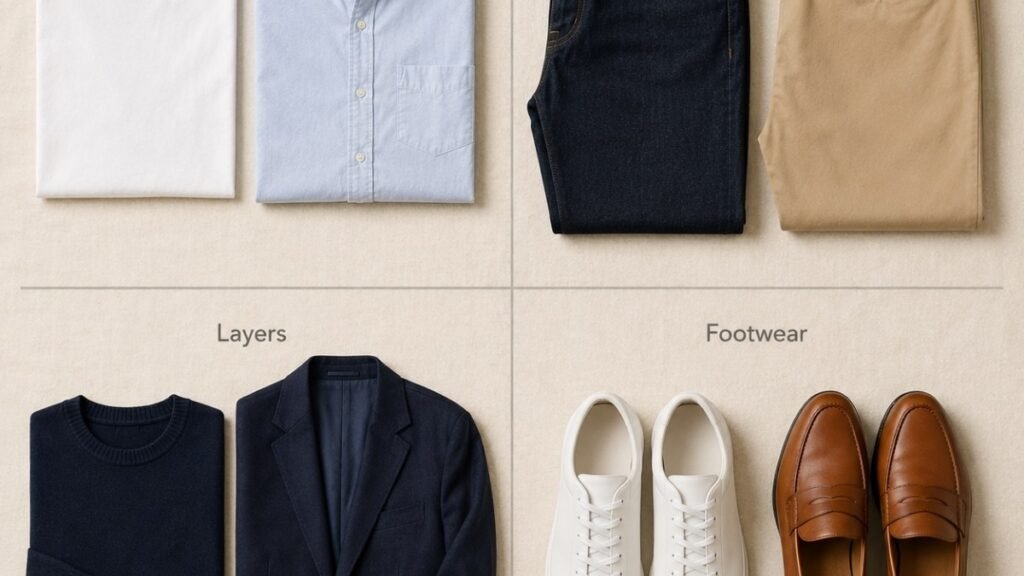
What to Buy First If You Are Starting From Zero
If you’re building a wardrobe from nothing, the order of purchase matters more than the brand.
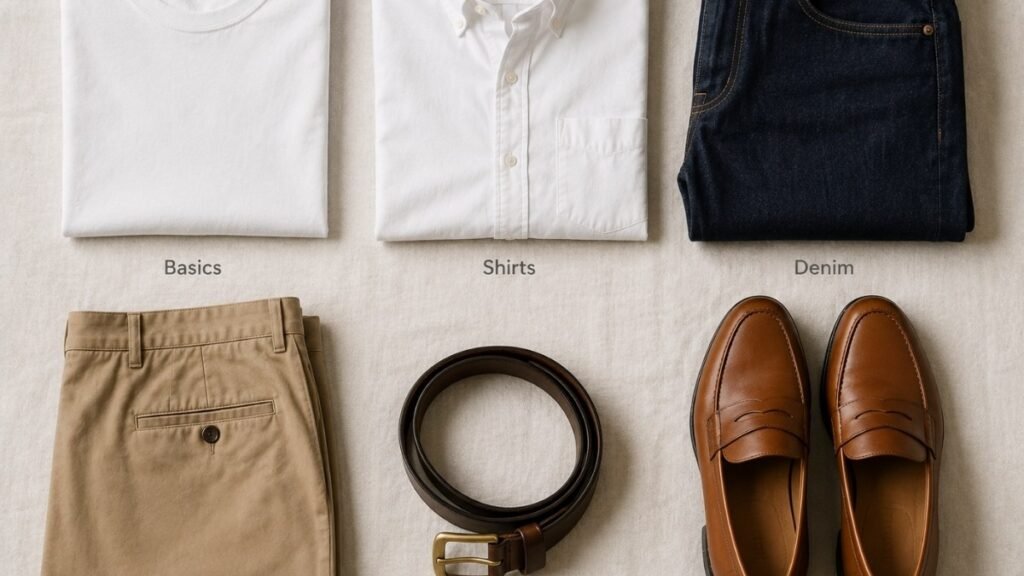
- White or neutral T-shirt
- Oxford shirt
- Dark jeans
- Chinos
- Neutral sweatshirt or knit
- Versatile overshirt or jacket
- Clean everyday shoes
For the T-shirt, our best white T-shirts for men breakdown goes deeper into fabric weight and fit differences between brands.
The smarter approach isn’t asking one brand to supply everything on this list. It’s matching each item to whichever brand does that specific job best — a strategy we’ll come back to throughout this guide.
The Best Smart Casual & Smart-Commuting Brands for the Modern Professional
Choosing the right basics is only half the job. For most working men, the harder question is what to wear somewhere between “jeans and a tee” and “full suit.”
Best Brands for Business Casual Basics
J.Crew, Todd Snyder, Bonobos, and Ministry of Supply each solve a slightly different version of the business-casual problem.
J.Crew remains a dependable source for Oxford shirts and chinos, with a fit range broad enough to suit most builds.
Todd Snyder leans slightly more elevated and tailored, appealing to buyers who want their smart-casual pieces to feel a step above standard office basics.
Bonobos built its name on trouser fit, offering more size and inseam variety than most competitors — useful if standard sizing has never quite worked for you.
Ministry of Supply focuses on performance fabrics: wrinkle-resistant trousers and shirts designed to survive a full commute and a long day without looking wilted.
The Easiest Business-Casual Formula for Men Who Hate Styling
If styling isn’t your interest, a simple formula removes most of the guesswork:
Oxford shirt or knit polo → chinos or tailored trousers → clean leather or minimalist sneakers → unstructured blazer or overshirt when the occasion calls for it.
A quick decision path: casual office → the formula above works as-is. Smart casual office → add the blazer or overshirt. Client-facing environment → swap sneakers for leather shoes and tighten the fit throughout.
Which Brands Are Best for a More Mature, Polished Silhouette?
A common complaint is that some American brands run boxy or a little young in cut. If that’s your experience, contemporary tailored options and European-inspired labels like Asket, Arket, Natalino, and Casatlantic tend to offer a more grown-up silhouette — closer through the shoulder and chest, with less excess fabric.
That said, European styling isn’t automatically superior. It solves a specific problem — a slimmer, more structured look — and creates a different one for broader or taller builds, who may find these cuts restrictive.
What to Buy for a 5-Day Workweek Without Owning 30 Outfits
A workable rotation doesn’t need to be large:
- 2–3 trousers in neutral tones
- 3–5 shirts or polos
- 1–2 layering pieces
- 1 versatile jacket
Sticking to a tight color palette — navy, gray, white, tan — means nearly every piece can be paired with every other piece, which does more for a polished appearance than owning more clothes ever will.
Rugged & Durable: The Best Heritage & Workwear Brands
Best for Hard-Wearing Everyday Clothing
Carhartt WIP, Flint and Tinder, Buck Mason, and 3sixteen are the names most associated with genuinely durable, everyday-tough clothing — heavyweight tees, chore coats, and denim built to take repeated abuse.
Which Brands Are Actually Built for Repeated Wear?
The differentiators worth comparing are fabric weight, construction quality, repairability, and how the material ages. Heavier fabrics develop character — fading, softening, creasing — in ways lighter fabrics simply don’t.
| Factor | What to Look For |
|---|---|
| Fabric weight | Heavier ounces generally mean more longevity |
| Construction | Reinforced seams and stress points |
| Repairability | Can it be patched, re-hemmed, or resoled |
| Patina potential | Does it age well or just look worn out |
| Care requirements | Some heavyweight pieces demand less frequent washing |
Heavyweight Does Not Always Mean Better
More durability often comes with trade-offs: more heat retention, a longer break-in period, and less comfort in warmer climates. A heavyweight chore coat that feels perfect in October can feel unbearable in July. Choosing based on your actual climate and lifestyle matters more than chasing the heaviest fabric on the rack.
Best Brands for the “Buy Less, Wear More” Wardrobe
A buy-it-for-life mindset asks a few honest questions before any purchase: Will you actually wear this often? Does it age gracefully? Can it be repaired instead of replaced? Is it versatile enough to justify the price? Brands built around durability tend to answer yes to most of these — but the fit still has to work for your daily life, not just look good in theory.
The Best Men’s Clothing Brands by Budget: Where Should Your Money Go?
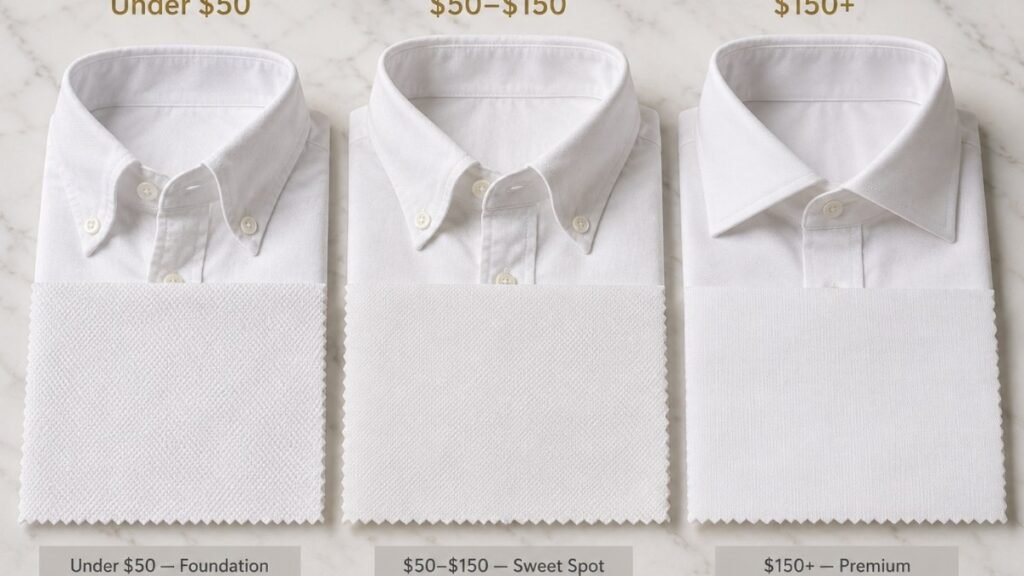
Under $50: Build the Foundation Without Overspending
At this price point, the goal is fewer, better-chosen basics rather than chasing brand prestige. A well-fitting plain tee or a simple pair of casual trousers does more for your wardrobe than three mediocre impulse buys.
The $50–$150 Sweet Spot: Where Value Often Gets Interesting
This is where materials and construction noticeably improve. Everlane, J.Crew, select Uniqlo lines, and Abercrombie & Fitch‘s more modern-fit pieces tend to deliver meaningfully better fabric and fit consistency than budget basics, without moving into premium pricing.
The $150–$300 “Is This Actually Worth It?” Category
This is the price range where the classic Reddit complaint shows up most often: “I paid more and it doesn’t feel any different.” The honest answer depends entirely on the specific product, not the brand name. Buck Mason, Taylor Stitch, and 3sixteen generally justify this range through heavier fabrics, sturdier construction, and better long-term durability — but it’s worth inspecting the specific item, not assuming the price tag guarantees the upgrade.
| Price | Material | Construction | Expected Use | Value Verdict |
|---|---|---|---|---|
| $150-$200 | Mid-weight cotton, denim | Reinforced seams | Weekly rotation | Generally worth it |
| $200-$300 | Heavyweight cotton, selvedge denim | Full reinforcement | Years of regular wear | Worth it if worn often |
When Luxury Is Actually Buying Something Different
Above $300, the value proposition changes. It helps to separate logo-driven luxury from fabric-driven, craftsmanship-driven, and tailoring-driven luxury. Brands like Brunello Cucinelli, Loro Piana, Brioni, Tom Ford, Kiton, and Ralph Lauren Purple Label each represent a different version of “expensive” — some rooted in rare fabrics, others in hand-finishing or precise tailoring.
Cost per wear is the more honest lens here. A $600 cashmere sweater worn weekly for five years may cost less per wear than a $150 sweater replaced every year.
Best Men’s Clothing Brands by Wardrobe Staple: Who Does Each Item Best?
Best Brands for T-Shirts
Look for collar durability, fabric weight, shrinkage resistance, and reasonable opacity. Lightweight tees layer well but wear out faster; heavyweight tees last longer but feel warmer. Our best white T-shirts for men guide breaks this down by fit and fabric in more detail.
Best Brands for Oxford Shirts and Casual Button-Downs
A good Oxford should hold its collar shape through repeated washing and work equally well tucked into chinos or worn open over a tee. Fabric texture and shrinkage resistance are the two details buyers most often overlook before purchasing.
Best Brands for Chinos and Everyday Trousers
Rise, thigh room, taper, and stretch all determine how a chino actually feels through a full day of sitting, walking, and moving. For a full comparison of specific brands and fits, see our best chinos for men guide.
Best Brands for Jeans and Durable Denim
Denim weight and cut vary enormously between brands, and rigid versus stretch denim changes both comfort and longevity. Our best men’s jeans guide covers the fit and durability differences in more depth.
Best Brands for Sweaters and Knitwear
Wool and cashmere quality, pilling resistance, and weight all matter more than fiber content alone. A cheaper cashmere blend can pill within a season, while a well-made wool knit outlasts it by years.
Best Brands for Jackets and Outerwear
Outerwear splits into a few distinct categories worth treating separately: workwear jackets, minimal everyday layers, technical outerwear, and heritage pieces. Each solves a different climate and use case, so matching the jacket to your actual routine matters more than picking the most stylish option.
Fit Matters: How to Choose the Right Brand for Your Body Type
For Shorter Men: Which Fits Help Create Better Proportions?
The goal is proportion, not simply sizing down. Jacket length that ends at the right point, a trouser break that isn’t pooling at the ankle, and a balanced rise all matter more than chasing a “slim fit” label.
For Broad-Shouldered or Muscular Men: Where Can You Find Enough Room Without Looking Baggy?
Shoulder fit should be checked first — a shirt or jacket that fits the shoulders correctly can usually be adjusted elsewhere, but a shoulder that’s too narrow can’t be fixed with tailoring. Chest room and sleeve proportions come next, followed by looking for brands offering an athletic cut specifically.
For Bigger or Broad Builds: How Do You Avoid the “Tent Effect”?
Structured, relaxed fits with the right fabric drape avoid both extremes — overly slim cuts that pull at the seams, and oversized fits that add unnecessary bulk. Correct garment length is often the detail that makes the biggest visual difference.
For Slim Builds: How Do You Avoid Looking Swallowed by American-Style Fits?
Moderate tailoring, thoughtful layering, and attention to shoulder structure help slim builds avoid drowning in boxier American cuts. Trouser proportions matter too — a slightly tapered leg reads far more intentional than excess fabric pooling at the ankle.
For the Average Build: Which Brands Are Easiest to Shop?
Brands with consistent sizing, multiple fit options, clear measurement charts, and easy returns tend to be the least frustrating to shop, regardless of body type. This is where reliability matters more than trend.
How to Compare Sizes Across American and European Brands
| US Size | EU Size | Chest (in) | Waist (in) |
|---|---|---|---|
| S | 46 | 36-38 | 30-32 |
| M | 48-50 | 38-40 | 32-34 |
| L | 52 | 41-43 | 34-36 |
| XL | 54 | 44-46 | 36-38 |
The safest habit is measuring an existing garment you already know fits well, rather than trusting a size label alone across brands.
How Do You Avoid Paying for a Brand Instead of Better Clothing?
The “Logo Tax” Test
Before checkout, ask whether the price is justified by fabric, whether the construction is noticeably better than a cheaper alternative, and whether the garment would still look good without any visible branding.
The “Quality Degradation” Warning Signs
Rather than making blanket claims about any specific brand going downhill, it’s more useful to inspect the current product composition, current construction, and recent reviews for the exact item you’re considering. Quality can shift between seasons even within the same brand.
Buy-before-you-buy checklist: Always inspect the exact product page and read the care label before assuming the brand’s overall reputation applies to this specific garment.
Why a Brand’s Reputation Can Be Older Than Its Current Product Quality
Quality varies by product line, season, factory, and material — sometimes significantly. A brand’s flagship item from five years ago may bear little resemblance to what’s currently on the shelf. Evaluating the actual garment in front of you matters more than relying on a brand’s historical reputation.
What Reddit Recommendations Get Right—and What You Still Need to Verify
Community threads are genuinely useful for surfacing recurring complaints, long-term wear reports, and fit frustrations that don’t show up in marketing copy. What they can’t replace is your own verification — a forum consensus isn’t a lab test, and fit experiences are personal enough that what worked for one poster may not work for you.
It’s a strange but common pattern: a brand’s reputation gets built on a shirt from several years ago, while the version currently for sale uses a completely different fabric supplier. The name stays the same. The product doesn’t.
How Do You Buy European Men’s Clothing Brands Without Losing Money on Sizing and Returns?
Why European Sizing Can Be Difficult for American Shoppers
Numeric sizing conventions, body proportion assumptions, and generally slimmer cuts all differ from what most American shoppers are used to. It’s a mistake to assume every European brand follows the same sizing logic — they don’t.
Measure the Garment You Already Own Before Ordering
Before ordering internationally, measure chest, shoulder, sleeve, waist, rise, and inseam on a garment you already know fits well. This single habit prevents most sizing disasters.
Which European Fit Profiles Are More Tailored, Relaxed, or Roomy?
Fit profiles vary brand by brand rather than by country alone, so it’s worth checking each label’s specific measurements instead of generalizing based on origin.
How to Check International Return Costs Before You Click Buy
Before ordering, check the return window, who covers return shipping, whether duties and taxes apply, how long refunds take, and whether the item is final sale. Free or easy returns make experimenting low-risk. Expensive international return policies mean you should only buy after a detailed measurement comparison.
When Paying More for a European Brand Can Actually Make Sense
Distinctive fit, specialized craftsmanship, and superior fabric can genuinely justify the premium — particularly when the garment gets worn often enough that cost per wear stays reasonable over time.
A fairly common scenario: a European sweater looks perfect in photos, the fabric is genuinely excellent, and then it arrives half a size too slim through the shoulders. Returning it costs nearly as much as a domestic purchase would have saved. That’s the real cost of skipping the measurement step — not the sweater itself, but the shipping bill on the way back.
How Should You Build a Men’s Wardrobe If You Are Starting From Scratch?
The $300 Starter Wardrobe
Prioritize neutral colors, high outfit versatility, and easy-care fabrics. A rough allocation might put roughly a third toward tops, a third toward trousers, and the remainder toward a single versatile layering piece.
The $500–$1,000 Upgrade Path
Rather than upgrading everything at once, focus on the pieces that see the most wear: shoes, trousers, outerwear, and knitwear. These are the items where better materials and construction pay off fastest.
The “One Great Item at a Time” Strategy
Identify whichever item gets worn or seen most often, and prioritize upgrading that one first. Cost per wear is the simplest way to rank where your next purchase should go. For more on building this out further, our men’s wardrobe essentials guide walks through priority order in more detail.
A Simple 10-Piece Capsule Wardrobe Formula
- 2–3 tops
- 2–3 trousers
- 1 knit or sweatshirt
- 1 overshirt or jacket
- 1 smart-casual layer
- Versatile footwear
This formula is a starting point, not a rigid rule — adjust it based on your climate and how formal your daily routine actually is. Our best casual shoes for men guide is worth a look for the footwear piece specifically.
The “One Brand, One Job” Shopping Strategy
Rather than expecting a single brand to be the best at everything, build your wardrobe from category winners: affordable basics from one brand, better trousers from another, durable outerwear from a third, and premium knitwear from a fourth. It’s a more effective strategy than brand loyalty, and it tends to produce a better wardrobe overall.
The Real-World Experience of Buying “Better” Men’s Clothing
Experience Point 1 — The $200 Shirt That Looks Worse After Two Washes
A common frustration reported across reviews and forums: a shirt priced well above average shrinks slightly, loses collar structure, or starts pilling within just a few washes. Price alone never guarantees this won’t happen — it’s a construction and fabric issue, not a budget one.
Experience Point 2 — The Brand That Fits Great Until You Try a Different Category
A brand’s T-shirt fit says very little about how its trousers or jackets will fit. Sizing and fit philosophy often shift between categories within the same label, which is why it’s worth checking fit notes for each specific item rather than assuming consistency across a brand’s entire catalog.
Experience Point 3 — The European Brand That Looks Perfect Online but Costs $50 to Return
This is a recurring theme in sizing complaints: the product photos and fabric description are excellent, but the fit runs slimmer than expected, and the return shipping cost eats meaningfully into any savings from the original purchase. Measuring before ordering remains the best defense.
Experience Point 4 — The “Luxury” Purchase That Is Worn Less Than a $60 Basic
An expensive item that only gets worn occasionally can end up costing more per wear than a much cheaper piece worn weekly. Versatility often matters more than price tag or prestige when it comes to actual wardrobe value.
Experience Point 5 — The Best Wardrobe Upgrade Is Often a Better Fit, Not a More Expensive Brand
A mid-priced garment that’s properly tailored and correctly proportioned frequently looks more polished than an expensive piece that doesn’t quite fit. Alterations — hemming trousers, taking in a jacket — are often the highest-value upgrade available, and they cost far less than buying up in price.
Frequently Asked Questions About the Best Men’s Clothing Brands
What is the best clothing brand for a man building a wardrobe from scratch?
There isn’t a single universal winner — the smartest approach combines brands by category. Affordable basics, business-casual staples, and durable trousers are often better sourced from different brands rather than forcing one label to cover everything.
Which men’s clothing brands offer the best value for money?
Value comes from a combination of quality, durability, versatility, and cost per wear — not price alone. A more expensive item that lasts five times longer and gets worn twice as often can be the better value, even at a higher upfront cost.
How do I know if a men’s clothing brand runs true to size?
Compare actual garment measurements rather than relying solely on standard size labels. Check brand-specific fit notes, read recent reviews for sizing feedback, and measure a garment you already own that fits well as your reference point.
What are the best men’s clothing brands for business casual workwear?
Brands like J.Crew, Todd Snyder, Bonobos, and Ministry of Supply each cover different pieces of the business-casual puzzle — shirts, tailored trousers, and wrinkle-resistant commuting fabrics. The right pick depends on your specific office dress code.
Which men’s clothing brands make the best quality basics?
It depends on the tier you’re shopping in. Uniqlo and Everlane lead affordable basics, Buck Mason and Taylor Stitch lead premium everyday basics, and heritage-focused labels like 3sixteen lead heavyweight, long-lasting basics.
Are expensive men’s clothing brands actually worth the money?
Sometimes, but only when the added cost buys a genuine improvement in fabric, construction, fit, or longevity. Not every expensive brand delivers a meaningful upgrade over a well-chosen mid-priced alternative — it’s worth evaluating the specific garment rather than assuming price equals quality.
Which men’s clothing brands are best for short, muscular, slim, or bigger men?
There’s no single brand that solves every body type. The better approach is identifying your specific fit needs — shoulder room, proportion, taper — and matching those to brands known for that particular cut, rather than searching for one universal recommendation.
How can I tell if a men’s clothing brand has gone downhill in quality?
Compare the current product’s fabric composition, construction, and recent reviews against its historical reputation. Quality can shift by product line, season, or factory, so it’s more reliable to evaluate the exact item you’re considering than to trust a brand’s reputation alone.
Final Thoughts
There’s no single best men’s clothing brand — there’s only the brand that’s best for the specific thing you’re buying right now. A brand that nails basic tees might be the wrong choice for trousers, and a brand known for outerwear might make forgettable shirts.
The most reliable wardrobes are built from category winners, not brand loyalty. Prioritize fit and fabric over logo, use cost per wear as your real measure of value, and only spend more when the extra cost buys something you’d actually notice in daily wear. Buy fewer pieces, choose them carefully, and let the wardrobe grow one smart decision at a time.
For more ways to put these pieces together, see our fashion tips for men and men’s outfit ideas for practical, low-effort combinations.
Behind This Guide
Finding good clothing isn’t about buying the most expensive brand or chasing every new trend. It’s about knowing which brands consistently make the pieces you’ll actually enjoy wearing—and which ones simply don’t live up to the hype.
That’s why this guide focuses on real buying decisions instead of brand rankings. Rather than asking “Which brand is the best?”, we ask a more useful question:
- 👕 Everyday Basics — Which brands offer the best quality for daily wear?
- 👔 Work & Smart Casual — Which brands are worth paying more for?
- 🧥 Long-Term Value — Which pieces actually hold up after years of wear?
Because building a better wardrobe isn’t about owning more clothes.
It’s about buying the right ones the first time.
Continue Exploring Modvello
Whether you’re replacing a single item or rebuilding your wardrobe from scratch, these guides will help you buy with more confidence and fewer regrets.
Shop by Category
- The Best Chinos for Men: Honest Picks at Every Budget
- The Best White T-Shirts for Men in 2026
- The Best Leather Belts for Men: Honest Picks at Every Budget
- The Best Men’s Jeans in 2026: Honest Picks for Every Fit and Budget
- The Best Men’s Casual Shoes in 2026
Build a Better Wardrobe
Fashion Tips for Men Who Don’t Think About Fashion
Capsule Wardrobe for Men: 10 Basics That Cover Every Situation
Men’s Wardrobe Essentials: What to Buy, What to Skip, and Where to Start
❤️ A Final Note
A great wardrobe isn’t built in a day—it’s built one thoughtful choice at a time.
At Modvello, we believe style isn’t about owning more clothes or chasing every trend. It’s about understanding what fits your life, investing in pieces that last, and feeling confident every time you get dressed.
Every guide we publish is created with one goal in mind: to help you make smarter clothing decisions with honest, practical advice you can trust.
Dress well. Buy wisely. Wear it with confidence.