
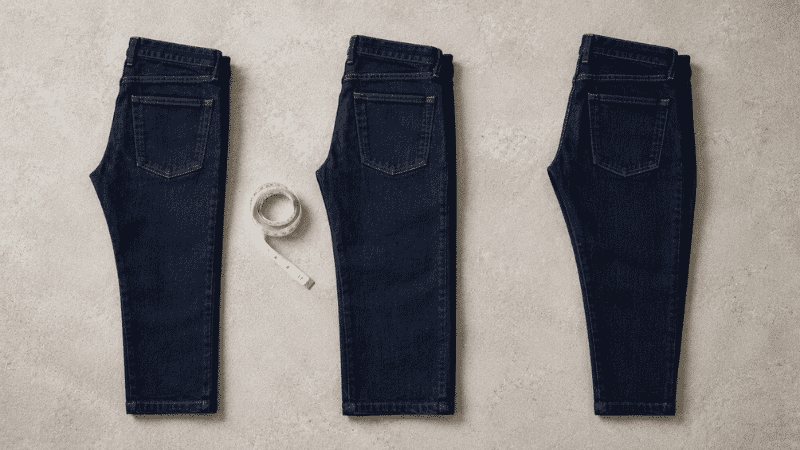
Here’s the thing about jeans: every man owns at least two pairs that technically fit—waist size is right, length is close—but something about them still looks off. They bag at the knee. The seat sags. The thigh pulls uncomfortably when you sit down. You’ve been wearing them for years and somehow never figured out why.
Finding jeans that genuinely fit is harder than it should be, partly because “fit” in denim is more complex than in other trousers. A dress shirt either fits the shoulders or it doesn’t. With jeans, you’re dealing with five separate areas—waist, seat, thigh, knee, and length—each of which can be slightly wrong in ways that compound on each other. And unlike most other garments, jeans are rarely tailored. What you buy is what you wear.
The other problem: different cuts use the word “fit” loosely. Slim fit from Brand A feels nothing like slim fit from Brand B. And the terminology—slim, straight, tapered, relaxed, athletic—sounds specific but isn’t.
This guide tells you exactly how jeans should fit at each part of the leg, how to test fit before you commit, and which cut is right for your body type and lifestyle.
Key Takeaways
- Jeans fit should be evaluated at five points: waist, seat, thigh, knee-to-calf, and length
- The “two-finger waist test” and “half-inch pinch test” at the thigh are the two most reliable fit checks
- Slim-straight is the most versatile cut for most men—fitted enough to look intentional, relaxed enough to be comfortable
- Men with athletic builds (broader thighs, narrower waist) consistently struggle with standard cuts—athletic fit or tapered cuts solve this specifically
- Denim stretches with wear but never shrinks back to fit; a slightly snug waist is fine, a tight seat or thigh is not
How Should Jeans Fit: The Five-Point Check
When you try on jeans—or assess ones you already own—evaluate these five areas in sequence. A problem in one area often masks or creates a problem in another.
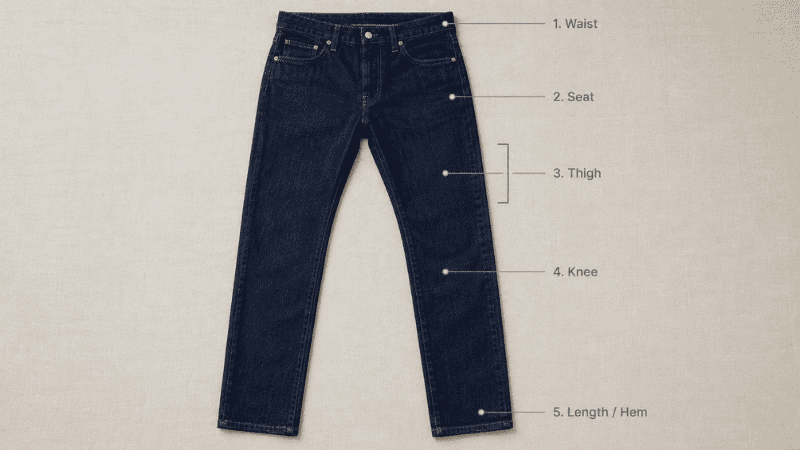
1. Waist
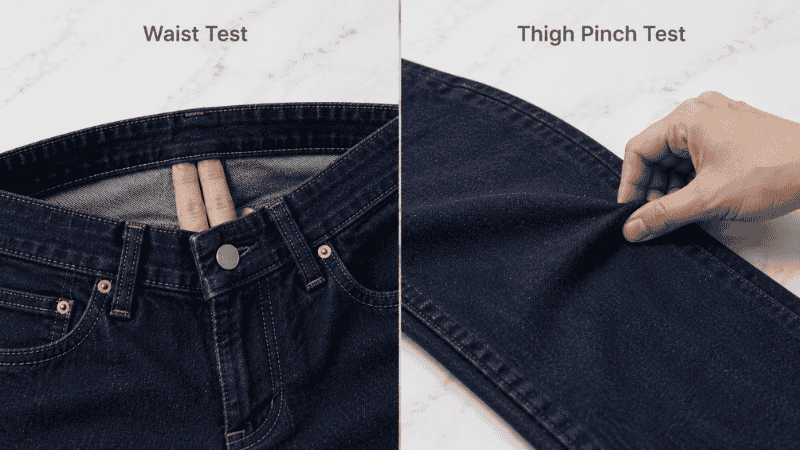
The waistband should sit securely without requiring a belt to stay up. Two fingers slipped inside the waistband when standing: comfortable without being loose. If you can fit your whole hand in without resistance, they’re too large. If the waistband cuts into your skin or creates a pressure mark, too tight.
The common mistake: Buying a size larger in the waist because the thighs are too tight in your true size. This just creates a different problem—a sagging waist paired with thighs that still strain. The solution is finding the right cut for your proportions, not sizing up.
One important note: Jeans waist sizing is not your natural waist measurement. Most jeans sit 1–2 inches below the natural waist, at or near the hip bones. If you’ve been measuring your natural waist and wondering why your jeans don’t match, this is why.
2. Seat
The seat should follow the shape of your body without gripping it tightly or sagging away from it. When you look at the back of the jeans in a mirror:
- Excess fabric pooling below the seat: too big in the seat
- Diagonal tension lines radiating from the center seam: too tight
- Horizontal pulling lines across the lower seat: too tight in the thigh
The seat test that actually works: sit down in the fitting room. The jeans should allow you to sit comfortably without the waistband pulling away from your lower back or the seat feeling like it’s about to split. If you’re constantly pulling the waistband up after sitting, the seat is too tight.
3. Thigh
The thigh fit is where most men go wrong, and where most standard cuts fail men with athletic builds.
The half-inch pinch test: Standing with your legs slightly apart (natural stance), pinch the fabric at the widest part of your thigh. You should be able to lift between half an inch and one full inch of fabric off your leg. Less than half an inch: too tight, will restrict movement and wear out faster at the inseam. More than one inch: too loose, will bunch and bag as you move.
The thigh should have enough room to sit, climb stairs, and squat without the fabric pulling thin across the quad. But it shouldn’t look like excess fabric is hanging between your legs.
4. Knee to Calf
Below the thigh, the knee should have a little room—enough to bend freely—but not enough fabric that it bunches behind the joint when you walk. The calf follows the same logic: some breathing room, no billowing.
This area is mostly determined by the cut (slim, straight, tapered) rather than by sizing. If the knee-to-calf area has too much fabric, sizing down won’t help—you need a different cut.
5. Length (Inseam)
The hem should land at or just above the top of your shoe. A single “break”—one fold of fabric resting lightly on the shoe—is the classic length and looks clean across dress codes. Multiple folds stacking at the ankle reads as poor fit immediately.
If you’re regularly rolling your hems not as a style choice but out of necessity, your inseam is too long. Most brands offer 30″, 32″, and 34″ inseam options. If your inseam falls between standard lengths, having jeans hemmed is the cheapest and most impactful tailoring investment available—$15–25 at most tailors.
Men’s Jeans Fit Types: What Each One Actually Means
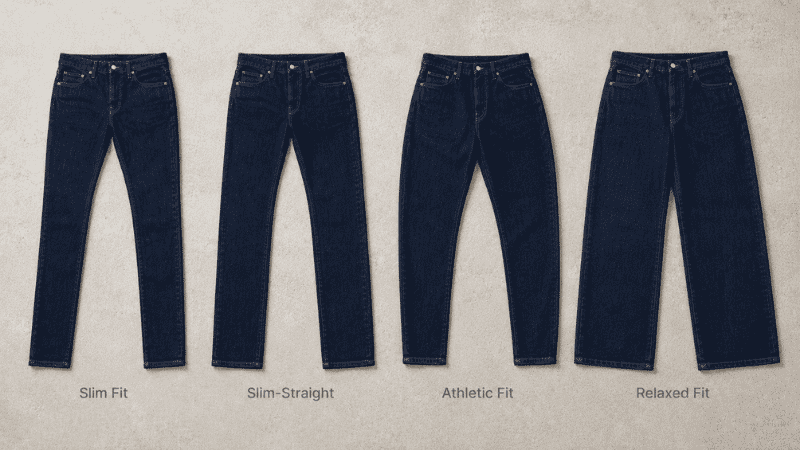
The terminology varies by brand, but these are the five standard cuts and what they actually do.
Slim Fit
Fitted through the seat and thigh, tapering toward a narrower ankle opening. The leg follows the shape of your body without clinging to it. This is the cut most men’s style guides recommend as the baseline—sharp enough for most office environments, relaxed enough for casual wear.
Best for: Average to lean builds. Men with proportional waist-to-thigh ratios. Not ideal for: Men with significantly broader thighs than waist—the seat and thigh will strain before the waist fits correctly.
Slim-Straight (Slim Tapered)
Fitted through the seat and upper thigh, then straight (consistent width) from knee to ankle rather than tapering. More relaxed than slim fit below the knee. Currently the most popular fit in men’s denim—balances a clean silhouette with practical comfort.
Best for: Most body types. Particularly good for men who find slim fit too restrictive in the lower leg or who plan to wear the jeans with boots. Pairs well with: Everything from sneakers to chelsea boots.
Straight Fit (Regular Fit)
Consistent width from the thigh to the ankle—the classic American jean cut. More room throughout than slim options. Reads as relaxed but not baggy when the waist and seat fit correctly.
Best for: Men who prefer more room, or who find slim cuts restrictive. Also the classic choice for casual weekend wear. Watch for: Excess fabric bunching at the ankle if you’re shorter—hemming is almost always necessary.
Athletic Fit (Tapered Fit)
More room through the seat and thigh than slim fit, but tapering toward a narrower ankle. Designed specifically for men whose thighs are significantly broader relative to their waist—the most common fit problem men with active or muscular builds face.
Best for: Men with athletic builds who’ve consistently found that jeans either fit the thighs (and sag at the waist) or fit the waist (and strain at the thighs). Brands that do this well: Mugsy, Tapered Menswear, Bonobos Athletic Fit, DUER.
Relaxed Fit
Significantly more room throughout—seat, thighs, and leg opening. The most comfortable but hardest to style. Works when intentional (casual weekend, relaxed lifestyle) but reads as poor fit if the waist and seat aren’t still sitting correctly on the body.
Best for: Men who prioritize comfort, or who are between sizes and find other cuts too restrictive. The fit check: Even in relaxed fit, the waist should still sit without a belt. If you need a belt to hold relaxed jeans up, they’re too large.
Which Jeans Cut Is Right for You
If you have a lean build (narrow hips and thighs)
Slim fit or slim-straight will work well. The cut follows your proportions without excess fabric. Avoid relaxed or loose fits—they’ll look shapeless on a lean frame rather than intentionally casual.
If you have an average build
Slim-straight is the reliable starting point. Try it first. If the thigh is too tight, try straight fit. If you want more room overall without losing the clean silhouette at the ankle, try athletic fit.
If you have an athletic build (broader thighs, narrower waist)
This is the most common fit challenge in men’s denim. The solution is athletic fit or tapered fit—specifically designed with extra room through the seat and thigh that narrows below the knee. Standard slim and straight cuts weren’t made for this proportion and won’t fit correctly regardless of size.
If you’re shorter (under 5’8″)
Focus on inseam length first—most brands’ standard 30″ inseam is still too long for shorter men. Look for brands offering 28″ or 29″ inseam, or plan to have jeans hemmed. A slight taper helps shorter men avoid excess fabric at the ankle. Avoid very wide or relaxed cuts which can shorten the visual line of the leg.
If you’re taller (over 6’1″)
Look for 34″ or 36″ inseam options—many mainstream brands stop at 32″. Straight fit or slim-straight typically works better than slim for taller men, as the proportional length of the leg is better complemented by a slightly more relaxed cut.
The Two Tests Before You Buy
Test 1 — The Sitting Test: Sit down fully in the fitting room. The waistband should stay at your waist (not pull away at the back). The seat shouldn’t feel like it’s about to split. You should be able to cross your legs comfortably. If any of these fail, try the next size up or a different cut.
Test 2 — The Movement Test: Walk around the fitting room. Squat down once. Take a long stride. If you feel restriction in the thigh or seat during any of these, the fit is wrong for your body even if it looks correct standing still.
When Your Jeans Don’t Fit Right After All
The waist fits but the seat sags: The seat on these jeans is cut for a larger seat than yours. The seat can be taken in by a tailor, though it’s a more complex alteration than hemming. Alternatively, try a slimmer cut or a brand with a different seat-to-waist ratio.
The thigh is fine but the ankle is too wide: The jeans can be tapered from the knee down by a tailor. This is a common and inexpensive alteration ($20–35) that transforms straight-cut jeans into a more tapered profile.
The length is right but the waist is too loose: A tailor can take in the waist from the back center seam. This is a moderate alteration that most tailors handle easily.
Everything is fine standing but uncomfortable sitting: The seat and thigh are too tight for your proportions when your legs flex. This is a cut issue, not a size issue—try athletic fit or tapered fit.
FAQ
How should jeans fit men at the waist? The waistband should sit securely without a belt. The two-finger test: slide two fingers inside the waistband when standing. Comfortable resistance means correct fit. No resistance (too loose) or inability to fit two fingers (too tight) signals the wrong size. The waistband should not gap at the back when you’re standing normally.
How tight should men’s jeans be? Jeans should not be tight—they should be fitted. At the thigh, you should be able to pinch between half an inch and one inch of fabric. Less than that is too tight and will restrict movement; more than that is too loose and will bag and bunch. The waist should hold without a belt but shouldn’t create pressure marks by the end of the day.
What is the difference between slim fit and straight fit jeans for men? Slim fit tapers from the thigh toward a narrower ankle opening, following the shape of the leg. Straight fit maintains a consistent width from the thigh to the hem—the same leg opening at the ankle as at the knee. Slim fit reads as more contemporary and structured; straight fit is more relaxed and classic. Slim-straight combines a fitted seat and thigh with a straight (non-tapering) leg below the knee.
What jeans cut is best for athletic builds? Athletic fit or tapered fit—both are designed with extra room through the seat and thigh that narrows below the knee. Standard slim and straight cuts are proportioned for more average builds and consistently create the problem of thighs that strain while the waist has room (or vice versa). Brands that engineer specifically for this: Mugsy, Tapered Menswear, Bonobos Athletic Fit.
How long should men’s jeans be? The hem should land at or just above the top of your shoe. One slight “break” (a single fold of fabric resting on the shoe) is acceptable and classic. Multiple stacking folds at the ankle looks like poor fit and reads as sloppy. If you’re rolling your hems regularly out of necessity, your inseam is too long—having them hemmed is a $15–25 alteration that transforms the look.
References
- Mugsy Jeans, “How Men’s Jeans Should Fit: The Complete Guide” (2026) — detailed fit analysis across waist, seat, thigh, knee, and ankle with the pinch test methodology
- Restart Your Style, “How Should Jeans Fit? A 12-Step Checklist for Perfect Fit” (2025) — the half-inch pinch test framework and fit type breakdown
- The Adult Man, “How Should Jeans Fit? A Must-Read Guide for All Men” (2024) — seat and thigh fit assessment techniques
- Caswell’s Fine Menswear, “How Should Jeans Fit for Men?” (2025) — body type recommendations and cut selection guide
Explore More on Modvello
- Men’s Clothing Size Chart: How to Measure and Find Your Perfect Fit (Fit & Sizing)
- How to Dress Better: The Practical Men’s Style Guide (Wardrobe Basics)
- Capsule Wardrobe for Men: 10 Basics That Cover Every Situation (Wardrobe Basics)
- How to Wear Chinos: Men’s Outfit Ideas From Office to Weekend (Outfit Ideas)
- The Best Chinos for Men: Honest Picks at Every Budget (Best Picks)
Last updated: June 2026 | Written by Daniel Ross