
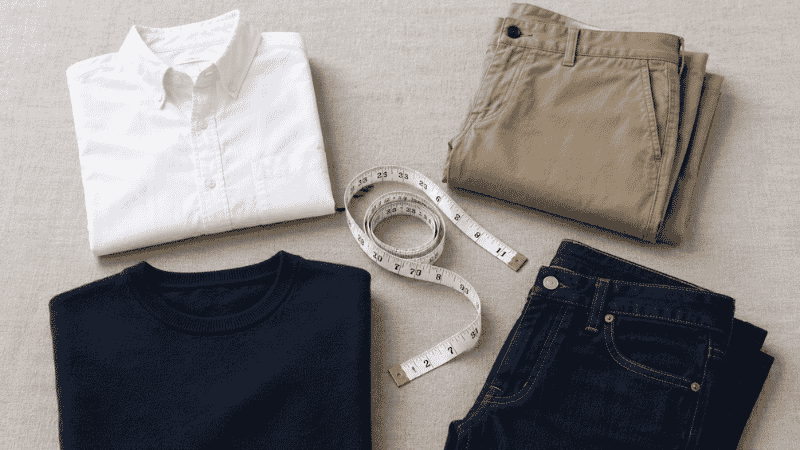
You ordered a shirt online in your usual size. It arrived and the shoulders were an inch too wide, the torso ballooned at the waist, and the sleeves hit somewhere mid-forearm instead of at the wrist. You returned it, ordered the same size from a different brand, and it fit perfectly.
This is not a you problem. It’s a sizing system problem.
Men’s clothing sizes in the US operate on two parallel systems—alpha sizes (XS, S, M, L, XL) and numeric sizes (chest inches, waist/inseam inches)—and neither one is standardized across brands. A Medium from Uniqlo fits differently than a Medium from J.Crew, which fits differently than a Medium from Gap. Every brand uses its own block, its own ease allowances, and its own target customer proportions.
The only reliable way to shop—online or in stores—is to know your actual body measurements and compare them against each brand’s specific size chart. This guide walks you through exactly how to take those measurements, what each number means for different garment types, and how to read a men’s clothing size chart so you stop guessing.
Key Takeaways
- Men’s clothing uses two sizing systems: alpha (S/M/L) and numeric (inches) — both require knowing your body measurements to use correctly
- The four measurements that cover most men’s clothing: chest, waist, inseam, and neck
- US and EU sizes differ by approximately 10 numbers (US 40 = EU 50 for suits and jackets)
- Brands size differently even within the same country — always check the brand’s specific size chart, not a generic one
- Fit type (slim, regular, athletic) matters as much as size number — two men with identical measurements can need different sizes in different cuts
How to Measure Yourself: The Four Essential Measurements
You need a flexible fabric tape measure. A hardware store metal tape won’t work. If you don’t own one, they cost $3-5 at any craft or fabric store and are worth having permanently.
Measure in underwear or minimal clothing. Don’t suck in or puff out—measure the body you actually have, not the body you want the clothes to fit.
Chest
Why it matters: Determines shirt size (alpha and numeric), jacket size, and suit size.
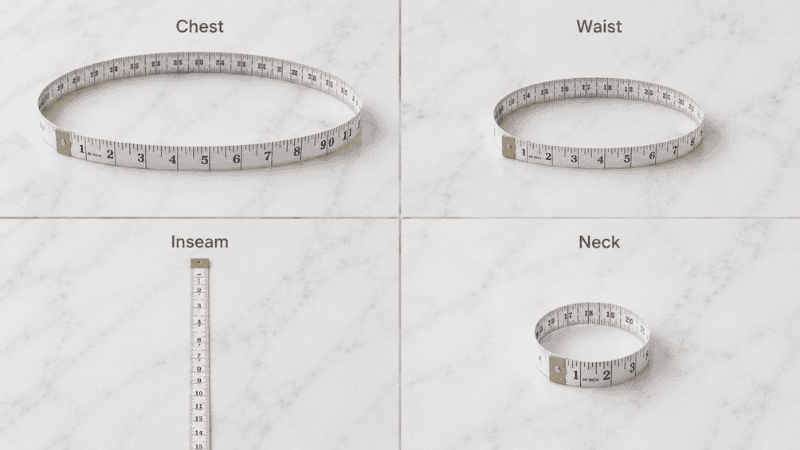
How to measure: Stand relaxed with arms hanging naturally at your sides. Wrap the tape around the fullest part of your chest—typically across the nipple line and under your armpits. Keep the tape level all the way around (parallel to the floor). It should be snug but not compressing. Read the number while breathing normally, not exhaled.
Common mistake: Pulling the tape too tight, which gives you a number that will make every shirt uncomfortably fitted across the chest.
Waist
Why it matters: Determines trouser size, jean waist size, and whether shirt/jacket fits through the midsection.
How to measure: Find your natural waist by bending slightly to one side—the crease that forms is your natural waistline. Stand back up straight and wrap the tape around that point. One finger between the tape and your body for a realistic wearing measurement.
Important distinction: Your natural waist (above the belly button) is different from your trouser waist (where pants actually sit). Most casual pants and jeans sit 1–2 inches below the natural waist. If you’re measuring for jeans specifically, measure where the waistband actually sits when you wear them, not at the narrowest point of your torso.
Inseam
Why it matters: Determines trouser and jean length.
How to measure: The inseam is the inside leg length—from the crotch down to the ankle bone. The easiest method: take a pair of pants that fit your length correctly, lay them flat, and measure from the crotch seam to the hem along the inside leg. This gives you your inseam measurement without needing a second person.
Typical inseam ranges: 28″–30″ (short), 30″–32″ (regular), 32″–34″ (long), 34″+ (extra long).
Neck
Why it matters: Determines dress shirt size. Dress shirts are sized by neck circumference and sleeve length, not chest or body size.
How to measure: Wrap the tape around the base of your neck, where the collar would sit. Slip one finger between the tape and your neck to ensure the measurement allows comfortable movement. Read the number.
Note: If your neck measurement falls between sizes (e.g., 15.5″), round up to the next half-inch (16″). A collar that’s too tight is deeply uncomfortable all day; slightly loose is manageable.
Men’s Clothing Size Chart: Alpha Sizes
Alpha sizes (XS through XXL) are the most common sizing for t-shirts, casual shirts, sweaters, and jackets. Here’s how body measurements typically correspond to alpha sizes across most US brands:
T-Shirts and Casual Shirts
| Size | Chest (inches) | Waist (inches) |
|---|---|---|
| XS | 32–34 | 26–28 |
| S | 35–37 | 29–31 |
| M | 38–40 | 32–34 |
| L | 41–43 | 35–37 |
| XL | 44–46 | 38–40 |
| XXL | 47–49 | 41–43 |
Important caveat: These ranges are approximate. Uniqlo’s Medium runs smaller than Gap’s Medium. Always check the brand’s own size chart and compare your chest measurement directly.
Jackets and Blazers
| Size | Chest (inches) |
|---|---|
| XS | 34–36 |
| S | 37–38 |
| M | 39–40 |
| L | 41–42 |
| XL | 43–44 |
| XXL | 45–46 |
Jacket sizing has an additional variable: length. Most brands offer Regular (R), Short (S), and Long (L) length options for the same chest size. Regular fits most men between 5’9″ and 6’1″. Short fits men under 5’9″. Long fits men over 6’1″.
Men’s Dress Shirt Size Chart: Numeric Sizing
Dress shirts use a two-number system: neck circumference (in inches) × sleeve length (in inches). A shirt labeled “15.5 × 33″ fits a 15.5″ neck with a 33” sleeve length.
How to measure sleeve length for dress shirts: Bend your elbow 90 degrees and place your hand on your hip. Have someone measure from the center back of your neck, across your shoulder, down to your elbow, and down to your wrist. This is the dress shirt sleeve measurement.
Common dress shirt sizes and what they mean:
| Neck Size | Chest Range (approx.) |
|---|---|
| 14″ | 34–36″ chest |
| 14.5″ | 36–38″ chest |
| 15″ | 38–40″ chest |
| 15.5″ | 40–42″ chest |
| 16″ | 42–44″ chest |
| 16.5″ | 44–46″ chest |
| 17″ | 46–48″ chest |
Men’s Pants Size Chart: Waist × Inseam
Pants and jeans use waist × inseam in inches. A label reading “32 × 30″ means 32″ waist, 30” inseam.
Standard waist sizes and alpha equivalents:
| Waist (inches) | Alpha Size |
|---|---|
| 28–30″ | XS–S |
| 30–32″ | S–M |
| 32–34″ | M |
| 34–36″ | M–L |
| 36–38″ | L–XL |
| 38–40″ | XL |
| 40–42″ | XXL |
Inseam guide:
| Inseam | Height Range (approximate) |
|---|---|
| 28–29″ | Under 5’7″ |
| 30″ | 5’7″–5’9″ |
| 32″ | 5’9″–6’1″ |
| 34″ | 6’1″–6’3″ |
| 36″ | Over 6’3″ |
US vs. EU Men’s Clothing Size Conversion
Shopping international brands requires converting between sizing systems. The general rules:
Suits and Jackets: EU size = US size + 10 US 38 = EU 48 | US 40 = EU 50 | US 42 = EU 52 | US 44 = EU 54
Shirts (alpha): US and EU alpha sizes are roughly equivalent, but EU shirts in numeric sizing use collar measurement in centimeters rather than inches. Multiply your inch measurement by 2.54 to convert (15″ neck = 38cm collar).
Pants: EU waist sizes are typically 10cm larger than US inch measurements. US 32″ waist = approximately EU 42 | US 34″ = EU 44 | US 36″ = EU 46
UK sizing: UK suit sizes match US sizes (US 40 = UK 40). UK trouser waist sizes also match US. Shirt collar sizes in the UK use inches like the US system.
Why Sizes Vary Between Brands (And What to Do About It)
This is the part most size guides skip, and it’s the most useful thing to understand.
Brands don’t just use the same measurements and cut clothes differently—they often define the measurements themselves differently. One brand’s “chest” measurement includes 2 inches of ease (extra room); another includes 4 inches. One brand cuts for an athletic torso with broader shoulders and a narrower waist; another cuts for a more average proportional body.
This means: your measurements stay the same, but your size in different brands may vary by one full size in either direction.
The practical solution:
First, know your body measurements (chest, waist, inseam, neck). These never change regardless of brand.
Second, when shopping a new brand, look for the brand’s size chart—not a generic size chart—and find where your measurements land.
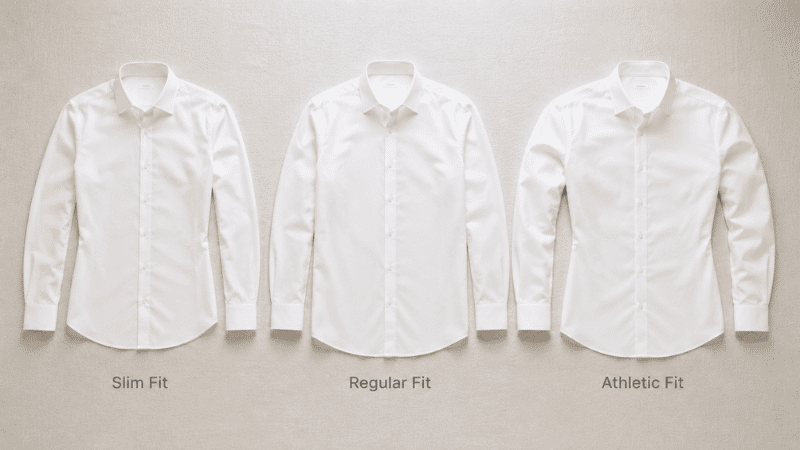
Third, if the brand offers a fit guide (slim, regular, relaxed), choose based on how you prefer clothes to fit relative to your body, not just the size number. Two people with 40″ chests may need different sizes if one prefers slim fit and the other prefers regular.
How to Measure Waist for Pants: The Quick Reference
This is one of the most searched sizing questions—and the most commonly measured incorrectly.
The correct method: Measure where the pants will actually sit. For most casual pants and jeans, this is about 1–2 inches below your natural waist—roughly at your hip bones, not at your narrowest point.
The most common mistake: Measuring at the natural waist (narrowest point) and ordering pants accordingly—the pants arrive and are too tight because they’re designed to sit lower.
Practical check: Find a pair of pants that fit well. Lay them flat. Measure across the waistband from side to side at the top, then multiply by 2. That’s your actual trouser waist measurement—more reliable than measuring your body for this specific purpose.
When Your Measurements Don’t Match Any Standard Size
This happens to a lot of men, and it’s worth naming directly. The clothing industry is sized around average body proportions. If your chest-to-waist ratio, height, or shoulder width falls outside those proportions, standard sizing won’t fit correctly even in your “correct” size.
The practical solutions:
Tailoring: Getting items altered after purchase is far cheaper than most men expect. Hemming trousers ($15–25), taking in a shirt at the sides ($20–30), or shortening sleeves ($25–40) transforms a garment that fits 80% into one that fits correctly.
Brand research: Some brands cut specifically for certain proportions. If you have broader shoulders and a slimmer waist, brands like Bonobos (which offers athletic cuts) address this specifically. If you’re between standard heights, brands offering short/regular/long length options give you more accuracy.
Made-to-measure: For dress shirts and trousers specifically, several online services offer made-to-measure at prices not far above off-the-rack. Worth considering for items you’ll wear frequently.
FAQ
What size am I in men’s clothing? Take your chest measurement (around the fullest part) and compare it to the brand’s size chart. For a 38–40″ chest, most US brands size this as Medium. For pants, measure your waist where the pants will sit (not your natural waist) and your inseam (inside leg length). A 32″ waist with 30″ inseam = 32×30 in most pants sizing.
How do I measure my waist for pants men? Measure where the pants will actually sit on your body—typically 1–2 inches below your natural waist, around the hip bones. Don’t measure at the narrowest point of your torso (natural waist) unless you’re buying high-rise trousers. The most accurate method: lay a pair of pants that fit correctly, measure across the waistband and multiply by 2.
What is the difference between slim fit and regular fit men? Slim fit is cut narrower through the chest, torso, and arms—closer to the body with less fabric between you and the garment. Regular fit has more ease (extra room) throughout and a straighter cut from chest to hem. Athletic fit is roomier in the chest and shoulders but tapers at the waist. All three can be the same size number; the difference is in the shape of the cut, not the overall size.
How do men’s US sizes convert to EU sizes? For suits and jackets: add 10 to the US size (US 40 = EU 50). For shirts: multiply your collar measurement in inches by 2.54 to get the EU collar size in centimeters (15.5″ = 39cm). For pants: EU waist sizes are approximately 10cm larger than US inch measurements (US 32″ ≈ EU 42).
Why do clothes fit differently even in the same size across brands? Brands define their sizes using different ease allowances (extra room built into the garment) and cut around different target body proportions. One brand’s Medium may have 2 inches of ease at the chest; another may have 4 inches. This is why knowing your body measurements—not just your size number—allows you to shop any brand accurately by comparing your measurements against their specific size chart.
References
- Outdoor Equipped, “How to Correctly Measure for Men’s Clothing Sizes” — measurement methodology for chest, neck, sleeve, waist, and inseam
- SizeChart.shop, “Men’s Size Chart: Complete Guide to Men’s Clothing Sizes” (2026) — US/EU size conversion data and fit type definitions
- Patagonia Size Guide — measurement instructions from a major apparel brand’s official methodology
- The Brooklyn Initiative, “US Men’s Clothing Size Chart” (2025) — waist/inseam system explanation and fit type guide
Explore More on Modvello
- How to Dress Better: The Practical Men’s Style Guide (Wardrobe Basics)
- Men’s Wardrobe Essentials: What to Buy, What to Skip, and Where to Start (Wardrobe Basics)
- The Best Chinos for Men: Honest Picks at Every Budget (Best Picks)
- Business Casual Dress Code for Men: What It Actually Means (Wardrobe Basics)
- Capsule Wardrobe for Men: 10 Basics That Cover Every Situation (Wardrobe Basics)
Last updated: June 2026 | Written by Daniel Ross