
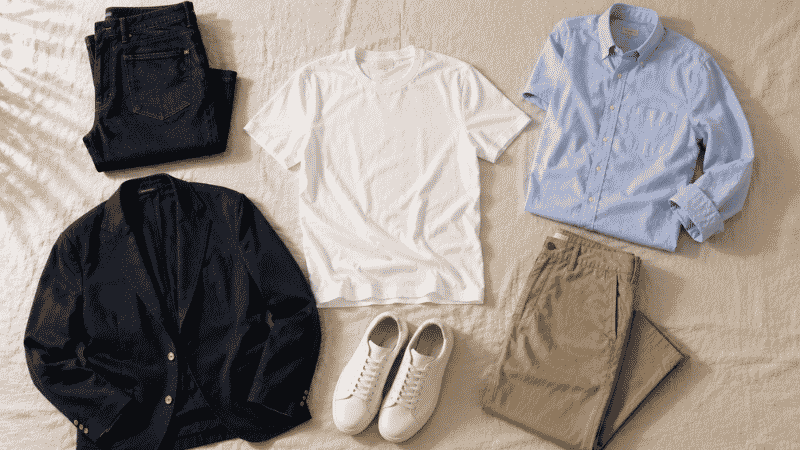
Here’s something that sounds backwards: the hardest outfit to put together isn’t the formal one. It’s the casual one.
When there’s a dress code, you have parameters. Black tie means tuxedo. Business casual means suit or blazer. But “casual” means almost anything—which, paradoxically, makes it the hardest question to answer. You stand in front of your closet on a Saturday morning with nowhere specific to be, nothing required of you, and somehow that complete freedom produces nothing. You end up in yesterday’s jeans and a t-shirt you’ve worn three times this week, not because you don’t own other things, but because casual has no rules to push against.
The men who consistently look good in casual settings aren’t following trends or spending more money. They’ve built a small set of reliable outfit formulas and they return to them without thinking. Same principle as a work uniform, just applied to weekends.
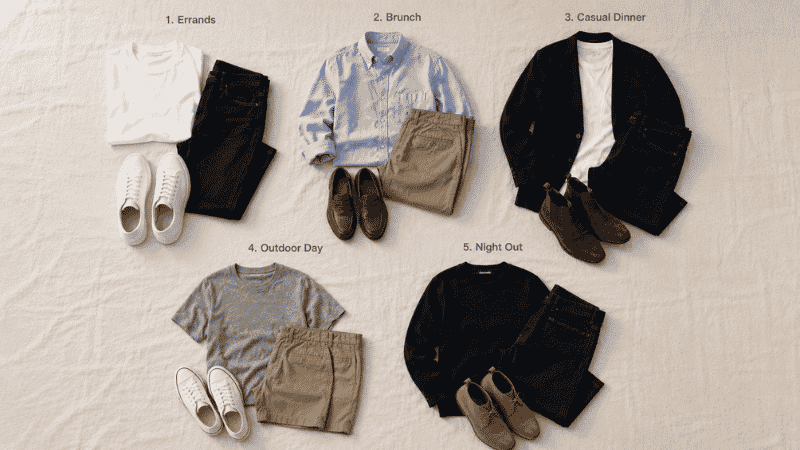
This guide gives you five of those formulas—one for each scenario you’ll regularly face without a dress code.
Key Takeaways
- “No dress code” is harder than a formal dress code because there’s no floor to build from—which is why casual outfit formulas matter
- Five scenarios cover 90% of situations men face on days off: errands, brunch, a casual dinner, an outdoor day, and a night out
- The difference between casual and sloppy is almost entirely fit—same outfit, different fit, completely different result
- Neutral colors (navy, white, grey, khaki) do the heavy lifting in casual dressing—they combine automatically without thought
- Research on “enclothed cognition” (Adam & Galinsky, 2012) shows that even casual clothing choices influence self-perception and confidence
Why Casual Is the Hardest Dress Code
The Batch Men’s style guide puts it well: casual dress has “no direction, no predefined set of rules.” For men who dress well in professional settings but struggle on weekends, this is usually the core issue. The structure of a work dress code—even a relaxed one—provides constraints that make decisions easier. Remove the constraints and you’re left with infinite options, which is cognitively harder than having fifty.
The fix isn’t more creativity. It’s fewer decisions. The men who look consistently good in casual settings have reduced their daily choices to a small number of reliable combinations. They’ve built what FashionBeans calls a “casual uniform”—not a single outfit worn every day, but a small rotation of combinations that always work.
That’s the goal here. Five scenarios, five formulas, zero deliberation.
5 Men’s Casual Outfit Ideas for Every Situation
Situation 1: The Morning Run (Errands, Coffee, Grocery Store)
The combination: White or grey crew-neck t-shirt + dark slim-straight jeans + white leather sneakers
This is the lowest-stakes casual outfit situation and the one where most men either nail it or miss badly. “Running errands” is not an excuse for gym clothes outside the gym. The combination above—a clean tee, well-fitting dark jeans, and maintained sneakers—takes three minutes to assemble and reads as a man who made a considered choice rather than one who rolled out of bed.
The fit is the entire game here. A white tee that bags at the chest and shoulders and jeans that pool at the ankle look careless regardless of how clean they are. The same combination in correct sizes looks intentional.
Why it works: The white-dark jeans-white sneakers palette is one of the cleanest neutral combinations in casual dressing. Nothing competes, nothing clashes, everything allows the person wearing it to be the focus rather than the outfit.
Quick upgrade: Swap the tee for a white or light blue OCBD shirt, left untucked. Adds ten seconds to the process and noticeably elevates the combination.
Situation 2: Weekend Brunch or a Casual Lunch
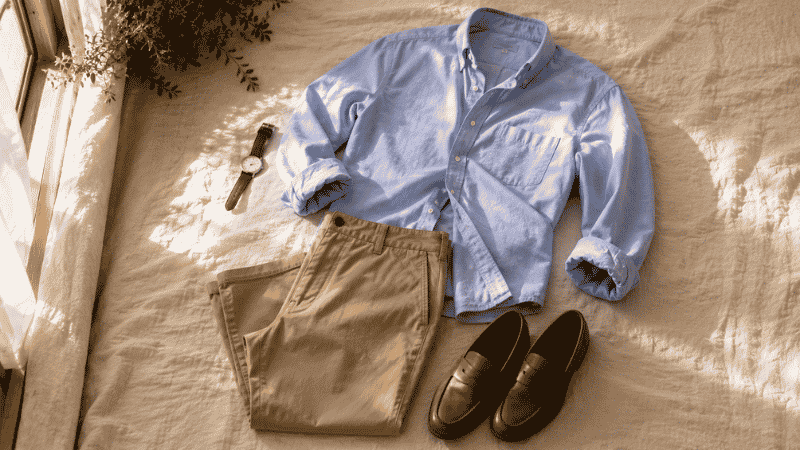
The combination: Oxford cloth button-down shirt (OCBD) in white or light blue + khaki chinos + tan leather loafers or white leather sneakers
Brunch occupies an interesting middle ground—more intentional than errands, less formal than a dinner. The OCBD-chinos combination handles it perfectly. The shirt signals effort without formality; the chinos read as casual but deliberate; the footwear choice determines whether the combination skews toward smart or relaxed.
Loafers: The outfit reads as smart casual. Good for a slightly more formal brunch setting, a family lunch, or any situation where you want to look pulled-together.
White leather sneakers: The outfit reads as casual but considered. Better for a relaxed brunch with friends, a late weekend morning, or anywhere the vibe is genuinely informal.
The one detail that matters: Whether you tuck the OCBD or leave it untucked. Tucked = slightly more formal. Untucked = more relaxed. A half-tuck (front only, loosely done) sits between the two. Choose based on the context.
Situation 3: A Casual Dinner or Evening Out
The combination: Navy unstructured blazer + plain white t-shirt + dark slim-straight jeans + chelsea boots or leather loafers
This is the combination that solves the “I want to look nice but it’s not a formal occasion” problem. A navy blazer over a white tee removes the need for a dress shirt, a tie, or any deliberate formality—but it instantly signals that the wearer made a decision about their appearance.
The white tee under a blazer only works with two conditions: the tee is genuinely clean (bright white, not off-white or grey from washing), and it fits correctly through the chest and shoulders. A sloppy tee undermines the blazer. A well-fitting one makes the combination look intentional.
Chelsea boots push the outfit toward smart casual evening territory. Loafers keep it relaxed. White leather sneakers can work in more casual environments but remove some of the evening sophistication.
When to use this: A restaurant that isn’t a special occasion but isn’t casual either. Evening drinks. A dinner with people you want to impress without appearing to try. Meeting someone’s family for the first time. Any situation where “smart casual” would be appropriate but you don’t want to wear a full dress shirt.
Situation 4: An Outdoor Day (Park, Day Trip, Outdoor Event)
The combination: Plain t-shirt (white, grey, or navy) + chino shorts or casual trousers + clean canvas sneakers or leather sandals
An outdoor day—a park picnic, a day trip, a casual outdoor gathering—calls for something comfortable that still reads as chosen rather than default. This combination does that without requiring thought.
Chino shorts in khaki or navy stay in the neutral palette and pair with any solid-color tee. Canvas sneakers (white or navy) are the most versatile outdoor casual shoe for most situations. If the setting is genuinely warm and relaxed, leather sandals are appropriate.
The trap to avoid: Athletic shorts and gym t-shirts. Unless you’re at a sports event or genuinely exercising, activewear in casual social settings reads as disengaged from the occasion. The combination above is only marginally more effort and significantly more considered.
Season adjustment: In cooler weather, swap the shorts for dark jeans or chinos and add a lightweight jacket or overshirt. The same principle applies—comfortable but intentional.
Situation 5: A Night Out (Casual Bar, Social Event, Relaxed Evening)
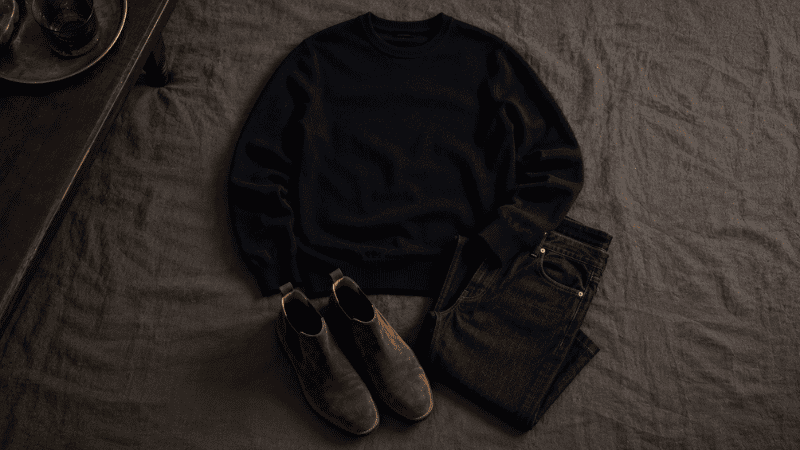
The combination: Navy or dark grey crewneck sweater + dark slim jeans + white leather sneakers or suede boots
An evening out in a casual setting doesn’t need a dress shirt or blazer. A clean, structured crewneck in a neutral color—no logos, no graphics—over slim dark jeans reads as intentional and contemporary without trying too hard. It’s the equivalent of a T-shirt-and-jeans combination that signals you made an actual choice.
The footwear distinction matters here more than in other contexts. White leather sneakers keep the combination firmly in casual territory—good for genuinely informal evenings. Brown or tan suede boots (chukkas or chelsea) add warmth and elevate the combination toward smart casual, which reads better in most bar or evening social contexts.
The detail that separates this from just wearing a sweater: The crewneck needs to be a deliberate choice. A worn-out cotton pullover is not the same as a mid-weight knit crewneck in a solid neutral. The fabric quality and cleanliness of the piece determines whether this reads as thought-out or default.
The Casual Color System: Why These Outfits Always Work
Every outfit above lives in the same neutral palette—white, navy, grey, khaki, tan. This isn’t accidental.
Neutral colors do something specific in casual dressing: they combine automatically. Pull any top and any bottom from the neutral palette and they’ll work together without any deliberate color management. This is why a capsule wardrobe built in neutrals feels easier to dress from than a closet full of more varied pieces—there are no wrong combinations.
The practical application: if you only buy pieces in navy, white, grey, khaki, and tan, you can get dressed on autopilot. Every top works with every bottom. Every shoe works with every trouser. The decisions disappear.
Once that foundation works, you add one piece with more color or personality—a burgundy crewneck, an olive jacket, a flannel overshirt in a muted check. These pieces read as personal expression because the neutrals underneath give them somewhere to land.
When Casual Isn’t Working
The outfit looks fine but feels off. Usually footwear. A casual combination with worn-out trainers reads as sloppy regardless of what the top half looks like. Clean leather sneakers or simple loafers change the register of the entire outfit with no other changes.
You keep reaching for the same things. This is the wardrobe orphan problem—pieces that don’t connect to anything else you own. The fix is the three-item rule: before any casual purchase, identify three things in your current wardrobe it pairs with. If you can’t name three, skip it.
You feel underdressed when you arrive somewhere. A blazer is the emergency upgrade. Keep one accessible. It changes any casual combination to smart casual in under a minute without requiring a wardrobe change.
FAQ
What are good casual outfit ideas for men? The most reliable casual outfit combinations for men are: white tee + dark jeans + white sneakers (errands and daily), OCBD shirt + chinos + loafers (brunch and lunch), navy blazer + white tee + dark jeans + boots (casual dinner), and a clean crewneck + dark jeans + suede boots (evenings out). All five work across most casual situations without requiring deliberate styling decisions.
What do men wear for casual style? Men’s casual style is built on a few reliable pieces: well-fitting dark jeans or chinos, plain solid-color tees or lightweight shirts, clean leather sneakers or loafers, and a navy or grey crewneck sweater for layering. The key word is “well-fitting”—casual clothes that fit correctly read as intentional; ones that don’t read as careless regardless of the brand or price.
How do men look stylish in casual clothes? Fit is the primary factor. A plain white tee and dark jeans in the right size looks better than a more interesting outfit in the wrong size. After fit: stick to neutral colors, keep shoes clean and maintained, and have one slightly elevated piece (a blazer, a quality crewneck, a leather shoe) that lifts the combination above pure casualwear.
What colors work for men’s casual outfits? Navy, white, grey, khaki, and tan are the five neutral colors that form the foundation of casual men’s dressing. These colors combine automatically—any top pairs with any bottom in this palette without deliberate color management. Once the neutral foundation is established, add one accent piece in a deeper color (burgundy, olive, forest green) for variety without complexity.
Is it okay for men to wear the same casual outfit repeatedly? Yes—in fact, it’s a sign of good style instincts rather than laziness. Men who dress well often rely on a small rotation of reliable combinations rather than constantly assembling new outfits. The goal is to look consistently good with minimal effort, not to have constant variety. Returning to combinations that work is how you build a reliable personal style rather than a random collection of one-off outfits.
References
- Adam, H., & Galinsky, A. D. (2012). “Enclothed Cognition.” Journal of Experimental Psychology: General, 141(4), 997–1006 — research on how clothing choices influence self-perception and behavioral confidence
- FashionBeans, “Casual Dress for Men: Style Guide 2026” — comprehensive analysis of the casual dress code for men including the “casual uniform” concept
- Batch Men’s, “Men’s Outfit Guide: The Fundamentals of Great Casual Outfits” — color matching framework for casual dressing
Explore More on Modvello
- How to Dress Better: The Practical Men’s Style Guide (Wardrobe Basics)
- Capsule Wardrobe for Men: 10 Basics That Cover Every Situation (Wardrobe Basics)
- White T-Shirt Outfits for Men: 5 Ways to Wear the Most Useful Item You Own (Outfit Ideas)
- How to Wear Chinos: Men’s Outfit Ideas From Office to Weekend (Outfit Ideas)
- What to Wear in Summer: The Men’s Guide to Looking Good When It’s Hot (Style by Occasion)
Last updated: June 2026 | Written by Daniel Ross