
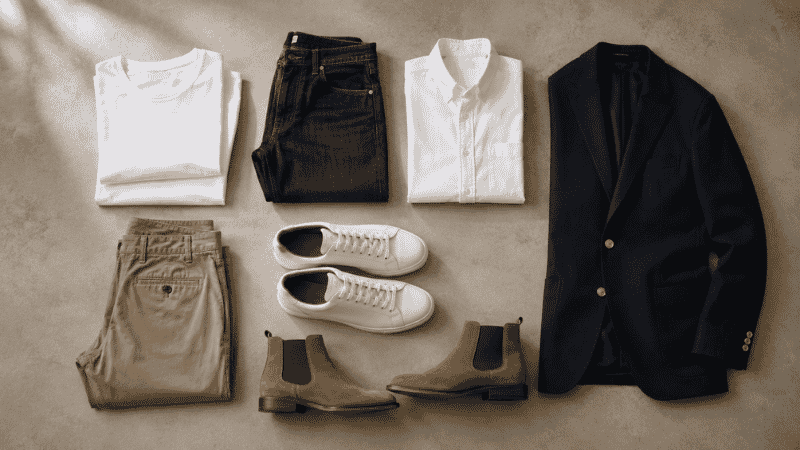
Most men don’t have a wardrobe problem. They have a clarity problem.
You’ve probably bought clothes that seemed like a good idea in the store and never got worn. You’ve stood in front of a full closet on a Tuesday morning and felt genuinely stuck. Maybe you’ve spent a reasonable amount of money on clothes over the years and still don’t feel like you dress particularly well.
This isn’t about having the wrong taste or not caring enough. It’s about buying without a system—picking up pieces that look good individually but don’t connect to anything else you own. One item at a time, no plan, no priority order. The result is a closet that’s full but doesn’t actually work.
Men’s wardrobe essentials aren’t just a list of items. They’re a foundation—a set of pieces that earn their place by working with everything else you own, covering multiple situations without requiring you to think too hard. Get these right and getting dressed becomes automatic. Get them wrong and you keep buying things that don’t fix the problem.
This guide tells you exactly what to get, in what order, and—just as importantly—when to stop.
Key Takeaways
- The average American owns 173 items of clothing but wears only about 20% of them regularly
- Men’s wardrobe essentials should be built in priority order—some pieces do ten times the work of others
- Neutral colors (navy, white, grey, khaki) are the foundation; everything else is optional
- Fit matters more than brand or price—an ill-fitting expensive shirt is always outperformed by a well-fitting cheap one
- A functional wardrobe needs roughly 12–15 core pieces, not 40
The Real Reason Your Wardrobe Doesn’t Work
Before talking about what to buy, it’s worth naming the actual problem.
Most men shop for outfits, not pieces. They see a shirt they like, buy it, and then realize it only works with one specific pair of pants they don’t own. Or they buy something on sale because it seemed like a deal, wear it twice, and forget about it. Over time the closet fills up with individual items that don’t connect—pieces that work in isolation but create no actual outfits when combined.
The fix isn’t buying better clothes. It’s buying strategically—starting with pieces that pair with the most other things, and only adding new items once the foundation is solid.
There’s a simple test for this. Before buying anything, ask: can I wear this with at least three things I already own? If the answer is no, it doesn’t belong in your wardrobe yet. It’s an orphan piece—one that looks fine alone but adds nothing to the system.
Men’s Wardrobe Essentials: The Priority Order
Here’s the part most guides skip entirely. Not all essentials are equally essential. Some pieces cover four situations; others cover one. Build in this order and you’ll have a functional wardrobe by step three, with everything after that being genuine improvement rather than replacement.
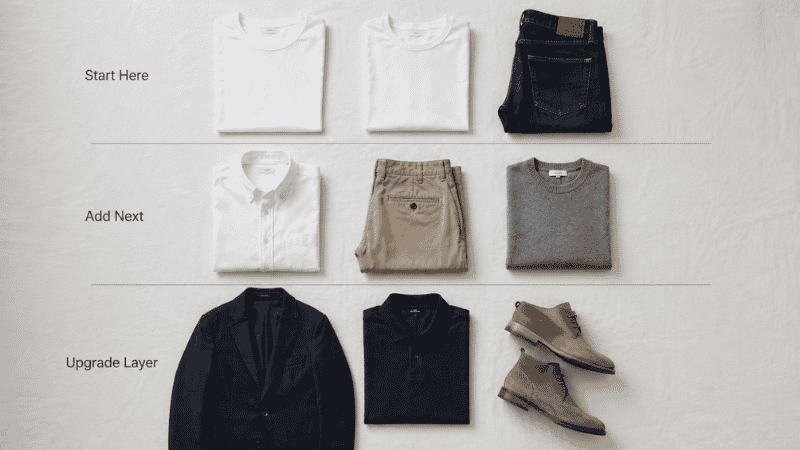
Priority 1: The Non-Negotiables (Start Here)
These three pieces form the base. If you own nothing else, own these—and make sure they fit.
Dark wash slim-straight jeans. Not skinny, not baggy, not distressed. Clean indigo denim in a straight or slim-straight cut reads as casual but never sloppy. It’s the single most versatile bottom in a man’s wardrobe—appropriate for most casual situations and, in relaxed offices, even workable as business casual. The fit rule: sits at the natural waist, follows the leg without clinging, minimal stacking at the ankle.
White or grey crew-neck t-shirt (2–3 of them). The base layer everything else goes over or under. It needs to fit through the chest and shoulders, with the hem sitting at the hip. Mid-weight cotton (around 180–200gsm) holds its shape and doesn’t go transparent after washing. Buy multiples—you’ll reach for these more than almost anything else.
Clean leather sneakers or leather shoes. One pair of well-kept footwear elevates everything above it. White leather low-top sneakers work for casual situations; loafers or clean leather shoes handle professional ones. The word clean is doing real work here—worn trainers drag down any outfit regardless of what else you’re wearing.
With just these three pieces working together, you have a baseline. Everything else makes that baseline more flexible.
Priority 2: The Pieces That Do Heavy Lifting
Once the base is solid, these are what turn a limited wardrobe into one that actually covers your week.
Khaki or navy chinos. The bridge between casual and professional. A medium-weight cotton twill in khaki or navy—slim-to-straight fit—works for office environments, dinners, and casual events that feel slightly too grown-up for jeans. The rule on fit: tapered through the thigh, sitting cleanly at the shoe.
Oxford cloth button-down shirt (OCBD). White or light blue. The Oxford weave is heavier and more textured than a standard dress shirt, which means it looks intentional even slightly wrinkled. Wear it tucked, untucked, open over a t-shirt, or under a jacket. Four separate use cases from one shirt. Buy one that fits through the shoulders and chest—that’s where most men get it wrong, buying too large because it’s more comfortable.
Grey crewneck sweater. Medium-weight, mid-grey. Layer it over an OCBD with the collar showing. Wear it solo with chinos. It’s the lowest-effort upgrade in menswear—adds warmth and visual interest without requiring any styling decisions. Merino wool is ideal; it’s lightweight, barely wrinkles, and looks better than cotton in most situations.
These six pieces—combined with the first three—create enough outfit combinations to handle a full week without repeating. That’s your functional wardrobe.
Priority 3: The Upgrade Layer
These pieces extend your range. Add them once the foundation is working.
Unstructured navy blazer. The single fastest way to elevate an outfit. Throw it over a t-shirt and jeans and you’re dressed for dinner. Over an OCBD and chinos and you’re office-ready. It needs to fit through the shoulders—the seam should sit at the edge of the shoulder bone, not overhang it.
Polo shirt (navy or white). More polished than a t-shirt, more relaxed than a button-down. Works in warm weather, casual offices, and weekend situations where a tee feels like too little and a button-down feels like too much.
Chelsea or chukka boots. One pair of boots in brown or tan suede. They work with jeans, chinos, and alongside a blazer. Brown pairs with far more colors in a neutral wardrobe than black does—start with brown.
Plain white dress shirt. Different from the OCBD in fabric and feel—smoother, dressier, more formal. For occasions that actually call for it: client dinners, weddings as a guest, more formal work events.
Priority 4: The Finishing Details
These don’t change your outfit but they communicate that you paid attention.
A simple watch. Leather strap, clean dial, nothing oversized. Under $150 is fine. The point isn’t the watch itself—it’s that the wrist isn’t bare.
A leather belt. Brown and black, or just brown if you only buy one. Match the leather to your shoes. It’s one of those details that nobody notices when it’s right and everyone notices when it’s wrong.
White pocket square or lapel pin (optional). Only relevant if you’re wearing the blazer in more formal contexts. Not a wardrobe essential, but useful to own one.
What Every Man’s Wardrobe Essentials Checklist Actually Looks Like
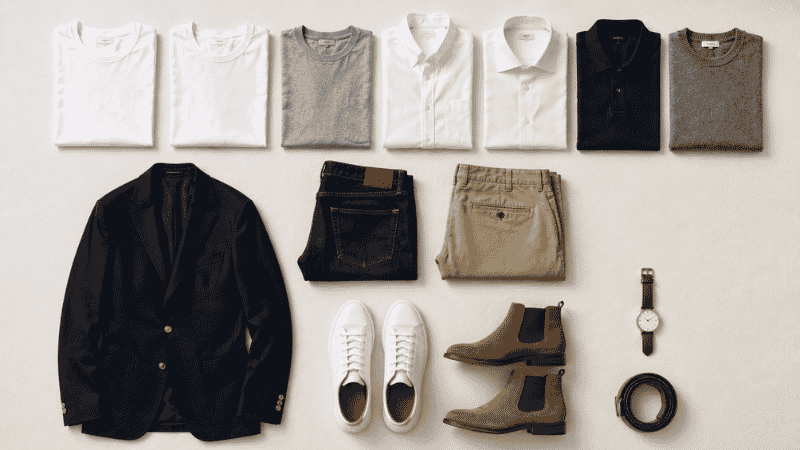
Here’s the full list, cleanly laid out:
Tops:
- White crewneck t-shirt × 2
- Grey crewneck t-shirt × 1
- White or light blue Oxford cloth button-down shirt
- White dress shirt
- Navy or white polo shirt
- Grey crewneck sweater
Bottoms:
- Dark wash slim-straight jeans
- Khaki chinos
- Navy chinos (optional second pair)
Outerwear:
- Unstructured navy blazer
Footwear:
- Clean white leather sneakers or leather loafers
- Brown or tan suede chelsea or chukka boots
Accessories:
- Simple leather-strap watch
- Brown leather belt
That’s 14–16 pieces. Not 40. Not 173. Fourteen pieces that connect to each other and cover the situations you actually face.
The Color System Behind It All
The reason this list works is the color palette—not the individual items.
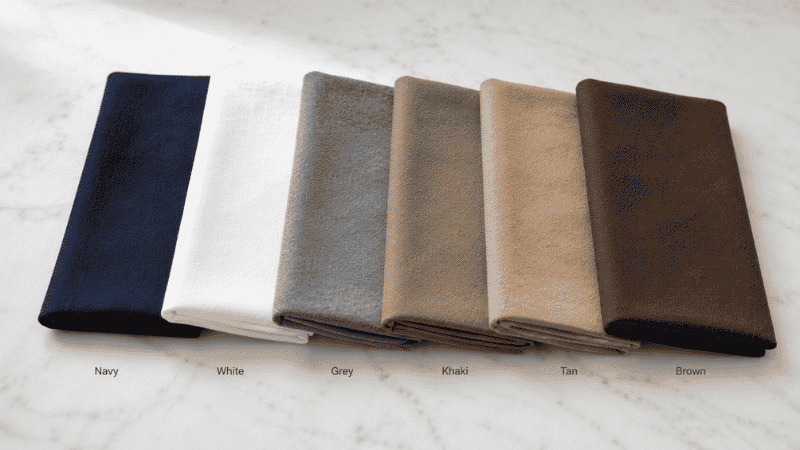
Everything above sits in the neutral zone: navy, white, grey, khaki, brown, tan. These colors pair with each other automatically. You can pull any top and any bottom from this list and they’ll work together without thinking. That’s not an accident; it’s the point.
Once this foundation is working, you can add one or two pieces with more personality—an olive chore coat, a burgundy crewneck, a flannel shirt in a muted plaid. These read as personal without breaking the system, because the neutrals underneath give them somewhere to land.
What you want to avoid: bright colors, loud patterns, or anything that only pairs with one specific other item. These are wardrobe orphans. They look fine alone and create nothing as part of a system.
How to Know When Your Wardrobe Is Actually Finished
Most men keep buying because they don’t have a clear endpoint. They feel like something is still missing, so they add another piece, and the problem doesn’t go away because the problem was never about quantity.
Your wardrobe is in good shape when you can answer yes to all three:
- Can I dress appropriately for work, a casual weekend, and a dinner or event without buying anything?
- Do I have at least three different outfit combinations I can put together without thinking?
- Is there something in my closet I’d actually feel good wearing to something that matters?
If the answer to all three is yes, stop buying and start wearing. The urge to add more is usually the wardrobe feeling incomplete—but the fix is often wearing what you have until you understand what’s actually missing, not buying more before you know.
What If You’re Starting from Nothing?
Don’t try to build everything at once. That’s how you end up with 40 items that don’t connect.
Week one: White t-shirts (×2), dark jeans, one pair of clean shoes. Under $150 total if you shop smartly. This covers casual situations immediately.
Month one: Add the OCBD, khaki chinos, grey crewneck. Now you have office-appropriate outfits and enough variation to stop repeating the same combination daily.
Month two–three: Add the blazer, boots, and polo. Your wardrobe is now fully functional for the situations most men face in an average month.
Ongoing: Replace things as they wear out. Add one piece at a time when you’ve identified a genuine gap—not a gap you imagine, but a situation you couldn’t dress for with what you owned.
Spreading it out also gives you time to learn what you actually reach for. The pieces you wear constantly are your real essentials. The ones sitting untouched after two months are probably orphans.
FAQ
What are the most important men’s wardrobe essentials to buy first? Start with dark wash jeans, two or three white or grey t-shirts, and one pair of clean shoes or leather sneakers. These three categories cover the most daily situations with the least investment. Once those are working, add an Oxford shirt and chinos—now you have office-appropriate outfits too.
How many clothes should a man own? Research suggests most people regularly wear only about 20% of what they own. A functional men’s wardrobe can work with 12–15 core pieces. More than that is fine, but more doesn’t automatically mean better—it usually just means more choices that don’t always pair well together.
What colors should men’s wardrobe essentials be? Stick to neutrals for the foundation: navy, white, grey, khaki, and tan or brown. These colors pair with each other automatically, which means you can combine any top and bottom from this palette without thinking. Once the neutrals are solid, add one or two pieces with more color or personality.
How do I know if something is a wardrobe essential or just a nice-to-have? Apply the three-item rule: if you can’t pair a new piece with at least three things you already own, it’s not an essential—it’s an orphan. True essentials earn their space by working with most of what you already have.
What’s the biggest mistake men make when building a wardrobe? Buying without priority order. Most men pick up individual pieces they like without thinking about how they connect to each other. The result is a full closet with no actual outfits. Build in layers—foundation first, upgrade layer second, details last—and every piece you add makes the ones before it more useful.
References
- Wrap Media / Statista: Average number of clothing items owned by Americans (173 items per person)
- Journal of Consumer Psychology, “Enclothed Cognition” — Adam & Galinsky, 2012: research on how clothing affects psychological state and self-perception
- MaleFashionAdvice Substack, “How the basic wardrobe has changed: a 2023 supplement” — updated guidance on fit and silhouette for men’s basics
Explore More on Modvello
- Capsule Wardrobe for Men: 10 Basics That Cover Every Situation (Wardrobe Basics)
- Business Casual Dress Code for Men: What It Actually Means (Wardrobe Basics)
- How Clothes Should Fit: The Complete Men’s Guide (Fit & Sizing)
- Best Chinos for Men: Simple Picks That Fit Well and Last (Best Picks)
- What to Wear to Work: Outfit Formulas for Every Office Type (Style by Occasion)
Last updated: June 2026 | Written by Daniel Ross