
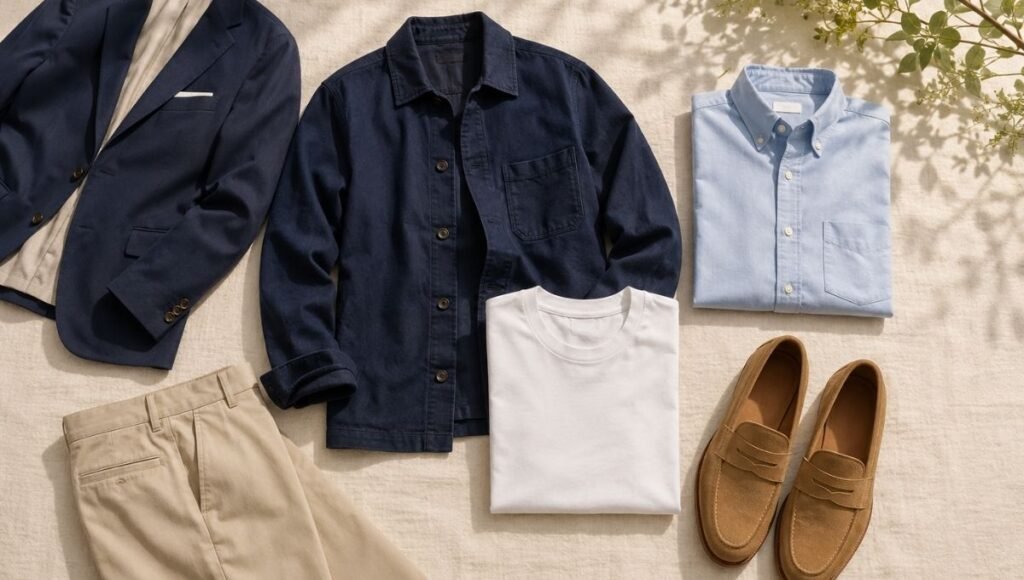
You leave the house at 8am in a jacket and by noon you’re carrying it like a rolled-up sleeping bag, slightly annoyed at yourself for not thinking this through. By 6pm, you need it again.
Spring is the only season that genuinely requires a strategy. Summer is hot — wear less. Winter is cold — wear more. But spring swings 20 degrees between morning and afternoon in most parts of the country, and that temperature gap is what makes it the hardest season to dress for consistently. You’re not managing a single weather condition. You’re managing a range.
The men who look good in spring aren’t wearing anything complicated. They’re wearing the right pieces — lightweight enough to handle a warm afternoon, layerable enough to handle a cool morning — in combinations that can be adjusted on the go without looking like they’re mid-costume-change on a subway platform.
This guide gives you six complete spring outfit ideas for men, plus the layering system that makes all of them work when the forecast turns out to be wrong.
Key Takeaways
- Spring temperature swings of 15-20°F between morning and afternoon are standard across most of the US and UK — dressing for a single temperature doesn’t work
- The overshirt is the single most useful spring layering piece — it functions as a shirt, a light jacket, and a mid-layer depending on temperature
- Lightweight merino wool regulates temperature better than cotton for spring layering — it stays comfortable across a wider temperature range
- Two visible layers is the maximum for spring — three layers reads as winter
- Spring is when lighter colors become appropriate: stone, sage, light grey, and navy replace the dark indigo and black of winter
The Spring Layering System That Actually Works
Before the outfits, the principle. Because spring dressing isn’t about individual pieces — it’s about combinations that can adapt.
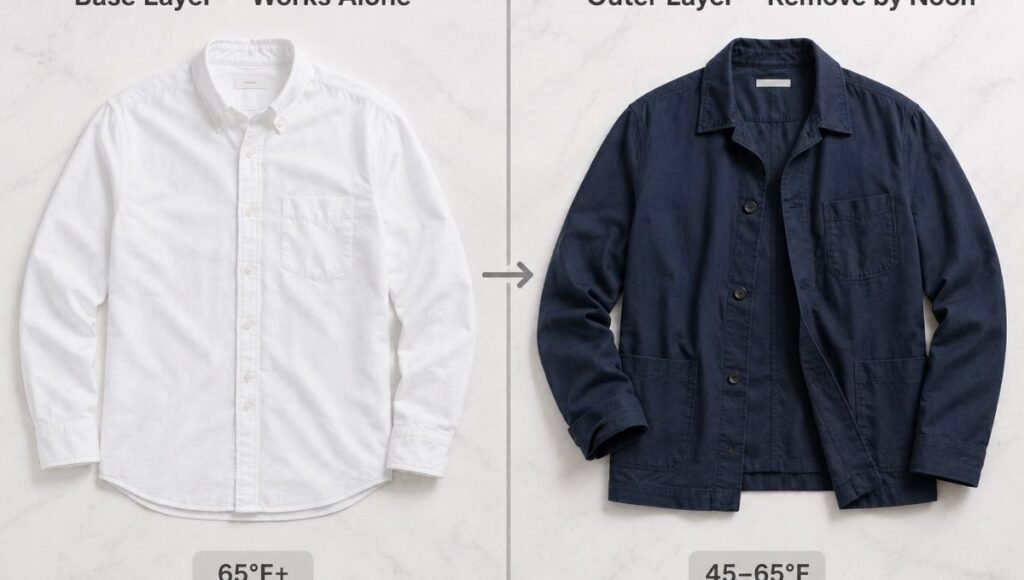
<cite index=”29-1″>The smartest approach comes down to building every outfit around one base piece that looks good on its own — a well-fitted shirt or a quality tee — then adding one removable layer for the morning chill.</cite> That’s the entire system. Two visible layers, breathable fabrics, and the ability to remove the outer layer without the base falling apart.
The failure mode most men fall into: choosing an outer layer that’s too warm for the afternoon (a wool overcoat, a heavy bomber) or a base layer that’s too thin for the morning (a single t-shirt). The fix is calibrating each piece to the right temperature zone.
The spring layer map:
Base layer (works from 65°F upward): White or light-colored t-shirt, Oxford shirt, polo, or lightweight merino crewneck. Should look intentional on its own — the outer layer will come off.
Outer layer (handles 45-65°F mornings and evenings): Overshirt, unstructured blazer, lightweight bomber, or Harrington jacket. Should fold or roll easily enough to carry. This is the piece you’ll take off by noon.
The simple test: Can you remove the outer layer and still look like you dressed on purpose? If yes, the combination works. If the base layer looks like an undershirt once the jacket comes off, you need to rethink the base.
6 Spring Outfit Ideas for Men
Outfit 1: The Default Weekend
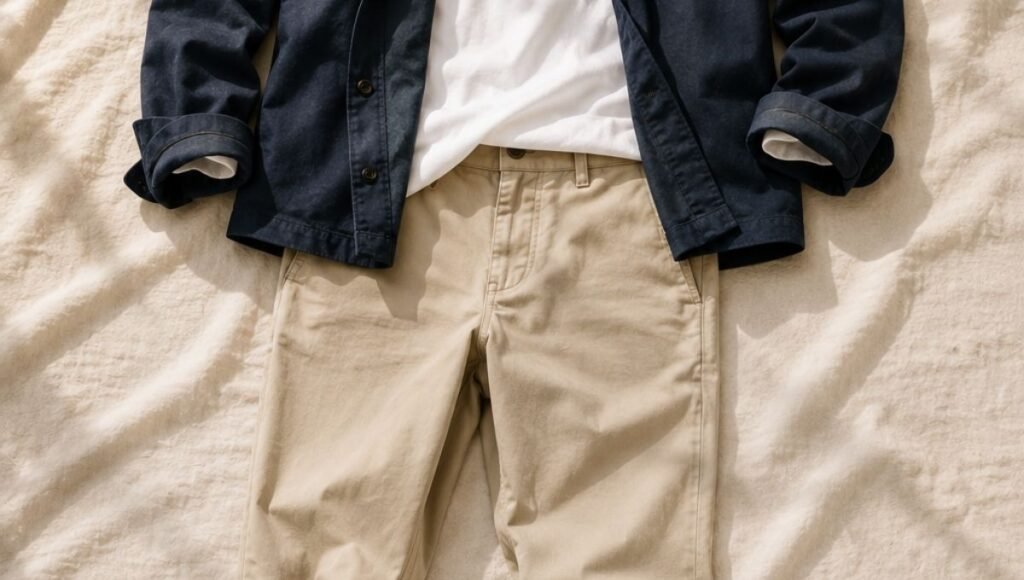
White tee + navy overshirt (worn open) + stone or khaki chinos + white leather sneakers
<cite index=”27-1″>A navy overshirt worn over a white t-shirt with stone-coloured chinos is the perfect look for a Saturday out — if it gets chilly, simply button up the overshirt.</cite> This is the spring outfit that works for 80% of casual weekend situations without deliberation.
The overshirt here does double duty. Open and worn as a light jacket, it reads as casual layering. Buttoned up on a cool morning, it functions as the only visible layer. The white tee stays clean underneath either way.
Temperature range: Works from 50°F (overshirt buttoned) through 75°F (overshirt removed, tee only)
What makes it work: The neutral palette — white, navy, stone — means the combination reads as deliberate rather than assembled. Nothing competes. The overshirt in navy grounds the lightness of the stone chinos.
When to wear it: Weekend errands, casual outdoor plans, any daytime situation without a formality requirement.
Outfit 2: The Smart Casual Spring
Light blue or white Oxford shirt + unstructured navy blazer + khaki chinos + tan leather loafers
Spring is when the unstructured blazer earns its place. <cite index=”25-1″>A navy blazer works particularly well because it pairs effortlessly with chinos, denim, and tailored trousers, and instantly elevates a spring outfit whether heading to the office or out for dinner.</cite> Unstructured means no shoulder padding, no stiff lining — the jacket moves with you and folds flat when you remove it.
The Oxford shirt underneath is the key piece here. It looks intentional when the blazer comes off at lunch, which is the test for whether a spring smart casual outfit actually works.
Temperature range: 55°F (blazer on, shirt tucked) through 72°F (blazer removed, shirt tucked or untucked)
The adjustment that changes the register: Tuck the shirt for business casual or smart casual situations. Untuck it when the blazer comes off for a more relaxed afternoon. Same outfit, two different readings.
When to wear it: Smart casual office environments, casual Friday meetings, weekend lunches where a tee feels too casual.
Outfit 3: The Transitional Commute
Grey fine-knit crewneck over Oxford shirt (collar visible) + dark jeans + chelsea boots
<cite index=”27-1″>A fine-gauge grey jumper over a button-down Oxford shirt paired with dark denim jeans and a lightweight jacket is professional enough for the office but practical enough for a drizzly walk to the station.</cite>
This combination solves the commute problem specifically. The crewneck over the Oxford shirt gives you warmth for the morning walk without requiring a heavy coat. The collar visible above the crewneck neckline keeps the combination looking intentional. Remove the crewneck in the office, and you’re left with a clean Oxford shirt and dark jeans — completely appropriate for most modern offices.
The fabric note: A fine-knit merino crewneck is worth the investment here. Cotton knitwear packs less heat regulation — you’ll overheat in a warm office and feel cold on the commute. Merino handles both.
Temperature range: 48-65°F (crewneck on) through 70°F (crewneck removed)
When to wear it: Work commutes, days with unpredictable forecast, any situation where you need to look professional at 9am and stay comfortable at 2pm.
Outfit 4: The Casual Layered Look
Navy or white polo + denim jacket + dark slim jeans + white leather sneakers
<cite index=”28-1″>The denim jacket is one of those layering pieces that never goes out of style — cool, classic, and easy to throw over almost anything. It takes you from cooler mornings to warmer afternoons with ease.</cite>
The polo underneath is the key move. A polo is smarter than a tee and cooler than a crewneck, which makes it the ideal spring base layer for casual situations. When the denim jacket comes off, the polo holds the outfit together rather than making it look like you’ve just removed your only visible garment.
The denim-on-denim note: If you’re wearing dark jeans, use a lighter or medium-wash denim jacket — the contrast is what makes the combination read as intentional. Same wash throughout reads as accidental. (This is the double denim rule covered in detail in our denim jacket guide.)
Temperature range: 52-68°F (jacket on) through 75°F (jacket removed, polo only)
When to wear it: Casual weekends, days out, relaxed social situations where a tee feels too casual and a blazer feels too much.
Outfit 5: The Spring Office Look
White or light blue linen-blend shirt + navy or charcoal chinos + leather loafers
<cite index=”29-1″>A cotton-linen blend shirt worn with tapered chinos and clean sneakers or loafers is the outfit that works more than any other between April and June — it reads as intentional without feeling overdressed, and the linen blend keeps you comfortable even in offices that run warm.</cite>
The linen blend is the critical detail. Pure linen looks beautiful but wrinkles aggressively within an hour of wear. A cotton-linen blend (typically 55% cotton, 45% linen) gives you most of the breathability with significantly better wrinkle resistance. It looks deliberately chosen for the season rather than accidentally casual.
The sleeve roll: Roll the sleeves to the forearm when the day warms up. This adjusts the formality level without changing any garment — it’s the simplest temperature management move in spring dressing.
Temperature range: Works across 60-80°F without adjustment. Add a light jacket for mornings below 60°F.
When to wear it: Modern offices in warmer spring weather, smart casual situations, client lunches where comfort matters.
Outfit 6: The Spring Evening
Navy or dark grey crewneck + chinos in stone or khaki + suede loafers or chelsea boots
<cite index=”25-1″>Lightweight merino wool sweaters are a particularly strong choice for spring evenings — they offer breathability, resist odor, and regulate body temperature, making them ideal for staying cool while still providing warmth.</cite>
For evening situations in spring — dinner, drinks, casual events — the crewneck is cleaner than a jacket and warmer than a shirt alone. The stone or khaki chinos are the spring color update from winter’s darker palette. Suede loafers complete the combination with appropriate texture for the season.
The color shift: Spring is when lighter trouser colors become genuinely appropriate. Switching from dark indigo jeans to stone or khaki chinos is the single fastest way to make an outfit read as seasonally aware rather than held over from February.
Temperature range: 55-68°F. Add a lightweight jacket for colder evenings.
When to wear it: Casual spring evenings, dinners, drinks, any smart casual occasion after 6pm.
The Spring Fabrics That Actually Work
Most spring style advice tells you what to wear. Here’s why the fabric matters as much as the item.
Cotton Oxford cloth: The standard for shirts. Slightly heavier than poplin, which helps it hold its structure through a long day. Works across most spring temperatures. Wrinkles moderately — not as much as linen.
Cotton-linen blend: The spring upgrade from pure cotton. More breathable for warm afternoons, more wrinkle-resistant than pure linen. Best for shirts in warm spring weather.
Fine-knit merino wool: The most underrated spring fabric. Regulates temperature across a wide range — comfortable from 50°F through 70°F — and resists odor better than cotton knitwear. Worth the price premium for pieces you’ll layer daily.
Light cotton twill: The fabric of chinos. Works across spring without modification. Stretch cotton twill (with 2-3% elastane) is more comfortable for all-day wear.
What to avoid: Heavy wool (too warm past mid-morning), pure linen (wrinkles too fast for professional contexts), thick fleece (reads as winter).
The Color Shift: What Changes in Spring
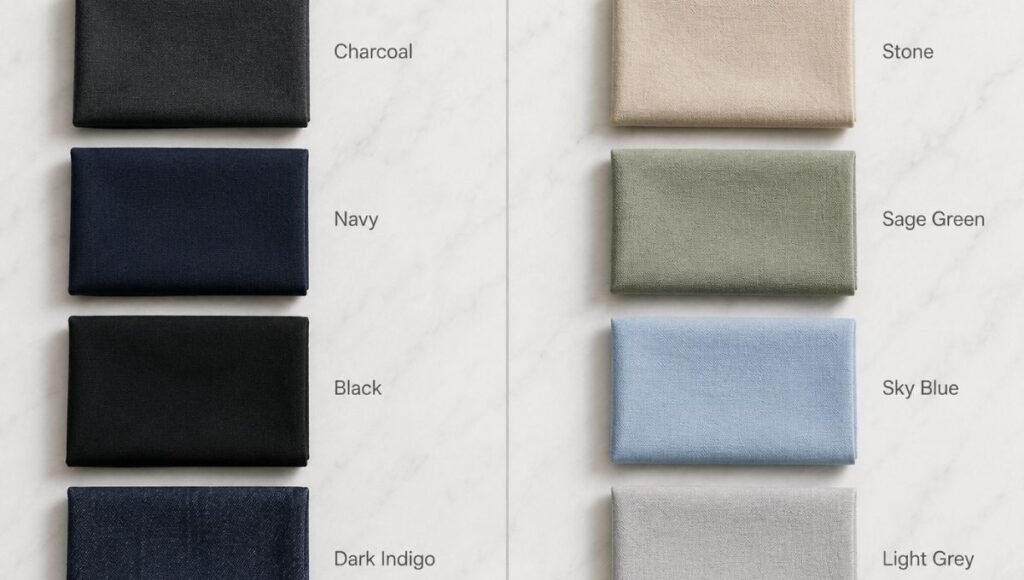
Winter wardrobes default to dark colors — black, dark navy, dark indigo — because they absorb heat and read as seasonally appropriate. <cite index=”27-1″>In spring, softer tones such as stone, sage, and sky blue come into their own, working in harmony with brighter natural light and lending outfits a fresher, more optimistic feel.</cite>
The practical color update for spring:
- Dark indigo jeans → khaki or stone chinos (or lighter-wash jeans)
- Black outerwear → navy, olive, or tan outerwear
- Dark grey knitwear → light grey or oatmeal knitwear
- Heavy dark coats → lightweight jackets in mid-tone colors
You don’t need to swap everything. Introducing one or two lighter pieces into a combination is enough to shift it from winter-holdover to deliberately seasonal.
The 10-Minute Default
Forecast is mixed, you have ten minutes, and you need to leave looking put together:
Oxford shirt + lightweight overshirt (worn open) + chinos + leather shoes or clean sneakers.
The overshirt handles any temperature between 50-70°F by buttoning or unbuttoning. The Oxford underneath looks intentional when the overshirt comes off. The chinos work in almost any context from casual through smart casual. This combination, assembled in under three minutes, handles most spring situations correctly.
FAQ
What are good spring outfits for men? The most reliable spring combinations are: a white tee under a navy overshirt with khaki chinos and white sneakers for casual weekends; an Oxford shirt under an unstructured blazer with chinos and loafers for smart casual; and a fine-knit crewneck over an Oxford shirt with dark jeans for work commutes. All three are built on the same principle — a base layer that works alone, plus a removable outer layer for morning and evening temperatures.
How should men dress in spring? Build every outfit around a lightweight base layer (fitted tee, Oxford shirt, or polo) that looks intentional on its own, then add one removable outer layer — an overshirt, unstructured blazer, or lightweight jacket — for morning and evening temperatures. Two visible layers maximum. Choose breathable fabrics: cotton, cotton-linen blends, and lightweight merino. Introduce lighter colors as the season progresses: stone, sage, and light grey replace winter’s dark tones.
What jackets should men wear in spring? The overshirt is the most versatile option — it functions as a shirt, light jacket, and mid-layer depending on temperature. The unstructured blazer handles smart casual and office contexts. The denim jacket and Harrington jacket both work for casual situations. All four are lightweight enough to carry when removed and warm enough to handle 50-60°F mornings. Avoid heavy lined jackets and thick wool coats — they’re too warm for most spring afternoons.
What colors should men wear in spring? Spring calls for lighter tones than winter. Stone, khaki, sage, sky blue, and light grey are the seasonally appropriate additions. Navy remains the most versatile neutral across all seasons. Introduce lighter colors through trousers or outerwear first — swapping dark indigo jeans for stone chinos shifts an entire outfit into spring territory immediately.
What shoes work for spring outfits men? Tan or brown suede loafers are the most appropriate footwear for spring smart casual contexts — the suede texture suits the season. White leather sneakers work across casual and smart casual. Chelsea boots in brown or tan handle cooler spring days. Avoid heavy dark leather boots from winter — they read as seasonally inconsistent once temperatures rise above 60°F consistently.
References
- The Tie Bar, “How to Layer Clothes for Men: A Complete Guide” (February 2026) — three-layer system and spring-specific layering principles
- Glamhive, “Spring Outfits Men: The Essential Guide to Transitioning Your Wardrobe” (March 2026) — fabric selection and transitional piece recommendations
- Jacamo, “Men’s Winter to Spring Outfits: A Transitional Style Guide” — color shift guidance and specific outfit combinations for transitional weather
- So Sugary, “Men’s Transitional Outfits From Spring to Summer 2026” (March 2026) — temperature-specific outfit formulas and layering strategy
Explore More on Modvello
- What to Wear in Summer: The Men’s Guide to Looking Good When It’s Hot (Style by Occasion)
- Winter Outfits for Men: How to Layer Without Looking Bulky (Style by Occasion)
- How to Wear a Denim Jacket: 5 Easy Outfit Combinations for Men (Outfit Ideas)
- How to Wear Chinos: Men’s Outfit Ideas From Office to Weekend (Outfit Ideas)
- Capsule Wardrobe for Men: 10 Basics That Cover Every Situation (Wardrobe Basics)
Last updated: June 2026 | Written by Daniel Ross