
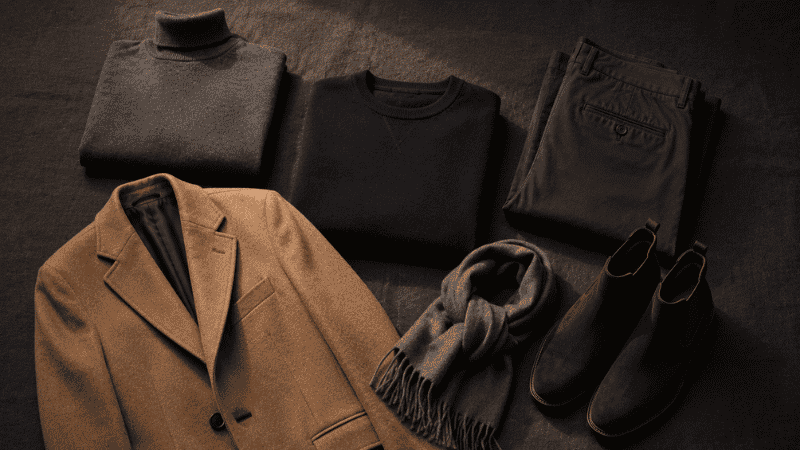
Every winter, the same thing happens. You put on a base layer, add a sweater, pull on a coat, and step outside looking like you’ve gained thirty pounds and lost your silhouette somewhere between the bedroom and the front door.
It’s not that you dressed wrong. It’s that most men approach winter layering by stacking clothes without a system—and without a system, warmth and shape tend to work against each other. More layers means more fabric means more visual bulk, and the coat that looked sharp on the hanger starts to look like a sleeping bag with sleeves once it’s covering three other things.
The men who dress well in winter aren’t wearing fewer layers. They’re wearing the right layers in the right order with the right fabric choices. The result looks intentional regardless of temperature—clean lines, preserved silhouette, no suggestion of a man who just pulled on everything in his closet.
This guide gives you the framework and five complete winter outfit ideas for men that you can use immediately.
Key Takeaways
- Layering without looking bulky comes down to fabric weight and fit—not the number of layers
- The three-layer system (base / mid / outer) controls warmth while preserving silhouette
- Merino wool is the highest-performing base and mid-layer fabric for warmth-to-thickness ratio
- Monochromatic or tonal color combinations visually minimize the appearance of bulk
- A well-fitted overcoat does more for winter style than any individual piece beneath it
Why Layering Makes You Look Bulky (And How to Fix It)
The bulky layering problem has a specific cause: most men choose their layers based on warmth alone, without thinking about how they interact visually or physically.
Layer one: a thick cotton sweatshirt. Layer two: a chunky knit sweater. Layer three: a padded parka. Each piece individually is fine. Together, they add about four inches of visual circumference to your torso and force the outer layer to accommodate all that fabric—which means it stops fitting correctly, the shoulders pull, the front strains, and the whole system reads as “man who got cold suddenly” rather than “man who dressed for winter.”
The fix operates on two principles.
Principle one: fabric thickness is not the same as warmth. Merino wool at 3mm of thickness provides more insulation than a cotton sweatshirt at 8mm. Choosing high warmth-to-thickness-ratio fabrics means each layer contributes more heat with less visual bulk. This is why outdoor athletes, who need warmth most urgently, don’t dress like snowmen—they’ve solved the physics problem.
Principle two: each layer should be slightly more relaxed than the one beneath it. Base layer skims the body. Mid layer has a little more room. Outer layer accommodates both without strain. When outer layers are sized to fit over nothing, they pull and bunch once layered. The system only works when it’s designed as a system.
The Three-Layer System: What Goes Where
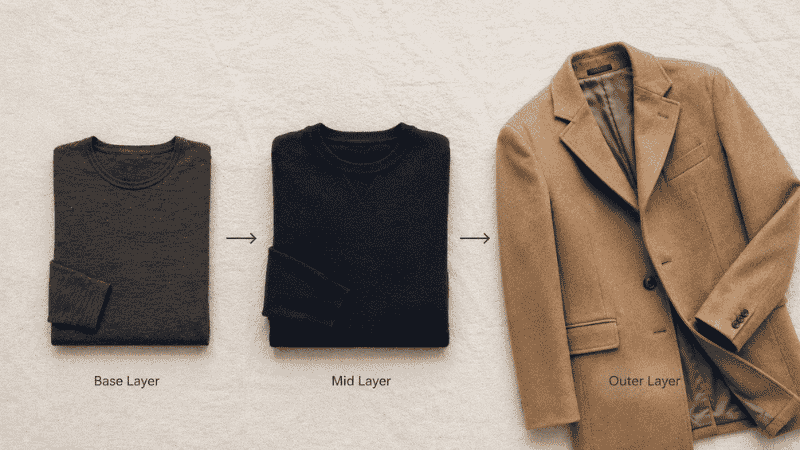
Layer 1: Base Layer (Warmth + Moisture Management)
The base layer’s job is heat retention and moisture management. It should sit close to the skin, never be seen, and add negligible visual bulk.
Best fabric: Merino wool. The warmth-to-thickness ratio is better than any other natural fiber—thin enough to wear under a dress shirt, warm enough to make a meaningful temperature difference. It’s also naturally odor-resistant, which matters when you’re wearing it all day.
Budget alternative: Uniqlo’s Heattech line does a reasonable job at a fraction of the cost. It’s synthetic rather than wool, so it doesn’t breathe as well, but it’s a solid practical option.
What it looks like in practice: A merino long-sleeve crew or turtleneck under your shirt. Nobody sees it. It just means the shirt above it needs to do less thermal work, which means the shirt can be lighter, which means the whole system sits closer to your body.
Layer 2: Mid Layer (Insulation + Visible Style)
The mid layer is where the visual outfit happens. It needs to provide insulation and look intentional, because in many situations—office, restaurant, indoor environments—the outer layer comes off and the mid layer becomes the primary outfit.
Best options:
- Merino or lambswool crewneck sweater — the most versatile mid-layer. Slim fit, solid neutral color (navy, grey, camel), not chunky.
- Fine-gauge cardigan — slightly more relaxed, works over a collared shirt for a smart-casual layer.
- Quilted gilet (vest) — adds core warmth without sleeve bulk. Works particularly well under a blazer or under an overcoat for an office setting.
The fit rule: The mid layer should fit correctly over the base layer without accommodating the outer layer. When you’re choosing a sweater, size it so it fits well with a shirt underneath—not so it leaves room for a coat on top.
Layer 3: Outer Layer (Protection + Structure)
The outer layer is the most visible piece and the one that determines whether the whole system reads as intentional or improvised.
The best outer layer for style: A tailored wool overcoat. Nothing does more for winter style at a single stroke. A charcoal, camel, or navy overcoat creates clean lines over everything beneath it, maintains structure in the wind, and reads as deliberate regardless of how casual the layers underneath are.
The best outer layer for practical cold: A quilted or down-filled jacket in a slim cut—not the padded parka that expands to twice its packed size, but a structured quilted jacket that sits close to the body. Uniqlo’s Ultra Light Down series, Patagonia’s Nano Puff, and similar slim-profile puffer jackets maintain silhouette while handling genuine cold.
The fit check for outer layers: Raise your arms fully. Put on everything you plan to wear underneath—base layer, mid layer. Now try the coat. The shoulders should sit flat. The front should close without pulling. You should be able to move naturally. If the coat strains with all layers on, it’s either the wrong size or your mid-layer is too thick.
5 Complete Winter Outfit Ideas for Men
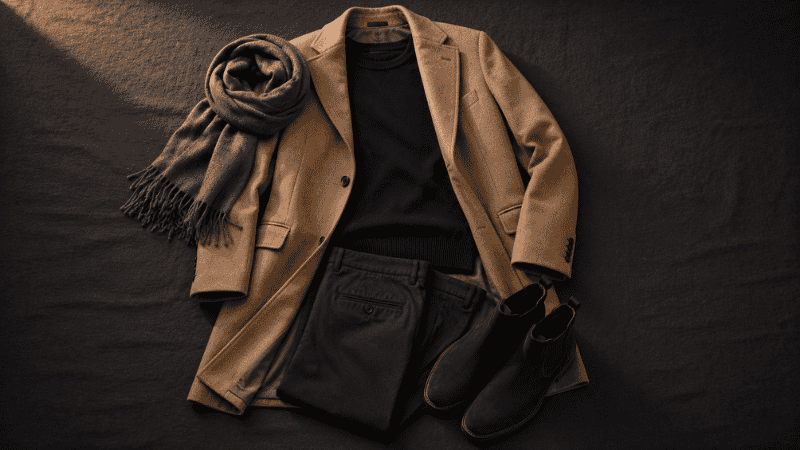
Outfit 1: The Smart Casual Winter Default
The combination: Merino base layer + navy crewneck sweater + dark slim chinos + chelsea boots + wool overcoat
This is the combination that handles 80% of smart casual winter situations—commuting, weekend plans, dinners, anything that isn’t strictly casual or formal.
The merino base under the sweater means the sweater doesn’t need to be chunky—a medium-weight crewneck is warm enough with the layer beneath. The slim chinos keep the bottom half from contributing to bulk. The chelsea boots add structure at the ankle without visual weight. The overcoat pulls the whole system together.
Color logic: All pieces in the navy-grey-tan palette. Nothing competes. The overcoat in camel or charcoal creates a clean top line that makes the outfit read as considered.
When to wear it: Most situations from October through March where a tie isn’t required.
Outfit 2: The Casual Weekend Layer
The combination: Heattech or merino base + grey or navy flannel shirt + dark slim jeans + chukka boots + waxed cotton or quilted jacket
For genuinely casual winter days, the flannel shirt functions as both mid-layer and visible top—no sweater required if the base layer is warm enough. A waxed cotton jacket or slim quilted jacket over the flannel handles light cold; add a sweater between the two if temperatures drop significantly.
The detail that makes it work: Roll the sleeves of the flannel to the forearm before putting the jacket on. It keeps the collar area clean and prevents the visible layer buildup that reads as “I’m wearing too many things.”
When to wear it: Weekend errands, casual outdoor situations, any setting where a sweater feels like too much formality.
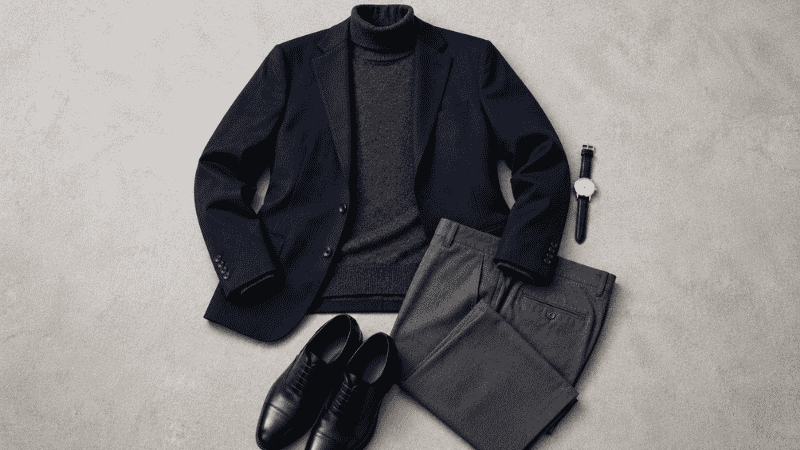
Outfit 3: The Office Winter Outfit
The combination: Merino turtleneck + navy or charcoal blazer + grey wool trousers + leather Oxford shoes or chelsea boots
The turtleneck-under-blazer combination is one of the cleanest moves in cold-weather dressing. The turtleneck replaces both the dress shirt and the separate sweater layer, doing the thermal work of both in one slim piece. The blazer goes over it cleanly, and the whole combination looks sharper than a shirt-and-tie setup in most modern office environments.
Fabric note: The turtleneck needs to be merino or a fine-wool blend—cotton turtlenecks look casual and add visible bulk. The merino version sits flat under the blazer without bunching at the collar.
When to wear it: Office environments, meetings, any situation where you’d normally wear a blazer and want to stay warm without adding a coat layer.
Outfit 4: The Cold Weather Smart Casual
The combination: Merino base + heavyweight merino crewneck + dark jeans + leather boots + wool overcoat + scarf
When it’s genuinely cold—below freezing—the answer isn’t more layers, it’s better fabric. A heavyweight merino crewneck (240gsm+) provides real warmth without the visual volume of a chunky knit. The overcoat over this combination creates a clean exterior while the layers beneath do the thermal work.
A wool scarf is the most efficient warmth-per-gram accessory available. It handles the collar gap where most body heat escapes, adds visual texture, and takes ten seconds to add or remove.
The monochrome principle: In cold weather when you’re wearing more, keep the color palette tighter. All navy, or charcoal and grey, or camel and tan—a single tonal range across all visible pieces makes the bulk disappear visually.
When to wear it: Genuinely cold days where function and appearance need to coexist.
Outfit 5: The Winter Date Outfit
The combination: Merino turtleneck or OCBD shirt + unstructured blazer + dark slim trousers + chelsea boots + tailored overcoat
A winter date requires something that looks intentional under the coat. The turtleneck-blazer combination or an OCBD shirt with a slim blazer both work—the key is that whatever’s under the overcoat can stand alone when the coat comes off at the restaurant.
The tailored overcoat is the most important investment for this combination. In cold weather, your date’s first impression is formed while you’re both in coats. A sharp overcoat makes the impression before you sit down; a shapeless puffer immediately sets a different tone.
When to wear it: Winter evenings, dinners, any situation where the date outfit from a warmer month needs to translate to cold weather.
The Mistakes That Create Bulk
Wearing cotton as a base layer. Cotton absorbs moisture and holds it against your skin, which makes you colder and adds compressed, damp bulk. Switch to merino or synthetic thermal and the system immediately performs better.
Choosing chunky knits for the mid layer. A chunky cable-knit sweater looks great as a standalone piece in a warm room. Under an overcoat, it forces the coat to sit further from your body and creates visible rippling across the chest. Switch to a medium-weight merino crewneck and the coat sits correctly.
Buying the outer layer to fit without layers. If your overcoat fits perfectly over a t-shirt, it’s too small to layer effectively. Size up slightly and have it adjusted at the shoulders and chest if needed—tailoring an overcoat is straightforward and worth the cost.
Too many colors across the layers. When every layer is a different color, each layer draws the eye separately and the overall effect looks assembled rather than planned. Tonal dressing—navy on navy, grey on grey—creates a single visual impression that hides the layering.
FAQ
How do men layer clothes in winter without looking bulky? The key is fabric selection over quantity. Use a thin, high-warmth base layer (merino wool), a slim mid-layer sweater (not chunky), and a well-fitted outer coat. Keep colors tonal or monochromatic—same color family across all visible layers. Ensure the outer layer is sized to accommodate what’s underneath without straining at the shoulders.
What are the best winter outfits for men? The most versatile winter outfit combinations for men are: a merino turtleneck under a blazer with wool trousers for offices and smart casual settings; a crewneck sweater over a base layer with chinos and an overcoat for everyday smart casual; and a flannel shirt over a base layer with dark jeans and a quilted jacket for casual weekends.
What should men wear in cold weather? Three-layer system: a merino wool or Heattech base layer against the skin, a sweater or mid-layer for insulation, and a structured coat or jacket as the outer layer. Choose slim profiles for each layer—the warmth comes from the fabric, not the thickness. A wool overcoat over these layers handles most cold-weather situations while maintaining a clean silhouette.
What coat should men wear in winter? A tailored wool overcoat in charcoal, camel, or navy is the most versatile winter coat for men’s style. It provides wind protection, maintains structure over multiple layers, and reads as intentional in almost any context. For practical cold weather with outdoor activity, a slim-profile quilted jacket (Uniqlo Ultra Light Down or similar) is more functional while still looking considered.
Is merino wool worth it for winter layering? Yes, specifically because of its warmth-to-thickness ratio. A merino base layer provides meaningful insulation at a fraction of the thickness of cotton or polyester alternatives. It’s also odor-resistant and moisture-wicking, which matters when worn all day. Uniqlo and similar brands offer merino at accessible price points—it’s not exclusively a premium item.
References
- Unbound Merino, “Why Merino Makes the Perfect Base Layer for Cold Weather” — merino wool thermal performance and moisture management properties
- FashionTimes, “How to Layer Clothes Properly Without Looking Bulky” (December 2025) — fabric selection and three-layer system framework
- Decode NI, “How Men Should Layer Clothes in Winter” (2025) — fabric weight recommendations and overcoat fit guidance
- Oliver Brown London, “How to Master Layering: A Style Guide for Men” (September 2025) — layering rule: maximum three layers for shape retention
Explore More on Modvello
- What to Wear in Summer: The Men’s Guide to Looking Good When It’s Hot (Style by Occasion)
- Capsule Wardrobe for Men: 10 Basics That Cover Every Situation (Wardrobe Basics)
- Men’s Work Outfits: Simple Combinations for Every Day of the Week (Style by Occasion)
- Casual Outfit Ideas for Men: What to Wear When There’s No Dress Code (Outfit Ideas)
- How to Dress Better: The Practical Men’s Style Guide (Wardrobe Basics)
Last updated: June 2026 | Written by Daniel Ross