
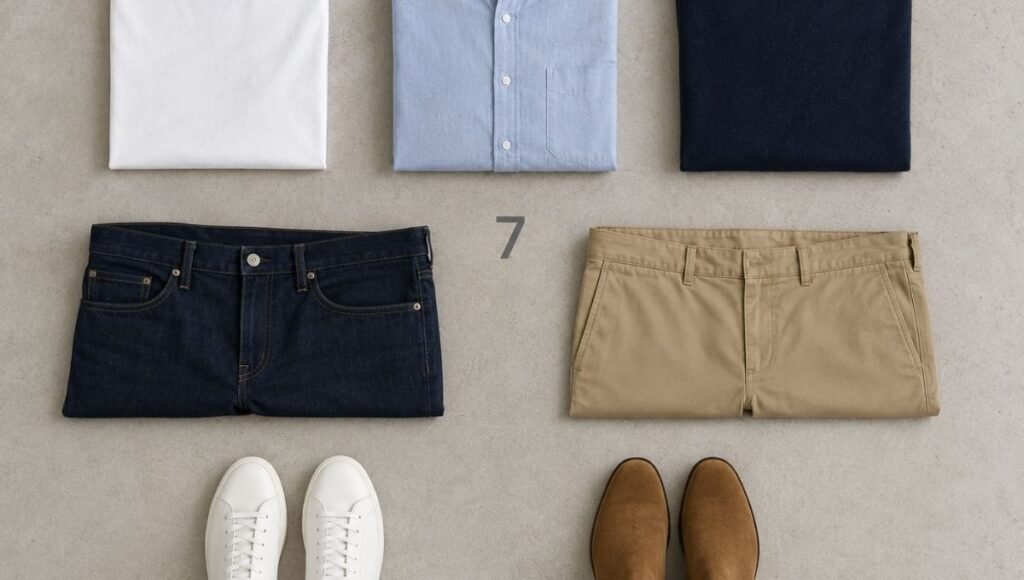
Most men don’t have a style problem. They have a decision problem.
You open your closet and the question isn’t “do I own anything decent?”—you probably do. The question is “how do I put it together?” And because that question doesn’t have a clear answer most mornings, you reach for the same reliable combination, wear it until it feels boring, and then convince yourself you need to go shopping.
You don’t. You need a system.
This guide is built around a simple idea: seven well-chosen basic pieces can generate more than twenty distinct outfit combinations that cover every situation you’ll realistically face. Casual weekends. The office. Dinner. A date. A job interview. A wedding you’re attending as a guest. All of it, from seven items.
The combinations aren’t creative exercises. They’re practical formulas—the kind you can commit to memory and return to without thinking. Once you have them, getting dressed stops being a daily problem and becomes an automatic decision.
Key Takeaways
- Seven core pieces (3 tops, 2 bottoms, 2 shoes) generate more than 20 viable outfit combinations
- A neutral color palette (navy, white, grey, khaki) means every top pairs with every bottom automatically
- The outfit formula that works in one context can be upgraded or downgraded with one piece change
- Most men wear 20% of their wardrobe 80% of the time — this guide helps you make that 20% count
- Fit matters more than any other variable: a well-fitting basic outperforms an interesting piece in the wrong size every time
The 7 Pieces Behind Every Outfit in This Guide
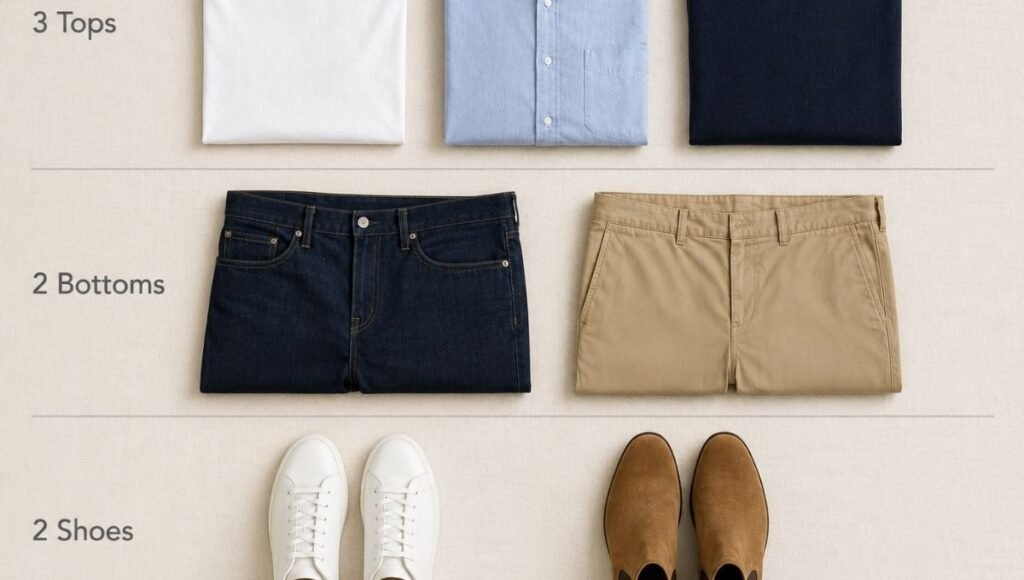
Before the combinations, the foundation. These seven pieces are chosen because they connect — every top works with every bottom, every bottom works with every shoe. No orphan pieces, no combinations that require thought.
The 3 Tops:
- White crew-neck t-shirt (mid-weight cotton, fitted)
- Light blue or white Oxford cloth button-down shirt (OCBD)
- Navy or grey crewneck sweater (medium-weight merino or cotton)
The 2 Bottoms: 4. Dark indigo slim-straight jeans 5. Khaki flat-front chinos
The 2 Shoes: 6. White leather low-top sneakers 7. Tan leather loafers or brown suede chelsea boots
That’s it. Everything below is built from these seven items — sometimes with an optional navy blazer as an upgrade layer.
The Color Logic That Makes It Work
The reason these combinations don’t require deliberation: every piece lives in the neutral palette.
Navy, white, grey, khaki, and tan don’t compete with each other. They coexist quietly. Pull any top from this list and any bottom, and they’ll work together without active color management. That’s not accidental — it’s the design principle behind a functional wardrobe.
Once this foundation is working, you can add one accent piece: a burgundy sweater, an olive jacket, a flannel shirt in a muted check. These read as personal without breaking the system, because the neutrals give them somewhere to land.
For now: stay neutral. Build the foundation. The personality can come later.
20 Men’s Outfit Ideas: Complete Combinations
CASUAL OUTFITS
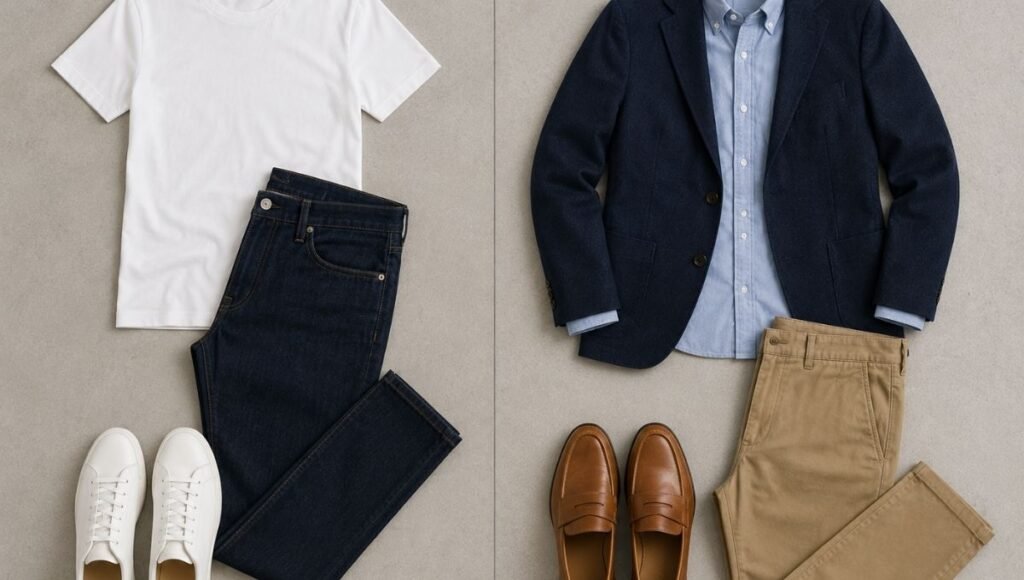
Outfit 1: The Default Weekend
White tee + dark jeans + white sneakers
The most reliable casual men’s outfit in existence. The contrast between white and dark denim is clean without being deliberate; the white sneakers ground the combination in contemporary casual. Everything depends on fit and execution: the tee should be fitted, the jeans should not stack excessively, and the sneakers should be clean.
When to wear it: Weekend errands, casual social plans, coffee, anywhere that doesn’t require a collar.
Quick upgrade: Swap the white tee for a grey crewneck sweater. Same combination, slightly more intentional.
Outfit 2: The Classic Casual
White tee + khaki chinos + white sneakers
A slightly smarter configuration than dark jeans — the chinos read as more considered without adding any formality. This combination works better in warm weather when dark denim feels heavy.
When to wear it: Weekend brunch, casual outdoor events, daytime social situations.
Outfit 3: The Neutral Layer
Grey crewneck + dark jeans + white sneakers
The grey-and-dark-indigo combination is one of the cleanest tonal pairings in casual menswear. The crewneck adds warmth and visual weight to the white tee configuration. Works across three seasons.
When to wear it: Cool-weather weekends, casual evening plans, any casual situation where a tee feels like slightly too little.
Outfit 4: The Chino Casual
Grey crewneck + khaki chinos + tan loafers
Swap the sneakers for loafers and the denim for chinos, and the grey crewneck moves from casual into considered territory. This combination consistently reads as “put together without trying.”
When to wear it: Weekend social situations, casual dinners with friends, any context where you want to look like you made an effort without looking formal.
Outfit 5: The Relaxed OCBD
Oxford shirt (untucked) + dark jeans + white sneakers
The untucked OCBD over dark jeans is the casual shirt combination that works across the most situations. Leave the collar open, roll the sleeves to the forearm if it’s warm, and the outfit reads as intentional without any stiffness.
When to wear it: Casual Friday, weekend plans that feel slightly too grown-up for a tee, anywhere you want a collar without formality.
Outfit 6: The Weekend Chino
Oxford shirt (untucked) + khaki chinos + tan loafers
The OCBD-and-chinos combination is a reliable foundation that appears in multiple configurations throughout this guide. Untucked with loafers, it reads as relaxed smart casual. Everything above this level involves tucking and/or a blazer.
When to wear it: Casual lunches, weekend plans, relaxed social events.
SMART CASUAL OUTFITS
Outfit 7: The Instant Upgrade
Navy blazer + white tee + dark jeans + tan loafers or chelsea boots
This is the most useful single outfit formula in men’s smart casual. A blazer over a white tee removes the need for a dress shirt while instantly signaling intention. The white tee keeps it relaxed; the blazer says you considered the occasion.
When to wear it: Casual dinners, drinks, events where the dress code is ambiguous, first impressions where you want to look like you thought about it.
The detail that makes it work: The tee must be genuinely clean — bright white, not off-white from washing. A slightly grey tee undermines the blazer entirely.
Outfit 8: The Smart Casual Default
Oxford shirt (tucked) + khaki chinos + tan loafers
The tucked Oxford over chinos with leather shoes is the canonical men’s smart casual combination — it handles more situations than any other single outfit formula. Office environments, smart casual events, client meetings, any situation where you need to look professional but not formal.
When to wear it: Business casual offices, client-facing situations, smart casual events of any kind.
Outfit 9: The Blazer Upgrade
Navy blazer + Oxford shirt (tucked) + khaki chinos + chelsea boots
Add a blazer to Outfit 8 and you move from business casual to smart professional — appropriate for formal office environments, important meetings, and anything slightly more elevated.
When to wear it: Formal office environments, important meetings, situations where you want to communicate more intentional effort.
Outfit 10: The Smart Casual Evening
Navy blazer + white tee + dark jeans + chelsea boots
A slight variation on Outfit 7 with boots replacing loafers — the chelsea boot pushes the combination toward evening smart casual. Works for restaurants, drinks, and any evening situation that isn’t a formal event.
When to wear it: Dinner, evening drinks, casual dates, events where you want to look sharp without being overdressed.
Outfit 11: The Sweater Smart Casual
Navy blazer + grey crewneck + dark jeans + chelsea boots
Layering a crewneck under a blazer adds texture and warmth without increasing formality. The sweater replaces the tee or shirt as the middle layer — visible at the collar if the crewneck sits above the blazer lapel. Works particularly well in autumn and winter.
When to wear it: Cool-weather smart casual situations, evening events where a blazer alone isn’t warm enough.
Outfit 12: The Tonal Smart Casual
Grey crewneck + khaki chinos + chelsea boots
Without a blazer, the grey-and-khaki-and-boot combination still reads as smart casual in most modern environments. The suede boot does the heavy lifting — it’s elevated enough to lift the whole combination past casual territory.
When to wear it: Modern offices on a casual Friday, smart casual social events, any situation where a blazer feels like slightly too much.
WORK AND OFFICE OUTFITS
Outfit 13: The Business Casual Baseline
Oxford shirt (tucked) + dark jeans + leather shoes
In most modern offices, dark slim jeans with a tucked Oxford shirt and leather shoes reads as business casual. The key variables: the jeans must be dark, clean, and without distressing; the shirt must be tucked; the shoes must be leather.
When to wear it: Tech companies, creative agencies, modern professional environments with relaxed dress codes.
Outfit 14: The Classic Business Casual
Oxford shirt (tucked) + khaki chinos + loafers
The version of Outfit 8 that works in traditional offices. Chinos replace jeans as the standard for most business casual environments — they have less casual association than denim regardless of wash.
When to wear it: Traditional business casual offices, professional service environments, client-facing work contexts.
Outfit 15: The Work Week Default
Navy blazer + Oxford shirt + khaki chinos + loafers
The full business casual formula — blazer, shirt, chinos, leather shoes. This combination handles every business casual situation from internal meetings to client presentations. Add a tie for business formal contexts.
When to wear it: Any professional environment from business casual upward.
DATE AND EVENING OUTFITS
Outfit 16: The First Date
Navy blazer + white tee + dark jeans + chelsea boots
Already in this guide as Outfit 10 — it’s included here specifically because it solves the first date problem. Smart without overdressing. Considered without looking like you’re trying too hard. The blazer signals that you took the evening seriously; the tee signals that you’re relaxed about it.
When to wear it: First dates, casual dinners with someone you want to impress, any evening where appearance matters but formality doesn’t.
Outfit 17: The Smart Dinner
Oxford shirt (open collar) + khaki chinos + chelsea boots
Without a blazer, the OCBD-chinos-boots combination reads as smart and considered for evening situations. Leave the top button undone — it reads as intentionally relaxed rather than undone. This combination is sharper than it looks because all three pieces are at the top of their respective categories.
When to wear it: Casual restaurant dinners, evening social plans, dates that aren’t quite formal enough for a blazer.
OCCASION OUTFITS
Outfit 18: The Wedding Guest (Smart Casual)
Navy blazer + Oxford shirt (tucked) + khaki chinos + loafers or dress boots
The smart casual wedding guest configuration — blazer, shirt, chinos, leather shoes. Works for garden parties, outdoor weddings, and any wedding with a smart casual dress code. Add a tie for cocktail attire situations.
When to wear it: Smart casual wedding dress codes, outdoor weddings, garden party occasions.
Outfit 19: The Interview (Business Casual)
Navy blazer + Oxford shirt (tucked) + khaki chinos + loafers
This is Outfit 15 again — the full business casual formula doubles as a reliable interview outfit for most modern companies. For traditional corporate, law, or finance environments, replace chinos with dark dress trousers.
When to wear it: Job interviews in modern office environments, tech companies, any interview context outside traditional corporate.
Outfit 20: The Summer Smart Casual
Oxford shirt (untucked, short-sleeve or linen) + khaki chinos + leather sandals or loafers
In warm weather, the OCBD-chinos combination adapts with lighter fabric and a sandal. A short-sleeve Oxford or a linen shirt keeps the smart casual register without the heat of heavier fabric.
When to wear it: Summer smart casual situations, warm-weather dinners, outdoor events in hot weather.
The Five Outfit Formulas Worth Memorizing
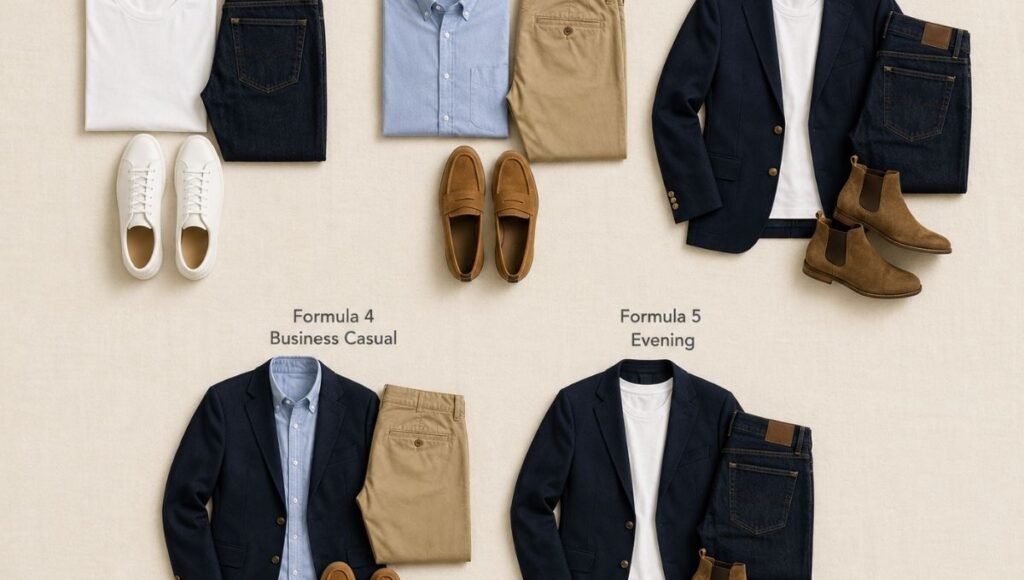
Twenty combinations is more than most men need to know on any given morning. The underlying formulas are even simpler — five patterns that generate all twenty outfits above.
Formula 1 — The Casual Default: Tee or crewneck + dark jeans or chinos + sneakers Use this for: any casual situation
Formula 2 — The Smart Casual Lift: Oxford shirt (untucked) + chinos + loafers or boots Use this for: smart casual situations without a blazer requirement
Formula 3 — The Blazer Upgrade: Blazer + tee or shirt + jeans or chinos + leather shoes Use this for: any situation that needs one level of formality above casual
Formula 4 — The Business Casual: Blazer + Oxford shirt (tucked) + chinos + loafers Use this for: office environments and professional contexts
Formula 5 — The Evening: Blazer + tee + dark jeans + chelsea boots Use this for: dinners, dates, and evening smart casual situations
Learn these five formulas and you can dress for any situation in your life without looking at a guide.
When the Outfit Isn’t Working
Everything fits but something feels off. Usually footwear. Sneakers under a blazer reads differently than boots or loafers — make sure the shoe is appropriate for the register you’re going for.
The combination looks fine at home but feels wrong out. Almost always a fit issue. A combination that fits correctly at every point — shoulder seams, chest, waist, trouser seat — looks right in the real world. Loose fits compound.
You keep reaching for the same thing. Good instinct. If one combination works reliably, the answer is to wear it more and understand why it works — then build variations from that foundation rather than reinventing from scratch every morning.
FAQ
What are good men’s outfit ideas for everyday wear? The most reliable everyday combinations are: white tee + dark jeans + white sneakers for casual, Oxford shirt + chinos + loafers for smart casual, and navy blazer + white tee + dark jeans + chelsea boots for evening or smart occasions. All three work across most situations most men face daily and can be assembled from basic wardrobe pieces without deliberation.
How do men put together a good outfit? Start with a bottom (jeans or chinos), choose a top in a neutral color that contrasts with it (white or grey with dark denim; navy or white with khaki), then choose shoes that match the formality level you’re going for (sneakers for casual, leather loafers or boots for smart casual). The neutral palette — navy, white, grey, khaki — means any combination from these colors works automatically.
What should men wear to look stylish every day? Stylish daily dressing comes from three things: clothes that fit correctly, a neutral color palette that combines automatically, and clean maintained footwear. A well-fitting white tee and dark jeans with clean white sneakers looks better than a poorly fitting designer outfit. Fit first, then color, then shoes — in that order.
How many outfits does a man actually need? Research suggests most men wear about 20% of their wardrobe on 80% of their days. In practice, five to seven reliable outfit combinations cover the vast majority of situations most men face. The goal isn’t variety — it’s having combinations you can assemble without thinking and that consistently look right.
What is the easiest men’s outfit for any occasion? Navy blazer + white tee + dark jeans + chelsea boots or leather loafers. This combination works for casual dinners, dates, smart casual events, and any ambiguous dress code situation. It reads as intentional without being formal, and it can be put together in under two minutes from pieces most men already own.
Go Deeper: Modvello’s Complete Outfit Guides
Each of the combinations in this guide is explored in depth in the articles below. If you want the full picture on a specific pairing — what shoes work, what situations it covers, how to adapt it — click through to the relevant guide.
By garment:
- How to Wear Chinos: Men’s Outfit Ideas From Office to Weekend (Outfit Ideas)
- White T-Shirt Outfits for Men: 5 Ways to Wear the Most Useful Item You Own (Outfit Ideas)
- What to Wear With Grey Pants: The Men’s Complete Styling Guide (Outfit Ideas)
- What to Wear With Black Pants: The Men’s Complete Outfit Guide (Outfit Ideas)
- How to Wear a Denim Jacket: 5 Easy Outfit Combinations for Men (Outfit Ideas)
- Casual Outfit Ideas for Men: What to Wear When There’s No Dress Code (Outfit Ideas)
By occasion:
- What to Wear to a Wedding: The Men’s Complete Guide (Style by Occasion)
- What to Wear to a Job Interview: The Men’s Guide (Style by Occasion)
- First Date Outfit for Men: What to Wear to Make the Right Impression (Style by Occasion)
- Men’s Work Outfits: Simple Combinations for Every Day of the Week (Style by Occasion)
By foundation:
- Capsule Wardrobe for Men: 10 Basics That Cover Every Situation (Wardrobe Basics)
- How to Dress Better: The Practical Men’s Style Guide (Wardrobe Basics)
Last updated: June 2026 | Written by Daniel Ross