The interview is scheduled. The preparation starts immediately—researching the company, rehearsing answers, thinking through what questions to ask. And then, usually the night before, the other question arrives: what do I actually wear?
It’s more stressful than it should be, partly because the old advice (“always wear a suit”) no longer holds in every context, and the new advice (“dress for the culture”) is too vague to act on. Showing up in a full suit to a startup can make you look out of touch before you say a word. Showing up too casually to a law firm interview can raise doubts about your judgment before you prove anything else.
The stakes are real. Research consistently shows that first impressions form within seconds, and interviewers’ initial judgments influence the rest of the conversation more than most people realize. Your outfit is part of your application.
This guide gives you a clear system. Not generic advice—specific outfit recommendations based on company type, so you walk in knowing you got this part right.
Key Takeaways
- The new rule isn’t “dress one step up”—it’s “dress for the culture, but always with polish”
- Hiring managers rarely penalize candidates for being too polished, but underdressing regularly raises questions about judgment and cultural awareness
- A navy or charcoal suit remains the safe choice for finance, law, consulting, and corporate environments; business casual handles most modern offices
- Shoes and grooming are the two most commonly overlooked factors in interview presentation
- When genuinely uncertain about dress code: go one level up, always
The Fundamental Rule Before Anything Else
Before choosing an outfit, do twenty minutes of research. Look at the company’s website, their LinkedIn page, their Instagram if they have one. Look at how employees are photographed—not the CEO at an event, but regular team members on a Tuesday. That’s your visual dress code.
If you’re working with a recruiter, ask directly: “I want to make sure I’m dressed appropriately—can you give me a sense of the office dress code?” Recruiters field this question constantly and appreciate candidates who think to ask.
One principle holds across every industry and every role: always dress one level above the daily office norm for the interview itself. Even tech companies that run on hoodies expect candidates to show more intention than the standard Thursday at the office. The interview is a signal—dress like you understand that.
What to Wear to a Job Interview: By Company Type
Traditional Corporate / Finance / Law / Consulting
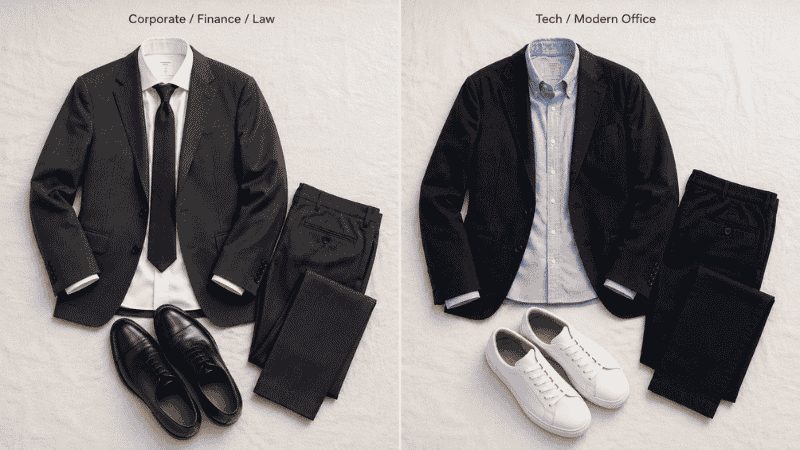
The expectation: Business formal. This is the category where the suit remains non-negotiable, and where deviating from it—even with good intention—sends the wrong signal.
What to wear:
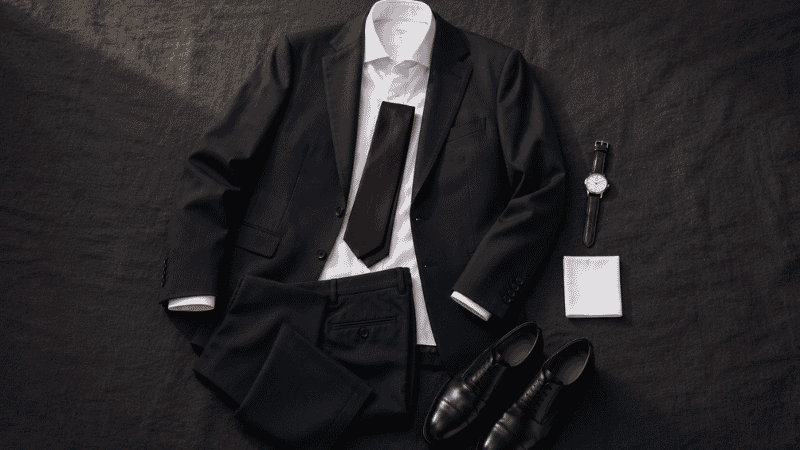
- Navy or charcoal grey suit (both are more interview-appropriate than black, which reads as funeral-formal rather than professional)
- White or light blue dress shirt, pressed and fitted
- Conservative tie in a solid color or subtle pattern (burgundy, navy, dark grey)
- Black or dark brown leather Oxford shoes, polished
- Matching leather belt
- Simple watch, white pocket square (optional but elevating)
What to avoid: Black suits as a first choice, novelty ties, brown shoes with a charcoal suit, any visible wrinkle in the shirt or jacket. In these environments, the details are read as signals of precision—which is relevant to the work itself.
The honest note: If you don’t own a suit that fits well, this is not the time to buy a cheap one. A well-fitted suit from an affordable brand (J.Crew, Suit Supply, Express) consistently outperforms an expensive one with poor fit. Prioritize shoulder and chest fit above everything else—the rest can be altered.
Mid-Size Corporate / Marketing / Professional Services
The expectation: Business casual, executed well. This is the most common interview context and the one where most men get it slightly wrong—either too formal (stiff suit with no personality) or too casual (chinos and a polo that reads like a Wednesday at the office).
What to wear:
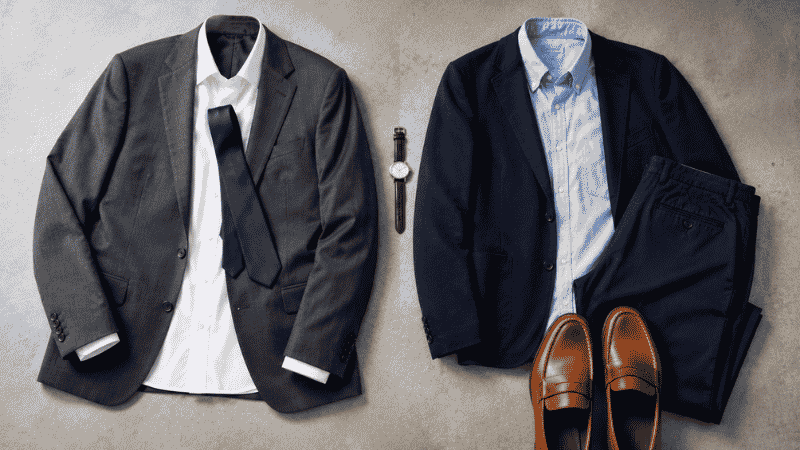
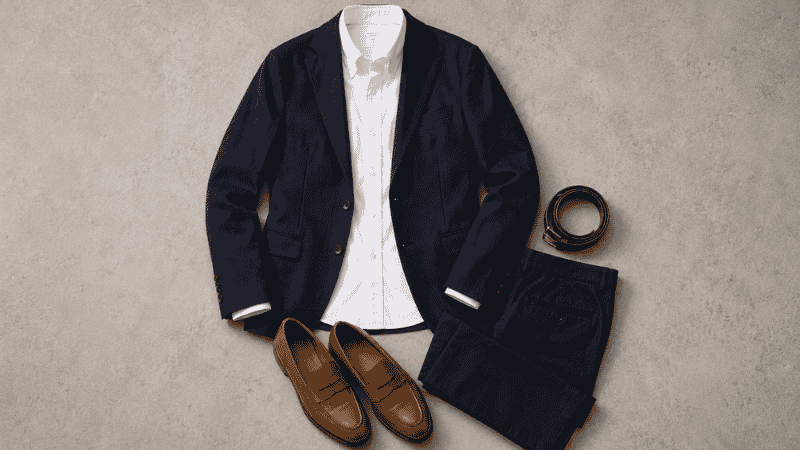
- Navy unstructured blazer or mid-grey suit jacket (matching or mismatched with dress trousers)
- White or light blue Oxford cloth button-down shirt, tucked
- Chinos in khaki, navy, or charcoal — or dress trousers in grey or navy
- Leather loafers or cap-toe Oxford shoes in brown or black
- No tie required, but have one accessible if the environment turns out more formal than expected
The interview-specific upgrade: Add the blazer. Even if the daily office culture is polo-and-chinos, a blazer in an interview context signals that you took the occasion seriously. You can remove it if everyone in the office is clearly more casual when you arrive.
What to avoid: Jeans (regardless of how dark or well-fitting), t-shirts under the blazer, athletic footwear, visible logos.
Tech Companies / Startups / Creative Agencies
The expectation: This is the category that confuses men the most. The daily office culture may be genuinely casual—jeans, hoodies, sneakers. But an interview, even at a casual company, is a different signal.
Expert consensus from hiring managers and recruiters: even in the most casual tech environments, dress one clear level above the office norm for the actual interview. Showing up in a graphic tee to a company where employees wear graphic tees signals that you didn’t make a distinction between “interview” and “Tuesday.” That’s a subtle but real impression.
What to wear (tech/startup business casual):
- Dark slim jeans (clean, no distressing) or chinos in charcoal or navy
- Oxford shirt or polo in a solid color, tucked or neatly untucked
- Clean leather sneakers (white or dark) or neat loafers — leather, not athletic
- Optional: lightweight unstructured blazer for a slight upgrade
For senior roles at tech companies:
- A blazer is more appropriate, even if you remove it once you’ve read the room
- Dress trousers over jeans signals executive-level awareness
- The same clean, minimal palette applies
What to avoid: The $2,000 suit at a startup. Hiring managers consistently report that overdressing for a startup interview creates friction—it signals cultural misalignment, not ambition. The goal is “clearly made an effort” not “clearly came from a different industry.”
Healthcare / Education / Government / Non-Profit
The expectation: Professional but approachable. These environments value competence and reliability over style, but they still expect evidence of intentional preparation.
What to wear:
- Conservative suit in navy or charcoal, or a blazer with dress trousers
- White or light blue dress shirt
- Tie optional (lean toward including it for government and healthcare)
- Dark leather shoes, polished
- Minimal accessories
The tone to aim for: Trustworthy and prepared. These roles often involve working with the public, patients, or students—the interview outfit should communicate stability and professionalism, not fashion awareness.
Video / Remote Interviews
The expectation: Everything that’s visible on camera needs to be correct. The waist-up rule applies—but the principle extends.
What to wear:
- Dress shirt or blazer in solid colors or very subtle patterns (busy patterns distort on camera)
- Avoid bright white against light backgrounds—it creates contrast issues
- Navy, mid-blue, light grey all perform well on video
- Ensure the shirt/blazer is wrinkle-free—wrinkles that might go unnoticed in person are amplified on camera
Practical steps: Test your outfit on camera before the interview. Check for colors that wash out, patterns that create visual noise, and whether the lighting flatters or flattens the fabric. Position the camera at eye level—looking up from a laptop creates an unflattering angle regardless of what you’re wearing.
Grooming on camera matters more than in person: Hair, shaving or beard maintenance, and background all register more prominently on a screen than in a room.
The Details That Determine the Impression
Shoes
Interviewers notice shoes, consistently and quickly. Clean, polished leather shoes in an appropriate style communicate the same thing on an interview that they do on a first date: you paid attention to the details, which implies you’ll pay attention to other details.
- For formal environments: cap-toe or plain Oxford in black or dark brown
- For business casual: leather loafers or monk straps in brown or tan
- For casual tech: clean minimal leather sneakers or neat loafers
The single most important thing: clean them the night before. Scuffed interview shoes are a detail that registers and doesn’t help.
Fit
A well-fitted $200 suit outperforms a $1,000 one with poor fit in every interview context. The shoulder seam sits at the edge of the shoulder bone. The jacket closes without pulling across the chest. Shirt collar sits close to the neck. Trousers fall cleanly to the shoe without pooling.
If anything you’re planning to wear doesn’t fit correctly, find an alternative before trying to make it work.
Grooming
Hair, facial hair, and nails are part of the complete picture. Clean and controlled is the baseline—it doesn’t need to be elaborate, but it needs to be intentional. Uncontrolled beard growth, un-styled hair, or visible dirt under the nails all create impressions that override a well-chosen outfit.
The 20-Minute Emergency Option
Interview in 20 minutes, nothing feels right:
Navy or charcoal blazer + white Oxford shirt (tucked) + dark chinos + leather loafers.
Check: is the shirt wrinkled? (Quick iron, ten minutes.) Are the shoes clean? (Wipe with a damp cloth.) Does the blazer fit through the shoulders? (If not, wear just the shirt and chinos—they’re cleaner than an ill-fitting jacket.)
This combination handles every interview context from casual tech to mid-size corporate without being either underdressed or overtly formal.
When the Outfit Isn’t Working
You feel overdressed when you arrive. Remove the jacket once you’ve read the room. Keep the shirt tucked. The outfit downgrades gracefully; a casual outfit cannot upgrade in real time.
You feel underdressed. There’s nothing to do in the moment except carry yourself with confidence and let the conversation take over. For next time: when in genuine doubt, go one level up.
Something doesn’t fit correctly. A poorly fitting suit jacket is worse than no jacket. If the shoulders don’t work, remove the jacket and proceed with the shirt and trousers—clean and fitted beats structured and wrong.
FAQ
What should men wear to a job interview? The right interview outfit depends on the company type. For finance, law, and traditional corporate environments: a navy or charcoal suit, white dress shirt, conservative tie, and polished leather shoes. For modern offices and business casual environments: a blazer with dress trousers or chinos, Oxford shirt, and leather loafers. For tech companies and startups: dark slim jeans or chinos, Oxford shirt or polo, and clean leather shoes—one clear level above the office daily norm.
Can men wear a blazer instead of a suit to an interview? Yes, in most business casual and modern professional environments. A well-fitted navy blazer with dress trousers and a tucked Oxford shirt handles most interviews outside of finance, law, and traditional corporate contexts. For conservative or formal environments, a matched suit is still expected.
What color suit should men wear to an interview? Navy or charcoal grey are the two most interview-appropriate suit colors. Both read as professional and authoritative without the severity of black (which leans toward formal/funeral occasions) or the casualness of lighter greys. Navy is particularly reliable—it photographs well, works across industries, and reads as confident rather than intimidating.
Should men wear a tie to a job interview? In traditional corporate, finance, law, and government environments: yes. In modern business casual offices and tech companies: generally no, though having one accessible if the environment turns out more formal than expected is sensible. The rule is context-dependent—if you’re unsure, err toward including a tie. It can be removed; it can’t be added.
What casual interview outfit works for men? For genuinely casual interview environments (tech, creative, startup): dark slim jeans without distressing, a tucked Oxford shirt or neat polo in a solid color, and clean leather sneakers or loafers. A lightweight blazer is optional but useful as an upgrade signal. Avoid graphic tees, athletic wear, or anything that wouldn’t distinguish “interview day” from a regular Tuesday at the office.
References
- 4 Corner Resources, “Business Casual vs. Business Professional: What to Wear to an Interview” (2026) — hiring manager perspective on interview attire expectations
- Optim Careers, “Interview Outfits for Men: What Impresses Hiring Managers” (2024) — recruiter-sourced guidance on company culture research and dress code calibration
- Bespoke Unit, “What to Wear to an Interview: A 2025 Guide for Men” (2025) — three-tier system for interview attire by industry type
- Men’s Journal, “Interview Attire for Men: The Rules to Master” (2024) — expert commentary from Josh Neuman, founder of Chummy Tees, on business casual interview standards
Explore More on Modvello
- Business Casual Dress Code for Men: What It Actually Means (Wardrobe Basics)
- How to Dress Better: The Practical Men’s Style Guide (Wardrobe Basics)
- Men’s Work Outfits: Simple Combinations for Every Day of the Week (Style by Occasion)
- What to Wear to a Wedding: The Men’s Complete Guide (Style by Occasion)
- The Best Chinos for Men: Honest Picks at Every Budget (Best Picks)
Last updated: June 2026 | Written by Daniel Ross